Fresh Peach Salsa
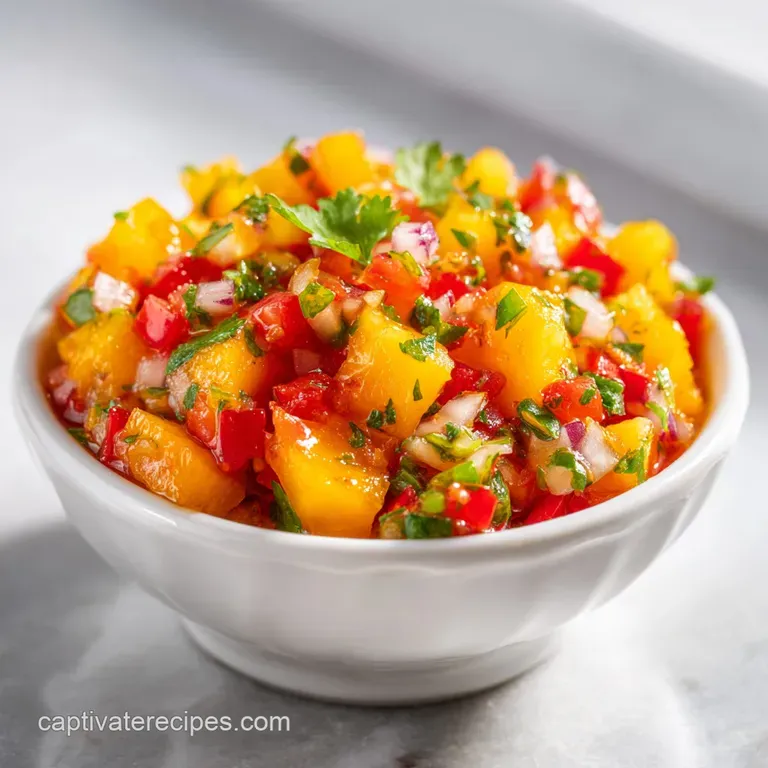
- Time: Active 15 minutes, Passive 0 minutes, Total 15 minutes
- Flavor/Texture Hook: A refreshing burst of juicy fruit with a crisp, vegetal snap.
- Perfect for: Low cost entertaining, summer barbecues, or quick weeknight taco nights.
- Crafting the Perfect Fresh Peach Salsa
- Essential Recipe Specifications
- Selecting Your Fresh Summer Ingredients
- Minimal Kitchen Tools Required
- Step-by-Step Preparation Guide
- Solving Common Texture Issues
- Clever Ingredient Swaps and Twists
- Freshness Maintenance and Storage
- Best Pairings for Your Salsa
- Recipe FAQs
- 📝 Recipe Card
Crafting the Perfect Fresh Peach Salsa
The first time I tried a fruit based salsa, I was at a backyard party where the humidity was so thick you could practically wear it. Someone handed me a chip loaded with this bright, orange flecked mixture, and honestly, it changed my entire summer perspective.
The way the cold peach juice hit the salt and the slow burn of the jalapeño felt like a literal cooling system for my palate. It wasn’t fancy or complicated; it was just honest, fresh food that worked harder than it looked.
But let me tell you, I've made the mistakes so you don't have to. I once tried making this with overripe peaches that were basically melting in my hands big error. The result was a soggy, bruised mess that looked more like baby food than a vibrant dip.
Since then, I’ve learned that the secret is all about the "snap" of the fruit and how you treat the onions to keep them from taking over the whole show.
We’re going to focus on a version that doesn’t require a massive grocery haul. By using Roma tomatoes to bulk out the volume and relying on the natural acidity of lime, we create a huge bowl of flavor for just a few dollars.
Whether you’re spooning this over a piece of fish or just diving in with a bag of discount tortilla chips, it’s a reliable win that feels much more expensive than it actually is.
Essential Recipe Specifications
The Magic of Maceration
Osmotic Pressure: Salt draws moisture out of the peach cells, creating a natural syrup that binds the aromatics without needing extra oil. This process effectively marinates the onions and peppers in the fruit's own juices, softening their bite within minutes.
| Premium Ingredient | Budget Alternative | Flavor Impact | Savings |
|---|---|---|---|
| White Peaches | Yellow Peaches | Yellow are tangier and often cheaper per pound | $1.50 - $2.00 |
| Shallots | Red Onion | Red onion is sharper but provides better color contrast | $0.80 - $1.00 |
| Key Limes | Standard Persian Lime | Negligible; standard limes are juicier and easier to zest | $2.00 |
| Fresh Cilantro | Dried Cilantro | Note: Dried lacks the bright "punch" fresh is highly recommended | $0.50 |
Choosing yellow peaches over the more delicate white varieties isn't just a budget move; it's a structural one. Yellow peaches have a higher acidity level that stands up better to the lime juice and salt, ensuring your salsa doesn't turn into a one dimensional sugar bomb.
Selecting Your Fresh Summer Ingredients
The beauty of a budget friendly recipe is making the most of what’s in season. When peaches are at their peak, they are incredibly affordable, but even "seconds" or slightly bruised fruit can work if you trim them carefully.
I always look for fruit that feels like a tennis ball firm with just a tiny bit of give.
Component Analysis
| Ingredient | Science Role | Pro Secret |
|---|---|---|
| 3 Fresh Peaches | Sugar/Structure | Leave the skin on for extra fiber and a beautiful rustic texture. |
| 2 Roma Tomatoes | Acid/Volume | Romas have less water than beefsteak types, preventing a "soupy" salsa. |
| 2 Fresh Jalapeños | Capsaicin Heat | Rub the cut peppers against the onion to distribute the oils evenly. |
When selecting your 1/2 medium red onion, look for one that feels heavy for its size. If the onion feels light or hollow, it’s likely drying out and will have a bitter, woody aftertaste. For the 1/2 cup fresh cilantro, don't throw away those stems!
They actually hold more flavor than the leaves; just mince them extra fine so the texture doesn't distract.
- 3 large fresh peaches (450g): Diced into 1/4 inch cubes. Why this? Provides the sweetness that counters the heat of the peppers.
- 2 Roma tomatoes (150g): Deseeded and diced. Why this? They stay firm and add a necessary savory base.
- 1/2 medium red onion (75g): Finely minced. Why this? Adds a sharp crunch that balances the soft fruit.
- 2 fresh jalapeños: Seeded and minced. Why this? Provides a manageable heat that lingers without burning.
- 1/2 cup fresh cilantro (15g): Chopped. Why this? The citrusy herb notes tie the fruit and veg together.
- 2 tablespoons fresh lime juice: Approximately one large lime. Why this? The acid prevents the peaches from browning.
- 1/2 teaspoon flaky sea salt: To taste. Why this? Enhances every other flavor in the bowl.
Minimal Kitchen Tools Required
You really don't need a pantry full of gadgets to pull this together. In fact, using a food processor for this specific dish is a trap it usually turns the peaches into a purée before the onions are even chopped.
A sharp chef’s knife is your best friend here because clean cuts prevent the fruit from bruising and leaking too much juice prematurely.
Chef Tip: If your red onion is particularly pungent, soak the minced pieces in a bowl of ice water for 5 minutes. Drain and pat dry before adding to the salsa. This removes the "sulfur" bite that can sometimes linger for hours after eating.
If you find yourself making this often, a small citrus press is a great investment. It extracts more juice from the 2 tablespoons of lime juice required than you ever could by hand, and it catches the seeds so you aren't fishing them out of your peaches later.
For the 1/2 teaspoon flaky sea salt, I love using a wide wooden bowl for mixing; the surface area allows you to toss everything gently without smashing the delicate fruit.
step-by-step Preparation Guide
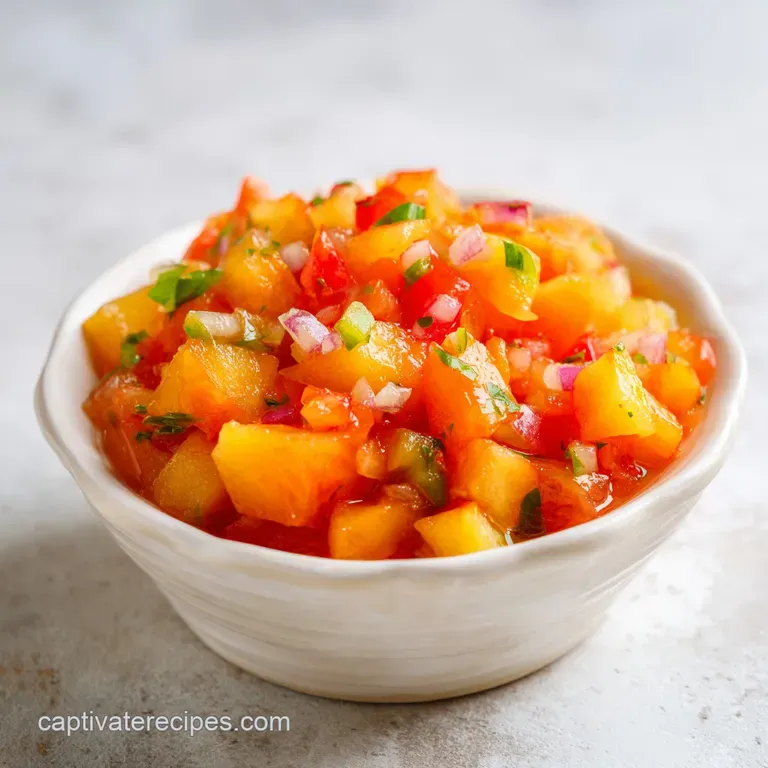
- Wash and prep your fruit. Rinse the 3 large fresh peaches and 2 Roma tomatoes under cold water. Note: Drying them thoroughly prevents excess moisture in the bowl.
- Dice the peaches. Cut around the pit of the peaches and dice into 1/4 inch pieces until you have a pile of uniform cubes.
- Core the tomatoes. Slice the tomatoes in half and scoop out the watery seeds. Note: This step is crucial for keeping the salsa crisp and dip able.
- Mince the onion. Chop the 1/2 medium red onion into very small pieces until they are roughly half the size of the peach cubes.
- Handle the peppers. Slice the 2 fresh jalapeños lengthwise and scrape out the seeds with a spoon. Note: Wear gloves or wash your hands immediately after to avoid "jalapeño hands."
- Chop the cilantro. Gather the 1/2 cup fresh cilantro into a tight ball and slice through it cleanly until it looks like bright green confetti.
- Squeeze the lime. Juice the lime directly over the onion and peaches until the fruit is glistening and coated.
- Season and toss. Sprinkle the 1/2 teaspoon flaky sea salt over the mixture.
- Rest the salsa. Let the bowl sit at room temperature for 10 minutes until the salt has drawn out a light, flavorful syrup.
Solving Common Texture Issues
Why Your Peach Salsa is Watery
If you find a puddle at the bottom of your bowl, it usually comes down to the tomatoes. Roma tomatoes are the best choice for a budget friendly salsa because they are "meaty," but if you didn't scoop out the jelly like seeds, that liquid will eventually separate.
Another culprit is adding the salt too early if you aren't serving it right away; salt is an excavator of moisture.
The flavor feels flat
Sometimes a batch of peaches just isn't as sweet as you hoped. If the salsa tastes a bit "green" or dull, it’s likely lacking a balance of acid and sugar. A tiny pinch of granulated sugar or a drop of honey can act as a bridge, bringing the peach flavor back to the forefront without making the whole thing taste like a dessert.
| Problem | Root Cause | Solution |
|---|---|---|
| Onions are overpowering | Pieces are too large | Mince finer or use the ice water soak method mentioned above. |
| Salsa is too spicy | Jalapeño veins remained | Add more diced tomato or a bit of extra lime juice to cut the heat. |
| Peaches are turning brown | Lack of acid | Ensure the lime juice is tossed thoroughly to coat every peach surface. |
Common Mistakes Checklist
- ✓ Using canned peaches (they lack the necessary structural integrity for salsa).
- ✓ Skipping the tomato seeding step (leads to a soup like consistency).
- ✓ Over chopping the cilantro until it turns into a dark green paste.
- ✓ Forgetting to let the salsa rest for at least 10 minutes before serving.
- ✓ Using table salt instead of flaky salt (table salt can taste "metallic" in fresh fruit).
Clever Ingredient Swaps and Twists
The Tropical Peach Mango Salsa
If you have a stray mango in the kitchen, swap out one of the peaches for half a mango. The textures are incredibly similar, but the mango adds a creamy, tropical finish that pairs beautifully with the lime. This is a great way to use up fruit that might be slightly more ripe than the peaches. Just like my Mango Cake Recipe, the key is handling the fruit gently to keep those cubes distinct.
The Smoky Char Twist
While this is a raw recipe, you can completely change the profile by charring the ingredients. This is where we look at the stovetop vs. oven debate. If you want a deeper, more savory salsa, try one of these methods:
| Method | Time | Texture | Best For |
|---|---|---|---|
| Stovetop (Grill Pan) | 6 minutes | Defined char lines, firm interior | Tacos and heavy meats |
| Oven (Broiler) | 4 minutes | Softened skins, smoky aroma | Dipping with thick chips |
Bell Pepper Swap
If you are cooking for kids or someone who truly despises heat, swap the 2 fresh jalapeños for 1/2 a finely diced red bell pepper. You still get the crunch and the beautiful color, but with zero Scoville units. It keeps the "salsa" vibe alive without the burning sensation.
Freshness Maintenance and Storage
Storage Guidelines
Fresh salsa is best eaten the day it’s made, but it will keep in an airtight container in the fridge for up to 2 days. Be aware that the longer it sits, the more juice will be released. By day two, I usually use a slotted spoon to serve it so I'm not bringing all that extra liquid to the plate.
Freezing is a no go here. The cell walls of the peaches and tomatoes will burst when frozen, leaving you with a watery mush once thawed. It’s strictly a fresh affair.
Zero Waste Tips
Don't throw away the peach pits! You can put them in a jar with some white balsamic vinegar for a week to create a peach infused vinegar that’s killer on summer salads. Also, the leftover liquid at the bottom of the salsa bowl is basically "liquid gold." I love whisking it with a little olive oil to make a quick vinaigrette for a simple spinach salad the next day.
Best Pairings for Your Salsa
This salsa is surprisingly versatile. While chips are the obvious choice, it acts as a phenomenal "relish" for heavier dishes. The acidity helps cut through the richness of melted cheese or fatty proteins.
Peach Salsa with Grilled Chicken
This is my absolute favorite way to serve this. The warm, charred chicken breast against the ice cold, zingy salsa is a textural dream. It transforms a boring chicken dinner into something that feels like a vacation meal. It also works beautifully alongside a Broccoli Casserole recipe if you want a fresh side to balance out a creamy, baked main dish.
The Sweet and Salty Dip
If you're hosting a party on a budget, buy a block of the cheapest cream cheese you can find. Spread it onto a plate and pour the peach salsa right over the top. The contrast between the cold, creamy fat and the sharp, fruity salsa is addictive, and it makes the salsa go twice as far for a crowd.
Scaling the Recipe
- To double (12 servings): Use 6 peaches and 4 tomatoes. Only use 1.5x the salt initially, as you can always add more, but fruit can easily become over salted.
- To halve (3 servings): Use 1.5 peaches and 1 tomato. Use 1 whole jalapeño because the heat doesn't scale down as linearly as the bulk ingredients.
- Peach Peeling Myths: Many people think you have to blanch and peel peaches for salsa. You absolutely do not. The skins provide color, texture, and help the cubes hold their shape against the lime juice. Plus, it saves you 10 minutes of work.
- The Pit Myth: Some say leaving the peach pit in the bowl prevents browning. This is a kitchen legend that doesn't hold up to science. It’s the vitamin C in the lime juice that actually does the work of preventing oxidation.
- Sugar Content: You might think fruit salsa is too sugary for dinner. In reality, the 7.0 g of sugar per serving is balanced by the fiber in the skins and the capsaicin in the peppers, making it a much lower glycemic option than bottled barbecue sauces or sweet glazes.
Recipe FAQs
What is in peach salsa?
Peaches, tomatoes, red onion, jalapeño, cilantro, lime juice, and salt. This combination balances the sweetness of the fruit against the sharp onion and bright citrus acid.
What do you eat with peach salsa?
Grilled chicken, fish tacos, or plain tortilla chips. The bright acidity cuts beautifully through rich or charred proteins, making it an excellent savory topping.
What flavor mixes well with peach?
Lime, jalapeño, and cilantro pair exceptionally well. The lime provides necessary acid to balance the sugar, while cilantro bridges the gap between the fruit and the savory vegetables.
What is the secret to great salsa?
Letting it rest for 10 minutes after salting. This process, called maceration, draws out natural juices, creating a light syrup that perfectly marries all the diced ingredients together.
How do I keep my peach salsa from being watery?
Descriptively scoop out the jelly like seeds from the Roma tomatoes. The seeds hold the most moisture, and removing them prevents the salsa from becoming soupy.
Is it true you should always peel peaches for salsa?
No, this is a common misconception. Leaving the skin on provides necessary structure so the cubes hold their shape against the lime juice and salt.
How do I prevent the red onion from overpowering the peaches?
Soak the minced red onion in ice water for five minutes before mixing. This technique removes the sharp sulfur bite, leaving only a clean, crisp crunch behind.
Easy Peach Salsa Recipe
Ingredients:
Instructions:
Nutrition Facts:
| Calories | 42 kcal |
|---|---|
| Protein | 1.2 g |
| Fat | 0.3 g |
| Carbs | 10.1 g |
| Fiber | 1.8 g |
| Sugar | 7.0 g |
| Sodium | 195 mg |
