Cinnamon Knots with Coffee Icing
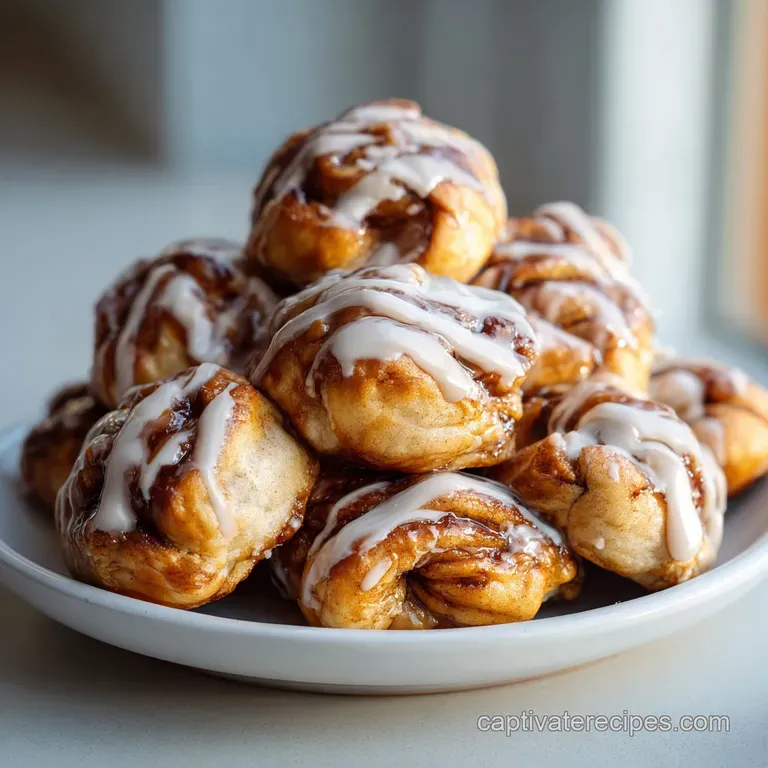
- Time: Active 35 mins, Passive 1 hour 40 mins, Total 2 hours 15 mins
- Flavor/Texture Hook: Fluffy, cloud like dough with a bold, roasted espresso finish
- Perfect for: Slow Sunday mornings or a joyful brunch showstopper
- Creating Artisanal Cinnamon Knots at Home
- Vital Recipe Specifications
- Analyzing the Primary Ingredients
- Gathering the Essential Baking Tools
- Mastering the Knotting Process
- Professional Solutions for Baking Problems
- Inspired Variations and Substitutions
- Preserving Your Baked Creations
- Delightful Pairings for Your Treat
- Recipe FAQs
- 📝 Recipe Card
Creating Artisanal Cinnamon Knots at Home
There is a specific kind of joy that fills a kitchen when the scent of warming cinnamon meets a brewing pot of coffee. I remember the first time I attempted these. I was so worried about the "knot" looking like a professional pastry chef had made it, but I quickly realized that the little imperfections are where the glaze pools and creates the best bites.
When you pull these out of the oven, the house smells like the best bakery in town, and that first bite of warm, yeasty dough is pure bliss.
We're moving beyond the standard roll here. This recipe is about texture and that artisanal feel without the stress. We are going to use a rich, enriched dough that feels like a pillow and a coffee infused icing that adds a sophisticated edge to the sweetness.
It's a fun project that yields a truly beautiful result, and I promise you, once you see those golden twists, you’ll be hooked.
You don't need a professional kitchen to pull this off. We’ll walk through the tucking and twisting together, focusing on that sensory experience of working with live dough. Get your espresso ready, clear a bit of counter space, and let’s create something that looks as incredible as it tastes.
Trust me, the aroma alone is worth the effort.
Vital Recipe Specifications
- Enriched Hydration: Using whole milk at exactly 110°F ensures the yeast wakes up without being scalded.
- Tension Twisting: Stretching the dough during the knotting phase creates more surface area for the cinnamon sugar to cling to.
- Contrast Glazing: The bitterness of strong espresso in the icing cuts through the heavy fat content of the butter for a balanced finish.
| Method | Total Time | Texture | Best For |
|---|---|---|---|
| Artisanal Yeast | 2 hours 15 mins | Velvety and airy | The full bakery experience |
| Quick Biscuit | 45 mins | Flaky and dense | Busy weekday cravings |
| Overnight Proof | 10 hours | Complex and tangy | Stress free morning hosting |
These Cinnamon Knots rely on a slow rise to build flavor, much like the process for a great Cinnamon Sugar Scones recipe. The extra time allows the gluten to relax, making the shaping process much easier for you.
Analyzing the Primary Ingredients
| Component | Science Role | Pro Secret |
|---|---|---|
| Active Dry Yeast | Fermentation gas | Bloom it in 110°F milk with sugar to verify its vitality. |
| Whole Milk | Protein/Fat structure | Use room temp or warmer to keep the dough soft and supple. |
| Espresso | Acidic balance | Use high-quality dark roast to provide a bold aromatic punch. |
| Brown Sugar | Hygroscopic moisture | Pack it tightly to ensure a syrupy, caramelized interior. |
Selecting the right flour is the foundation of any good bake. While all purpose flour works beautifully here for a tender bite, you want to ensure your butter is high-quality and unsalted so you can control the seasoning exactly.
Gathering the Essential Baking Tools
For the Enriched Dough
- 1 cup whole milk: Warmed to exactly 110°F (43°C). Why this? Proper temperature ensures the yeast activates without dying. (Substitute: 2% milk)
- 1 packet (2.25 tsp) active dry yeast: The leavening agent. Why this? Provides that signature airy, yeasty lift. (Substitute: Instant yeast)
- 0.25 cup granulated sugar: Feeds the yeast. Why this? Adds just enough sweetness to the base dough. (Substitute: Honey)
- 4 tbsp unsalted butter: Melted and cooled. Why this? Adds richness and a tender crumb. (Substitute: Vegan butter block)
- 1 large egg: Room temperature. Why this? Emulsifies the dough for a uniform texture. (Substitute: Flax egg)
- 3.5 cups all purpose flour: The structural base. Why this? Provides a soft but sturdy framework. (Substitute: Bread flour)
- 1 tsp kosher salt: Flavor enhancer. Why this? Prevents the dough from tasting flat. (Substitute: Fine sea salt)
For the Cinnamon Filling
- 6 tbsp unsalted butter: Softened. Why this? Acts as the glue for the spice mix. (Substitute: Coconut oil)
- 0.5 cup light brown sugar: Packed. Why this? Creates a deep, molasses like sweetness. (Substitute: Dark brown sugar)
- 2 tbsp ground cinnamon: The star spice. Why this? Delivers that classic, warm aroma. (Substitute: Pumpkin pie spice)
For the Signature Coffee Icing
- 1.5 cups powdered sugar: The sweet base. Why this? Dissolves quickly for a smooth glaze. (Substitute: Sifted maple sugar)
- 3 tbsp strong brewed espresso: Cooled. Why this? Adds a sophisticated, roasted flavor profile. (Substitute: Instant coffee dissolved in water)
- 1 tsp vanilla extract: Depth of flavor. Why this? Rounds out the coffee notes. (Substitute: Almond extract)
- 1 pinch salt: Balances sugar. Why this? Brightens the overall flavor of the icing. (Substitute: Omit)
Mastering the Knotting Process
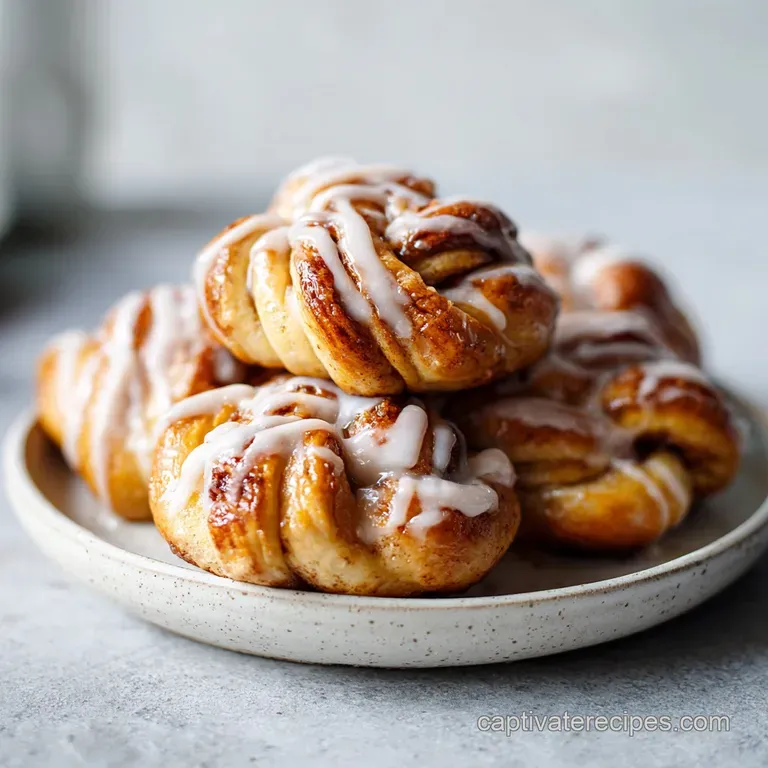
Step 1: Yeast Activation
Mix 1 cup warmed whole milk with 1 packet active dry yeast and 0.25 cup granulated sugar in a large bowl. Note: Wait 5-10 mins until the mixture is foamy and smells like bread.
Step 2: Incorporate Wet Ingredients
Whisk in 4 tbsp melted butter and 1 large egg. Note: Ensure the butter is cooled so it doesn't scramble the egg.
Step 3: Mix the Dough
Stir in 3.5 cups all purpose flour and 1 tsp kosher salt until a shaggy ball forms.
Step 4: First Rise
Knead the dough on a floured surface for 5 mins, then place in a greased bowl and cover. Note: Let it rest for 1 hour until it has doubled in size.
Step 5: Prepare Filling
Cream together 6 tbsp softened butter, 0.5 cup light brown sugar, and 2 tbsp cinnamon until it looks like a velvety paste.
Step 6: Shape and Fill
Roll the dough into a large rectangle and spread the filling evenly over the surface. Note: Leave a small border at the edges to prevent leaking.
Step 7: The Knotting Technique
Fold the dough in half, cut into 12 strips, twist each strip, and tie into a loose knot. Note: Don't pull too tight or the dough won't rise properly.
Step 8: Second Rise
Place knots on a parchment lined tray and cover for 30 mins until they look puffy and soft.
Step 9: The Golden Bake
Bake at 350°F (180°C) for 18 mins until the edges are golden and the kitchen smells like heaven.
Step 10: Drizzle and Finish
Whisk 1.5 cups powdered sugar, 3 tbsp espresso, 1 tsp vanilla, and a pinch of salt, then drizzle over warm knots. Note: The glaze will set into a beautiful, crackly shell.
Professional Solutions for Baking Problems
Achieving Fluffy Dough
If your dough feels like a brick, it usually comes down to the temperature of your liquids. If the milk is too cold, the yeast stays asleep; if it's too hot, you've accidentally killed it. Always use a thermometer if you're unsure.
Creating Beautiful Shapes
Knots can be intimidating, but the secret is not overthinking the "tie." If the dough is too warm, it becomes floppy and hard to handle. A quick 10 minute chill in the fridge before cutting the strips makes the process much more manageable.
| Problem | Root Cause | Solution |
|---|---|---|
| Dough won't rise | Dead yeast or cold room | Check expiration; move dough to a warmer spot like the oven (off) with a pan of hot water. |
| Knots are dry | Overbaking or too much flour | Pull from oven when just golden; measure flour by weight if possible. |
| Icing is too runny | Too much coffee | Add powdered sugar one tablespoon at a time until it coats the back of a spoon. |
Common Mistakes Checklist
- ✓ Avoid adding too much flour during kneading; the dough should be slightly tacky.
- ✓ Use room temperature eggs to ensure they incorporate smoothly into the fats.
- ✓ Don't skip the second rise; it's vital for that airy, artisanal texture.
- ✓ Sift your powdered sugar for the icing to avoid unappealing lumps.
- ✓ Let the knots cool for at least 5 mins before icing so it doesn't just melt off.
Inspired Variations and Substitutions
Adjusting this recipe for a smaller crowd is easy. If you only want 6 knots, simply halve all the ingredients. When halving the egg, whisk it in a small bowl first and use exactly 2 tablespoons of the mixture. For larger batches, the recipe scales linearly, but keep an eye on your oven space.
You don't want to overcrowd the pans, or the knots will steam instead of baking to a golden brown.
Chef Tip: Freeze your butter for 10 minutes before creaming it with the cinnamon sugar. It helps the filling stay inside the knot rather than melting out onto the baking sheet instantly.
For a different flavor profile, you could swap the coffee icing for a simple vanilla bean glaze, or even try the technique used in a Chocolate Crinkle Cookies recipe by adding a bit of cocoa powder to the dough itself for a mocha version.
| Goal | Adjustment | Outcome |
|---|---|---|
| Extra Crunch | Add 1/4 cup chopped pecans | Adds a nutty, toasted texture to the filling. |
| dairy-free | Use oat milk and vegan butter | Similar texture, though the dough may brown slightly less. |
| Mocha Twist | Add 1 tbsp cocoa to filling | Deepens the flavor and creates a dark, rich interior. |
Preserving Your Baked Creations
The Maillard reaction creates that beautiful crust, but it doesn't stop moisture loss once they're out of the oven. Some people think you should leave them on the counter uncovered to stay "crispy," but that actually leads to stale dough within hours.
- - Room Temperature
- Store in an airtight container for up to 2 days.
- - Fridge
- Not recommended, as the cold air can dry out the starch molecules.
- - Freezer
- These freeze beautifully! Wrap individual un iced knots in plastic wrap and freeze for up to 2 months.
- - Reheating
- Give them 10 seconds in the microwave or 5 minutes in a 300°F (150°C) oven to restore that "just baked" softness.
Zero Waste Tips: If you end up with stale knots, don't toss them! Chop them up and use them as a base for an incredible bread pudding. The cinnamon and coffee flavors are already built in, making for a sophisticated dessert.
You can also dry out the scraps and blitz them into sweet breadcrumbs for topping fruit crumbles.
Delightful Pairings for Your Treat
These Cinnamon Knots are a showstopper on their own, but they play so well with others. Since we have that bold espresso icing, a side of fresh berries or a tart fruit compote provides a necessary acidic lift to the palate. It cleanses the tongue between those rich, buttery bites.
If you're serving these as part of a larger spread, they pair naturally with savory items like a sharp cheddar omelet or crispy bacon. The saltiness of the protein highlights the warm spices in the dough.
For a truly indulgent experience, serve them alongside a cold glass of milk or a creamy latte to echo the dairy notes in the enriched dough. Making these is all about the joy of the process, so take your time and enjoy the artisanal results.
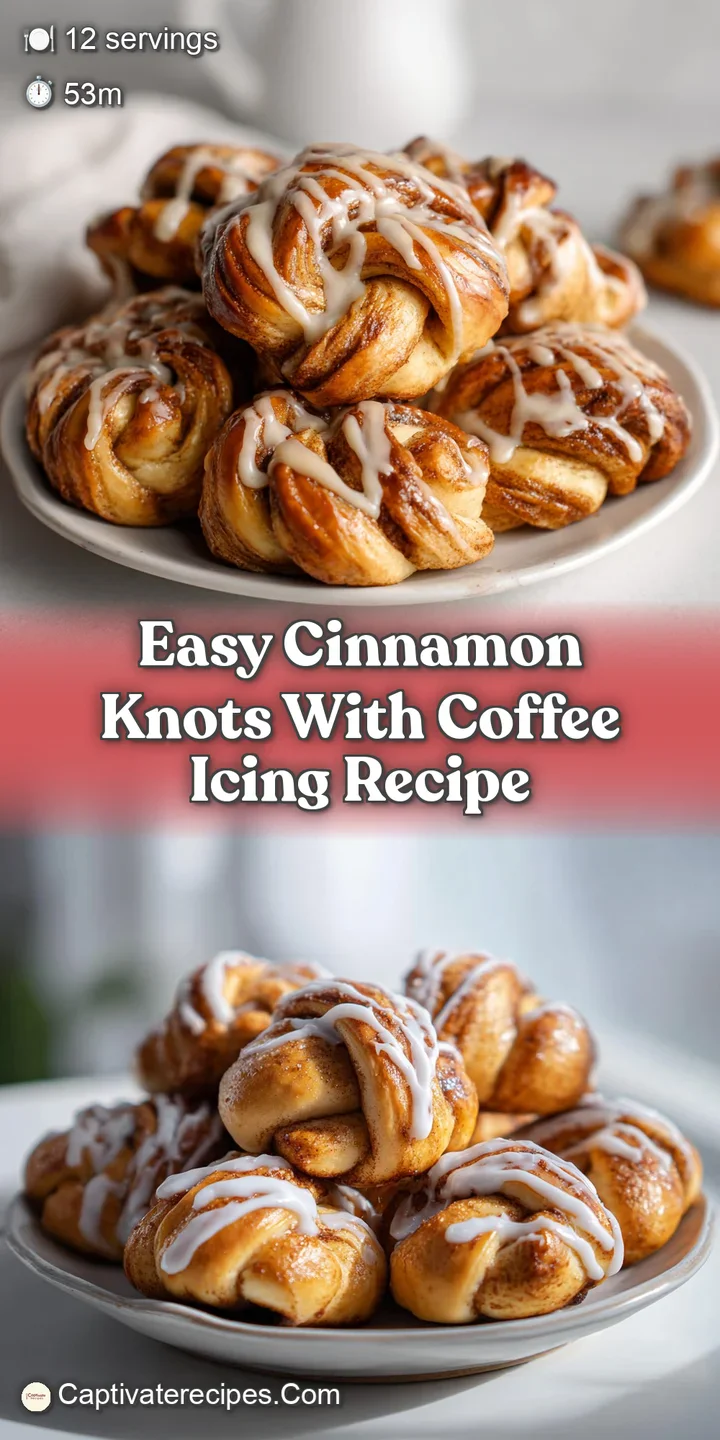
Recipe FAQs
Can I skip the second proofing step to save time?
No, you absolutely should not skip the second rise. That final 30-minute rest allows the dough to relax after shaping, which results in the signature fluffy, airy texture we want; skipping it yields dense, tight knots.
What is the best way to ensure the coffee icing doesn't taste bitter?
Use cooled, strong brewed espresso, but only 3 tablespoons. The bitterness is intentional to cut the richness, but if it tastes too harsh, increase the powdered sugar slightly; this technique is similar to balancing acidity in our Almond Layer Cake recipe.
How do I prevent the cinnamon filling from oozing out during the bake?
Make sure your butter for the filling is softened, not melted, and apply it evenly. You must also leave a small border about half an inch clean around the edges of the dough before rolling to create a proper seal.
Is it true that using bread flour instead of all-purpose will make the knots too tough?
False. Using bread flour will result in a chewier, slightly more substantial knot. While all-purpose is traditional for tenderness, bread flour provides a higher protein content, which is excellent for capturing the gas produced during fermentation; if you enjoy that robust chew, give it a try.
How should I handle the dough if it tears slightly when I twist the knots?
Pinch the tear closed gently with your fingertips before tying the knot. Small tears are fine because the dough expands significantly during the final proof and bake; mastering this basic dough handling skill will also benefit you if you ever try making laminated doughs, similar to what is needed for our Caramel Crunch Cake recipe.
What temperature must the milk be for activating the yeast properly?
The milk must be between 105°F and 115°F, ideally aiming for 110°F. If the temperature is too low, the yeast will be slow and sluggish, leading to a weak rise; if it is too hot (over 130°F), you will kill the yeast completely.
Can I make these ahead of time and bake them in the morning?
Yes, shape the knots, place them on the tray, cover them, and refrigerate overnight. This overnight proof deepens the flavor profile; just allow them to sit at room temperature for 30 minutes before baking as directed.
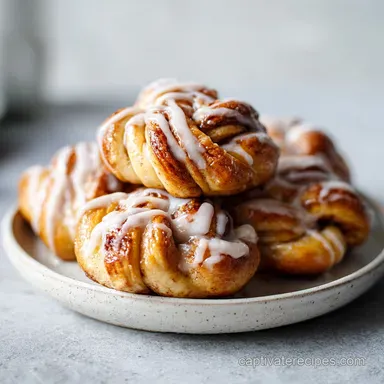
Fluffy Cinnamon Knots With Coffee Icing
Ingredients:
Instructions:
Nutrition Facts:
| Calories | 348 kcal |
|---|---|
| Protein | 4.9 g |
| Fat | 13.2 g |
| Carbs | 53.5 g |
| Fiber | 1.6 g |
| Sugar | 29.8 g |
| Sodium | 215 mg |
