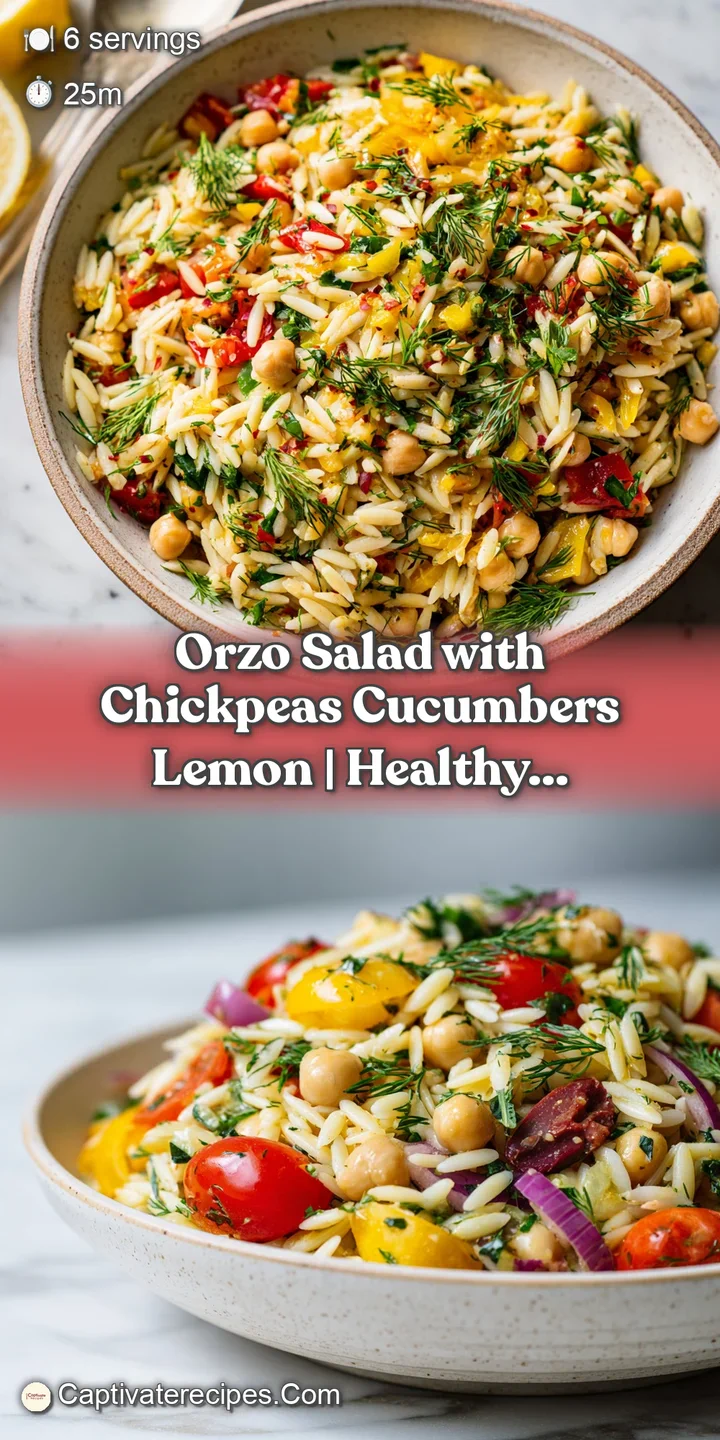
Orzo Salad with Chickpeas Cucumbers Lemon
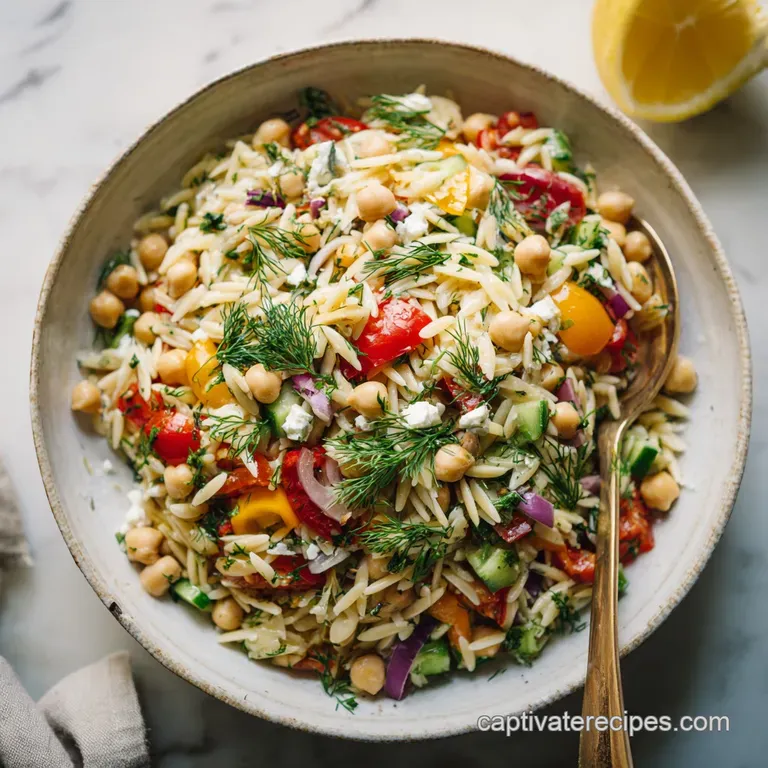
- Time: Active 15 minutes, Passive 10 minutes, Total 25 minutes
- Flavor/Texture Hook: Zesty, herbaceous, and incredibly snappy
- Perfect for: High protein meal prep or a crowd-pleasing summer potluck
- Mastering the Orzo Salad with Chickpeas Cucumbers Lemon
- The Secret to Vibrant Mediterranean Flavors
- Recipe Specs for Success
- Essential Ingredients for Bold Flavor
- Simple Tools for a Flawless Salad
- Step by Step to a Bold Mediterranean Feast
- Avoiding Common Pasta Salad Pitfalls
- Creative Variations for Every Table
- Storage Guidelines and Reducing Waste
- Debunking Kitchen Myths
- What to Pair with Your Fresh Orzo Bowl
- Recipe FAQs
- 📝 Recipe Card
Mastering the Orzo Salad with Chickpeas Cucumbers Lemon
Have you ever wondered why some pasta salads feel like a heavy, gluey chore to eat while others taste like a sun drenched afternoon in a Mediterranean garden? For the longest time, I struggled with orzo.
I’d cook it, toss it with some bottled dressing, and by the time lunch rolled around, I was left with a clump of flavorless starch that had sucked up every drop of moisture. It was boring, bland, and frankly, a waste of good feta.
This article features a single, star recipe for Orzo Salad with Chickpeas, Cucumbers, Lemon, Dill, and Feta. The secret isn't just in the ingredients; it's in how we handle the temperature and the timing.
We want a salad where the cucumbers stay crisp enough to shatter between your teeth and the herbs smell so fresh they practically sing. After many trials in my own kitchen, I found that the contrast between the warm, freshly rinsed pasta and the cold, marinated chickpeas is what creates that vibrant, bold profile we’re after.
What we’re making today is a masterclass in texture and brightness. We’re ditching the heavy mayo based dressings for a sharp, lemon forward vinaigrette that cuts through the richness of the olives and cheese.
You’ll get that punchy hit of garlic, the grassy aroma of fresh dill, and the satisfying bite of perfectly cooked pasta. It’s a meal that stands on its own but plays well with others, and I can’t wait for you to see how simple it is to get it right.
The Chill Factor: Why Rinsing Works
Starch Removal: Rinsing the orzo under cold water immediately after boiling stops the cooking process and strips away surface starch. This ensures the individual grains stay separate and slippery rather than clumping into a sticky mass.
The Flavor Infusion: Why Marinating Matters
Osmotic Pressure: When you toss the chickpeas in a portion of the dressing while they are still at room temperature, the salt and acid penetrate the skin. This prevents the "bland center" problem where the outside of the legume is seasoned but the inside tastes like nothing.
The Texture Shield: Why Cukes Go In Last
Water Retention: English cucumbers have a high water content and thin skin. By adding them to the cooled pasta rather than warm grains, we prevent them from weeping excess water, which would otherwise dilute our bold vinaigrette.
The Acid Balance: Why Vinegar Meets Lemon
Layered Acidity: Using both lemon juice and red wine vinegar provides a wider spectrum of brightness. The lemon offers a fresh, citrusy top note, while the vinegar provides a sharp, fermented backbone that lingers on the palate.
| Method | Total Time | Texture Result | Best For |
|---|---|---|---|
| Stovetop (Standard) | 25 minutes | Individual, slippery grains | Classic texture and maximum freshness |
| Oven (Baked Pasta) | 45 minutes | Softer, more cohesive | Comfort food vibes; less "salad" like |
| Instant Pot | 15 minutes | Plump and very soft | Quick weeknight fuel when you're in a rush |
Choosing the right method depends entirely on your texture preference, but for this specific Orzo Salad with Chickpeas Cucumbers Lemon, the stovetop method is the undisputed king. It allows you to control the exact "al dente" point of the pasta, ensuring it doesn't turn into mush when it hits the dressing.
The Secret to Vibrant Mediterranean Flavors
When you think about a bold salad, it’s all about the contrast. You need the "snap" from the cucumber to fight against the "cream" of the feta. If everything is the same texture, your brain gets bored after three bites.
That’s why we use English cucumbers specifically their seeds are almost non existent, and the skin is tender enough that you don't have to peel it. Every forkful becomes a little discovery of different shapes and feels.
I remember making this for a neighborhood block party last July. Everyone else brought the standard heavy potato salads or coleslaw that looked a bit sad after thirty minutes in the sun. This Orzo Salad with Chickpeas Cucumbers Lemon was the first bowl to be scraped clean.
People were asking what kind of "exotic" vinegar I used, and they were shocked when I told them it was just the combination of fresh lemon and a tiny bit of honey to round out the edges. It’s a dish that looks expensive and tastes complex, but it’s really just about respecting the individual components.
Component Deep Dive
| Ingredient | Science Role | Pro Secret |
|---|---|---|
| Extra Virgin Olive Oil | Fat carrier for aromatics | Use a "peppery" cold pressed oil for a bold finish |
| Fresh Lemon Juice | Protein denaturant/Brightener | Always zest the lemon before juicing for double the aroma |
| English Cucumber | Structural crunch | Slice them into "half moons" to match the scale of the orzo |
| Feta Cheese | Saline and fat balance | Buy the block in brine and crumble it yourself for better moisture |
The role of the fat here isn't just to make things oily; it’s to coat the herbs and garlic so their flavors stay suspended on your tongue. If you used a low-fat dressing, the flavors would wash away too quickly. We want that silky mouthfeel that makes the whole dish feel luxurious without being heavy.
Recipe Specs for Success
| Serving Size | Orzo Quantity | Chickpea Amount | Liquid Ratio |
|---|---|---|---|
| 2 People | 0.5 cups dried | 5 oz (1/3 can) | 2 tbsp oil / 1 tbsp lemon |
| 4 People | 1.0 cup dried | 10 oz (2/3 can) | 4 tbsp oil / 2 tbsp lemon |
| 6 People | 1.5 cups dried | 15 oz (1 can) | 1/3 cup oil / 3 tbsp lemon |
When you're scaling this recipe, keep in mind that the orzo expands significantly. One and a half cups of dried pasta might look small in the pot, but once it’s hydrated and fluffed up, it’s a substantial amount of food.
If you're prepping this for a large crowd, don't just double the salt taste as you go. Salt interacts differently with the feta as it sits, and you don't want to end up with a salt bomb.
One of the beautiful things about this specific Orzo Salad with Chickpeas Cucumbers Lemon is how forgiving the timing is. As long as you don't overcook the pasta, you can take your time with the chopping. In fact, if you’re looking for a different vibe, you might enjoy my Mediterranean Chickpea Salad bowl which skips the pasta entirely for a lighter, grain free option. But for today, we are leaning into the satisfying "chew" that only orzo can provide.
Essential Ingredients for Bold Flavor
- 1/3 cup extra virgin olive oil: This is the backbone of your dressing. Why this? Provides a silky mouthfeel and carries the herbaceous notes across the palate.
- 3 tbsp freshly squeezed lemon juice: Avoid the bottled stuff at all costs. Why this? Fresh juice contains volatile oils that provide a much brighter, floral citrus punch.
- 1 tbsp red wine vinegar: Adds a different dimension of tartness.
- 1 clove garlic, microplaned: This ensures the garlic is a fine paste. Why this? Microplaning prevents biting into a raw chunk of garlic while distributing flavor evenly.
- 1 tsp honey or agave nectar: Just enough to balance the acid.
- 1/2 tsp sea salt: Essential for drawing out vegetable juices.
- 1/2 tsp cracked black pepper: Provides a subtle, earthy heat.
- 1.5 cups dried orzo pasta: The perfect "rice shaped" canvas.
- 15 oz canned chickpeas, drained and rinsed: Our main protein source.
- 1 large English cucumber, halved and sliced: For that essential, snappy crunch.
- 1 pint cherry tomatoes, halved: These provide "pops" of sweetness.
- 1/2 cup red onion, finely diced: Adds a sharp, pungent bite.
- 1/2 cup Kalamata olives, pitted and halved: These bring the funky, fermented brine.
- 1/2 cup Feta cheese, crumbled: Salty, creamy, and undeniably Mediterranean.
- 1/2 cup fresh dill, chopped: The star aromatic that defines this dish.
- 1/4 cup fresh flat leaf parsley, chopped: Adds a clean, peppery finish.
| Original Ingredient | Substitute | Why It Works |
|---|---|---|
| Orzo Pasta | Israeli Couscous | Similar size and "chew," though slightly more pearl like. |
| Feta Cheese | Goat Cheese | Offers a similar tang but with a much creamier, spreadable texture. |
| Red Onion | Shallots | Provides a more delicate, sweeter onion flavor without the "bite." |
If you find yourself out of dill, don't panic. While dill gives this specific Orzo Salad with Chickpeas Cucumbers Lemon its signature "Balkan" or "Greek" flair, you can lean into fresh mint or basil for a more Italian inspired profile.
Just remember that soft herbs are delicate; they should always be the last thing to hit the bowl.
Simple Tools for a Flawless Salad
You don't need a kitchen full of gadgets to pull this off, but a few specific items make the process much smoother. First and foremost, a microplane is your best friend here. It turns that single garlic clove into a fine mist that melts into the oil.
If you just mince it with a knife, the flavor remains localized, and someone is going to get a very "spicy" surprise in their salad.
A large fine mesh strainer is also non negotiable. Orzo is small, and if you use a standard colander with big holes, half of your lunch is going to end up in the sink. I’ve made that mistake more times than I care to admit. Also, use a mason jar to mix your dressing.
Shaking is far more effective at emulsifying the oil and lemon juice than whisking in a bowl. Plus, you can store any extra in the fridge without dirtying another dish.
Chef's Note: If you want the most vibrant color, use a sharp chef's knife to slice your herbs in a single pass. "Sawing" back and forth bruises the leaves, turning your beautiful green dill into a dark, muddy mess.
step-by-step to a Bold Mediterranean Feast
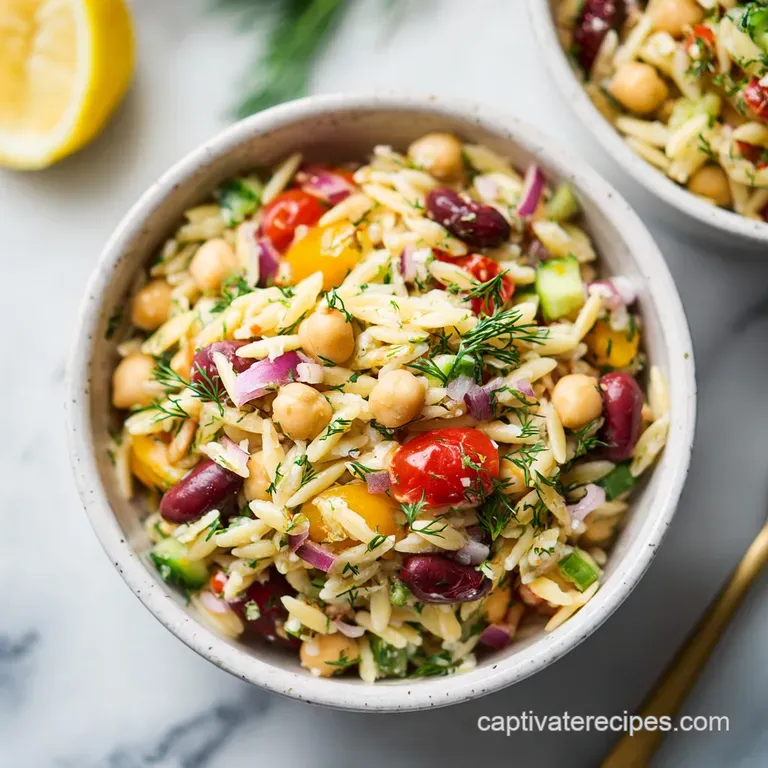
Phase 1: The Flavor Foundation
- Boil the water. Fill a large pot with water and add a generous tablespoon of salt. Note: The water should taste like the sea to season the pasta from the inside out.
- Cook the orzo. Add 1.5 cups dried orzo to the boiling water. Cook for 8-10 minutes until al dente.
- Mix the vinaigrette. While the pasta boils, combine 1/3 cup olive oil, 3 tbsp lemon juice, 1 tbsp red wine vinegar, microplaned garlic, 1 tsp honey, 1/2 tsp salt, 1/2 tsp pepper, and half of the chopped dill in a jar. Shake vigorously until the dressing looks cloudy and thick.
- Marinate the chickpeas. Place the 15 oz of drained chickpeas in a large bowl and toss with 2 tablespoons of that fresh dressing. Let them sit for at least 10 minutes to soak up the aromatics.
Phase 2: The Assembly
- Rinse the pasta. Drain the orzo and immediately blast it with cold running water. This stops the cooking and removes the sticky starch.
- Prep the produce. While the orzo drains, halve the pint of cherry tomatoes and slice the large English cucumber into thin half moons. Finely dice the 1/2 cup of red onion.
- Combine the base. Add the cold orzo, cucumber, tomatoes, onion, and 1/2 cup Kalamata olives to the bowl with the marinated chickpeas.
- The final toss. Pour the remaining dressing over the mixture and toss with a large spoon until every grain of orzo glistens.
- Fold in the delicate items. Gently stir in the 1/2 cup crumbled feta, the 1/4 cup parsley, and the remaining fresh dill.
- Rest and serve. Let the salad sit for 5 minutes before serving to allow the flavors to meld. The salad should look bright, wet, and colorful.
Avoiding Common Pasta Salad Pitfalls
Why Your Orzo Becomes Gummy
If your salad feels like a brick of pasta, you likely skipped the cold rinse. Unlike a warm pasta dish where you want the starch to help the sauce stick, a cold salad requires clean, separated grains. If the orzo is even slightly warm when it hits the dressing, it will absorb the oil too quickly and become heavy.
Why the Flavor Seems to Vanish
Have you ever seasoned a salad, put it in the fridge, and found it tasteless an hour later? Cold temperatures dull our taste buds. You often need more salt and acid in a cold dish than you would in a hot one. Always give the salad a "final taste" right before serving and add an extra squeeze of lemon if it feels flat.
| Problem | Root Cause | Solution |
|---|---|---|
| Watery bowl bottom | Cucumbers or tomatoes released juice | Salt the veggies separately and drain before adding, or add them right before serving. |
| Soggy Orzo | Overcooked pasta | Boil for exactly 8 minutes; it should have a firm "bite" in the center. |
| Bitter Aftertaste | Burnt garlic or old oil | Use a microplane for garlic and ensure your olive oil hasn't gone rancid. |
Common Mistakes Checklist
- ✓ Don't skip the honey; it’s not there to make it sweet, but to balance the aggressive acidity of the lemon.
- ✓ Use English or Persian cucumbers; the thick skin of standard garden cucumbers is too "waxy" for this delicate salad.
- ✓ Always rinse the orzo until it is completely cold to the touch.
- ✓ Fresh herbs only dried dill tastes like dust and won't provide the same vibrant aroma.
- ✓ Marinate those chickpeas! It’s the difference between a "good" salad and a "professional" one.
Creative Variations for Every Table
For a Vegan Friendly Feast
Replacing the feta is easy. You can use a store-bought vegan feta (often made from coconut oil) or, my personal favorite, chopped smoked almonds. The almonds provide the salt and fat that the feta usually offers, along with a satisfying "shatter" that adds a whole new texture.
If you want a more "cheesy" funk, a tablespoon of nutritional yeast in the dressing works wonders.
For the Herb Hater (The Chive Swap)
Some people have a genetic aversion to dill or parsley. If that’s the case, swap the dill for fresh chives and the parsley for basil. This shifts the flavor profile toward a "Caprese" style orzo salad while keeping the core structure intact.
You could even add a drizzle of balsamic glaze at the end for extra punch.
For the Protein Seeker
While chickpeas provide 11.6g of protein per serving, you can turn this into a massive main course by adding shredded rotisserie chicken or grilled shrimp. The lemon dill profile is a natural partner for seafood. If you want to stay plant based, try adding some hemp hearts or toasted pine nuts for extra amino acids and a nutty finish. For another protein packed option, my Chickpea Avocado Feta Salad is a fantastic alternative that uses healthy fats to keep you full.
Storage Guidelines and Reducing Waste
This Orzo Salad with Chickpeas Cucumbers Lemon is a meal prep dream. Because there are no leafy greens like spinach or lettuce to wilt, it actually holds up remarkably well in the fridge.
In fact, many people (myself included) think it tastes better on day two once the garlic and dill have had a chance to really permeate the pasta.
- Fridge: Store in an airtight container for up to 4 days.
- Freezer: I do not recommend freezing this salad. The cucumbers and tomatoes will become mushy and unappealing upon thawing.
- Zero Waste Tip: Don't throw away the stems of your dill and parsley! Finely mince them and add them to the dressing. They contain just as much flavor as the leaves but with a bit more "crunch." Also, if you have leftover feta brine, use it to marinate chicken or splash a teaspoon into your next batch of hummus for an extra salty kick.
Debunking Kitchen Myths
Myth: You should never rinse pasta. In the world of Italian cooking, rinsing is usually a sin because you lose the starch that binds the sauce. However, for cold pasta salads, this is the one time you must rinse.
We aren't trying to bind a sauce; we are trying to create a light, grain like texture. Rinsing is the only way to achieve that "slippery" mouthfeel that makes orzo so enjoyable.
Myth: Canned chickpeas are inferior to dried. While dried beans have a slightly better texture for stews, canned chickpeas are actually preferred by many chefs for salads. They are consistent, perfectly tender, and the "aquafaba" (the liquid in the can) can be saved for other recipes.
Just make sure you rinse them thoroughly to remove the metallic canning liquid taste.
Myth: Lemon zest and lemon juice are the same. The juice provides the "sour" (the acid), while the zest provides the "lemon flavor" (the essential oils). If you only use juice, you get the tartness but miss out on that bright, floral aroma that makes your kitchen smell like a citrus grove.
Always use both for a truly vibrant result.
What to Pair with Your Fresh Orzo Bowl
This salad is quite substantial on its own, but it also makes the ultimate side dish. It’s naturally light and refreshing, making it the perfect foil for heavier grilled meats. Think of it as a more sophisticated version of a pasta salad that doesn't leave you feeling like you need a nap afterward.
I love serving this alongside a simple piece of grilled salmon or lemon herb chicken skewers. The dill in the salad echoes the flavors in the meat, creating a cohesive meal. If you're hosting a vegetarian dinner, pair it with some grilled halloumi or a big plate of roasted vegetables.
The acidity in the Orzo Salad with Chickpeas Cucumbers Lemon cuts through the char of the vegetables beautifully.
If you’re looking for a full Mediterranean spread, try serving this with some warm pita bread and a bowl of tzatziki. The creaminess of the yogurt dip against the sharp, zesty orzo is a match made in heaven.
It’s a versatile dish that can go from a simple Tuesday lunch to the centerpiece of a weekend BBQ without breaking a sweat. Just remember: keep it cold, keep it fresh, and don't be afraid to be bold with those herbs!
Recipe FAQs
How to prevent the orzo from clumping together?
Drain the pasta and immediately rinse it under cold running water. This step removes the excess surface starch that causes the grains to stick together, ensuring a perfect texture for your salad.
Is it necessary to marinate the chickpeas?
Yes, marinating is essential for professional results. Tossing the chickpeas with a portion of the vinaigrette while you prep the vegetables allows the flavors to penetrate the legumes, creating a much deeper flavor profile than just dressing the salad at the end.
How to keep the salad from becoming watery in the fridge?
Use only English or Persian cucumbers for the best results. These varieties have thinner, non-waxy skin and fewer seeds compared to standard garden cucumbers, which helps keep the salad crisp without excess liquid buildup over the four day storage period.
Can I use dried herbs instead of fresh?
No, avoid dried herbs entirely for this recipe. Fresh dill and parsley are crucial for the vibrant aroma that defines this dish; dried dill lacks the necessary brightness and can taste like dust in a fresh, cold salad.
Why is honey included in the vinaigrette?
The honey balances the aggressive acidity of the lemon juice and red wine vinegar. If you enjoyed mastering this flavor balancing technique, see how we apply the same principle to achieve the perfect tangy profile in our Chinese Lemon Chicken.
Is it true I should freeze the leftovers for later?
No, this is a common misconception. Freezing causes the high water-content vegetables like cherry tomatoes and cucumbers to break down, resulting in a mushy, unappealing texture upon thawing.
How to ensure the orzo reaches the perfect texture?
Cook the orzo in salted boiling water until al dente, usually taking 8 to 10 minutes. Testing a single piece of pasta for a slight bite before draining ensures it remains firm enough to hold its shape when tossed with the dressing and vegetables.
Orzo Chickpea Salad
Ingredients:
Instructions:
Nutrition Facts:
| Calories | 405 kcal |
|---|---|
| Protein | 11.6 g |
| Fat | 18.3 g |
| Carbs | 48.5 g |
| Fiber | 4.2 g |
| Sugar | 6.5 g |
| Sodium | 467 mg |
