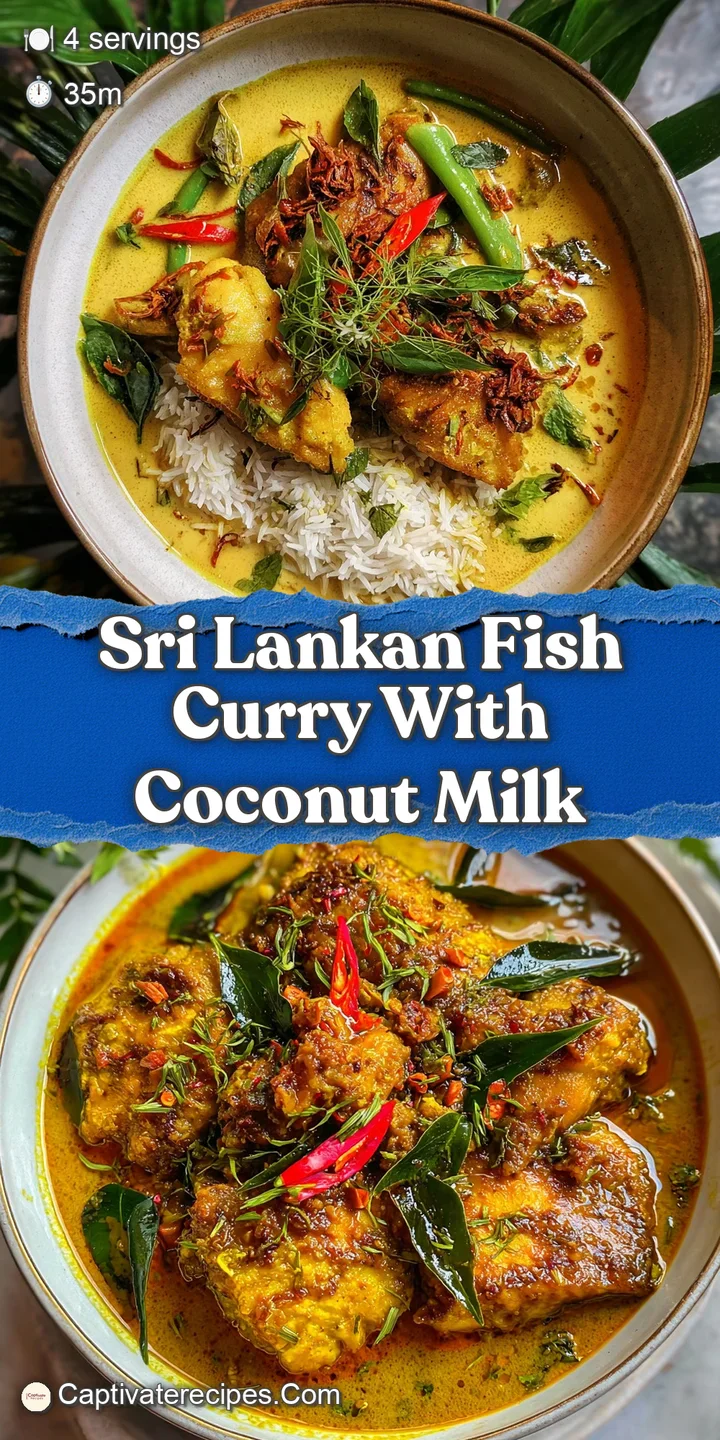
Sri Lankan Fish Curry with Coconut Milk
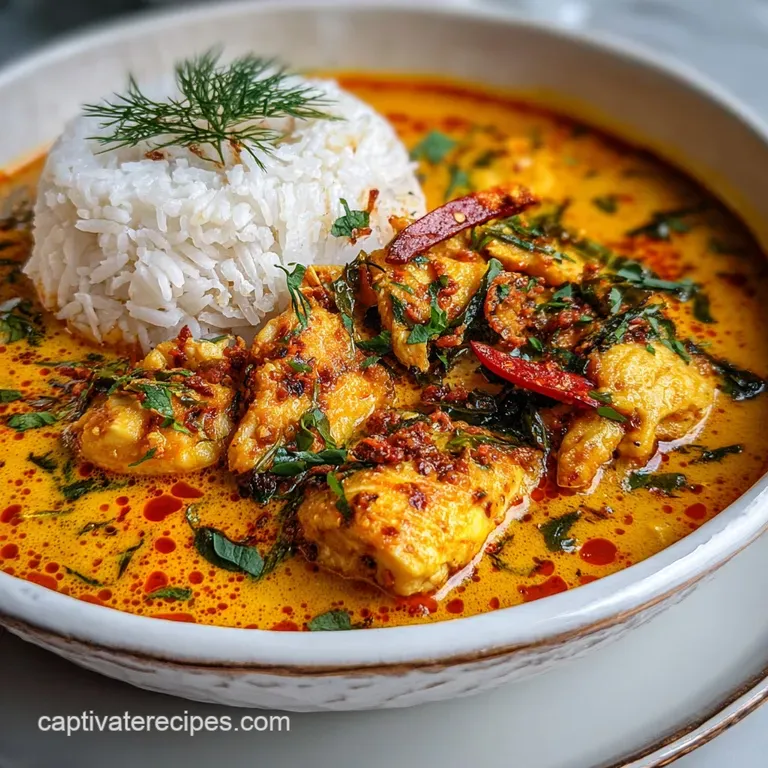
- Time: Active 15 minutes, Passive 20 minutes, Total 35 minutes
- Flavor/Texture Hook: Zesty, aromatic, and incredibly flaky
- Perfect for: A quick weeknight dinner that feels like a tropical escape
- Mastering the Vibrant Sri Lankan Fish Curry Flavor
- The Physics of the Velvety Emulsion
- Quick Cook Method Comparison
- Component Analysis and Ingredient Roles
- Selecting the Finest Components for Your Lankan Feast
- The Simple Tools Required for a Flavor Explosion
- Step-by-Step Guide to Creating Bold Island Flavors
- Solving Common Texture and Heat Balance Challenges
- Adapting the Recipe for Different Nutritional Needs
- Best Practices for Storing and Reheating Leftovers
- Choosing the Best Sides to Complement This Dish
- Debunking Common Kitchen Myths
- Recipe FAQs
- 📝 Recipe Card
Mastering the Vibrant Sri Lankan Fish Curry Flavor
The moment the mustard seeds pop and those fresh curry leaves hit the hot coconut oil, my kitchen transforms. There is a specific, sharp, herbal sizzle that signals the start of something special, a scent that immediately transports me back to a small, sun drenched kitchen in Mirissa.
I remember watching an old chef there who didn't use measuring spoons, only his senses, tossing handfuls of dark, roasted spices into a blackened clay pot until the air was thick with the aroma of toasted cumin and coriander.
That experience taught me that this dish isn't about being subtle; it is about being bold. We are looking for that striking contrast between the sour punch of tamarind and the soothing, creamy finish of coconut milk.
If you have ever had a fish curry that felt one dimensional or, heaven forbid, bland, this version is the remedy. It is a layered experience where the heat from the green chilies lingers just long enough to make you reach for another spoonful of rice.
We are going to treat the fish with the respect it deserves, marinating it first to ensure every flake is seasoned to the core. This is not just a meal; it is a vibrant celebration of island life that you can pull off in just 35 minutes.
Trust me, once you smell that cinnamon and pandan leaf blooming in the pan, you will never go back to boring, monotonous stews again.
The Physics of the Velvety Emulsion
The secret to this texture lies in the interaction between the tamarind's tartaric acid and the coconut milk's fats. The acidity of the tamarind acts as a protein stabilizer, preventing the delicate fish from turning into mush while helping the coconut milk maintain a velvety, unified structure without breaking.
- Acid Stabilization: Tamarind lowers the pH, which helps the fish flakes remain distinct and firm during the simmering process.
- Fat Encapsulation: The high fat content in full fat coconut milk binds to the volatile spice oils, ensuring the heat is distributed evenly rather than stinging the tongue.
- Maillard Depth: Slicing the red onions thinly allows them to caramelize rapidly, providing a foundational sweetness that offsets the bitter notes of fenugreek.
- Aromatic Infusion: The pandan leaf releases essential oils that act as a bridge between the earthy roasted curry powder and the bright lime juice.
Quick Cook Method Comparison
| Method | Time | Texture | Best For |
|---|---|---|---|
| Stovetop (Clay Pot) | 20 minutes | Flaky and ultra moist | Maximum flavor depth and authenticity |
| Stovetop (Stainless Steel) | 18 minutes | Firm and clean | Quick cleanup and even heat distribution |
| Oven (Baked Curry) | 30 minutes | Denser and concentrated | Large batches where you don't want to stir |
Cooking this on the stovetop allows you to monitor the "bloom" of the spices, which is vital for getting that deep, dark color characteristic of a true Lankan Fish Curry. While the oven is convenient, you lose that initial sizzle of the tempering spices that defines the dish's soul.
Component Analysis and Ingredient Roles
| Ingredient | Science Role | Pro Secret |
|---|---|---|
| Fenugreek Seeds | Emulsifier | Toasted seeds provide a maple like aroma that mimics "slow cooked" depth in minutes. |
| Coconut Milk | Fat Medium | Always use the thick, first press milk to prevent the sauce from looking watery or gray. |
| Tamarind Paste | Protein Firming | It keeps the fish from disintegrating into the broth, maintaining a "shatter on-the fork" texture. |
Selecting the Finest Components for Your Lankan Feast
To get that authentic, vibrant result, you need the right building blocks. I always go for Barramundi if I can find it, but any firm white fish works brilliantly here.
- 1.5 lbs (680g) firm white fish (Barramundi, Snapper, or Kingfish): Cut into 1 inch cubes. Why this? Firm fish holds its shape under the weight of the heavy coconut gravy.
- 0.5 tsp turmeric powder: For that golden hue and earthy base.
- 0.5 tsp sea salt: Essential for drawing out the moisture during the marinade phase.
- 1 tbsp fresh lime juice: Brightens the fish and starts the "cold cook" process.
- 2 tbsp coconut oil: The only oil to use for that true tropical aroma.
- 1 medium red onion: Finely sliced to melt into the sauce.
- 3 cloves garlic: Minced into a fine paste.
- 1 inch piece ginger: Grated fresh for a sharp, zingy bite.
- 2 green chilies: Slit lengthwise to release heat without making it unbearable.
- 1 sprig fresh curry leaves: These will shatter and crackle, releasing incredible oils.
- 2 inch piece pandan leaf: Adds a unique, nutty, floral scent.
- 1 small cinnamon stick: Provides a woody, sweet undertone.
- 2 tbsp Sri Lankan roasted curry powder: Darker and more intense than standard powder.
- 1 tsp chili powder: Adjust this based on your bravery.
- 0.5 tsp fenugreek seeds: For that signature bitter sweet balance.
- 1 cup water: To create the initial simmering broth.
- 1 cup thick full fat coconut milk: The key to a velvety finish.
- 1 tbsp tamarind paste: Dissolved in 2 tbsp warm water to remove any seeds.
Chef's Tip: If you can't find Sri Lankan roasted curry powder, toast regular curry powder in a dry pan for 2 minutes until it turns a deep chocolate brown. It changes the flavor profile entirely!
| Original Ingredient | Substitute | Why It Works |
|---|---|---|
| Barramundi | Snapper or Halibut | Both have the necessary oil content and structure to handle a 20 minute simmer. |
| Pandan Leaf | Vanilla Bean (Scraped) | Sounds odd, but a tiny hint of vanilla mimics the floral, nutty notes of pandan. |
| Tamarind Paste | Lime Juice + Brown Sugar | Provides the necessary acidity and a touch of molasses like sweetness. |
The Simple Tools Required for a Flavor Explosion
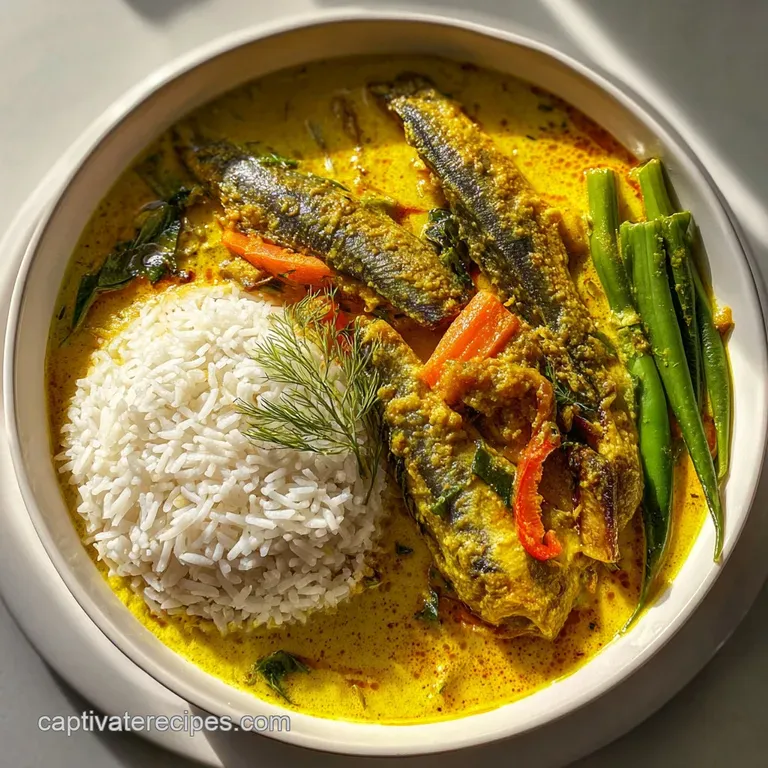
You don't need a kitchen full of gadgets, but a few specific items make a world of difference. If you have a heavy bottomed pot, like a Dutch oven, that's your best bet for heat retention.
For the most authentic experience, a traditional Sri Lankan clay pot (manchatti) is incredible because it breathes, but a standard 12 inch sauté pan works just as well. You will also want a microplane for the ginger and garlic to ensure they incorporate fully into the oil. If you are looking to round out your seafood repertoire, the techniques here are very similar to what you might use in an Ina Gartens Chilean recipe where pan searing meets a delicate sauce.
step-by-step Guide to Creating Bold Island Flavors
Phase 1: The Essential Marinade
- Toss the fish. Combine the 1.5 lbs of fish cubes with the turmeric, sea salt, and lime juice in a glass bowl. Note: This firms up the proteins and seasons the meat deeply.
- Rest the fish. Let it sit for 15 minutes at room temperature while you prep the aromatics.
Phase 2: Building the Tempering Base
- Heat the oil. Add 2 tbsp of coconut oil to your pan over medium heat until it begins to shimmer and faint wisps of smoke appear.
- Sizzle the aromatics. Drop in the onion, curry leaves, pandan leaf, and cinnamon stick. Cook for 5 minutes until the onions are translucent and the curry leaves are crisp and fragrant.
Phase 3: Blooming the Spices
- Add the aromatics. Stir in the ginger, garlic, green chilies, and fenugreek seeds. Cook for 2 minutes until the scent of toasted ginger fills the kitchen.
- Toast the powders. Lower the heat and add the roasted curry powder and chili powder. Stir constantly for 1 minute until the spices turn a shade darker and smell nutty.
Phase 4: Developing the Broth
- Deglaze the pan. Pour in 1 cup of water and the dissolved tamarind paste. Bring to a gentle boil.
- Simmer the fish. Carefully slide the marinated fish into the liquid. Reduce heat and simmer for 8 minutes until the fish is opaque but not yet flaking apart.
Phase 5: The Finishing Infusion
- Cream it up. Pour in the 1 cup of thick coconut milk. Gently swirl the pan instead of stirring to avoid breaking the fish.
- Final thicken. Simmer for another 5 minutes until the sauce coats the back of a spoon with a velvety sheen.
Solving Common Texture and Heat Balance Challenges
Why Your Fish Broke Apart
If your fish disintegrated into the sauce, it usually means the heat was too high or the fish was stirred too aggressively. High heat causes the muscle fibers to contract and snap.
| Problem | Root Cause | Solution |
|---|---|---|
| Curdled Sauce | Boiling the coconut milk | Add coconut milk at the very end and keep the heat at a low simmer, never a rolling boil. |
| Bitter Aftertaste | Burnt fenugreek or spices | Bloom spices on low heat and add liquid immediately once they become fragrant. |
| Thin, Watery Curry | Too much water/low-fat milk | Use full fat coconut milk and simmer uncovered to allow for slight evaporation. |
Common Mistakes Checklist
- ✓ Never skip the lime juice marinade; it is the "glue" that keeps the fish from turning to mush.
- ✓ Pat the fish dry before marinating to ensure the turmeric sticks to the flesh.
- ✓ Do not over stir the pot once the fish is in; a gentle shake of the pan is all you need.
- ✓ Ensure your roasted curry powder is fresh; old spices will make the dish taste like cardboard.
- ✓ Remove the cinnamon stick and pandan leaf before serving to make eating easier.
Adapting the Recipe for Different Nutritional Needs
If you are looking for a lighter version, you can swap the full fat coconut milk for light coconut milk, but be warned: the sauce will not have that same iconic, velvety mouthfeel. It will be more of a brothy soup, which is still vibrant but less indulgent.
For a vegan transformation, this curry base is actually incredible with firm tofu or even roasted cauliflower. The tamarind and roasted spices provide so much "umami" that you won't even miss the seafood. If you're looking for a different plant based protein texture, you could even try the seasonings with a Crispy Buffalo Tofu recipe logic, where you crisp the tofu first then drop it into the sauce at the last second.
Decision Shortcut
- If you want a spicier kick, finely dice the green chilies instead of slitting them.
- If you want a thicker gravy, blend half of the sautéed onions with a splash of water before adding the fish.
- If you want a smokier depth, use a blowtorch on the fish skin for 10 seconds before cubing it.
Best Practices for Storing and Reheating Leftovers
This is one of those rare dishes that actually tastes better the next day. As it sits, the spices permeate the fish even further, and the coconut milk mellows into a rich, complex gravy.
- Storage
- Keep it in an airtight container in the fridge for up to 3 days.
- Freezing
- You can freeze this for up to 1 month, but the coconut milk may slightly separate upon thawing. To fix this, whisk in a tablespoon of fresh coconut milk while reheating.
- Zero Waste
- Don't throw away the leftover sauce! It makes an incredible poaching liquid for eggs the next morning, or you can toss it with some leftover noodles for a quick "fusion" lunch.
Choosing the Best Sides to Complement This Dish
A Lankan Fish Curry demands something to soak up that glorious sauce. The classic choice is a bowl of steaming basmati rice or, even better, red rice for an earthy contrast.
If you want to go full island style, serve this alongside a fresh Pol Sambol (coconut relish) and some crispy papadums. The crunch of the papadum provides a "shatter" texture that balances the softness of the fish. If you're hosting a party and need a variety of textures, this curry is a bold main that would be offset nicely by a Crab Rangoon Dip recipe as an appetizer it keeps the seafood theme going while offering a completely different, crispy creamy vibe.
Debunking Common Kitchen Myths
Myth 1: You must boil the coconut milk to "cook" it. This is actually the fastest way to ruin your curry. Boiling coconut milk causes the proteins to clump and the fat to separate, leaving you with a grainy, oily mess. A gentle simmer is all that is needed to meld the flavors.
Myth 2: Fresh curry leaves and dried ones are interchangeable. Honestly, don't even bother with the dried ones. Dried curry leaves lose almost all their volatile oils and end up tasting like hay.
If you can't find fresh, just leave them out and add a bit more lime zest at the end to compensate for the herbal brightness.
Myth 3: Searing the fish "seals in the juices." Searing is for flavor (the Maillard reaction), not for moisture retention. In this curry, we skip the sear and use a marinade because the gentle poaching method keeps the fish much more succulent than a hard sear would.
Recipe FAQs
Is it true that I must use a clay pot for authentic flavor?
No, this is a common misconception. A heavy bottomed stainless steel pan works very well for even heat, though a clay pot does offer superior, slow heat retention.
How to stop the coconut milk from separating or curdling?
Add the coconut milk last and maintain a gentle simmer. Never allow the coconut milk to reach a rolling boil after adding it, as the fat will split from the liquid base.
How to ensure the fish remains flaky and doesn't disintegrate?
Marinate the fish with lime juice first to firm the proteins. The acid stabilizes the fish fibers, preventing them from completely breaking down during the 10-15 minute simmer time.
Can I make this curry base ahead of time?
Yes, the base is excellent for meal prep. You can prepare the entire spice bloom and simmering liquid up to 24 hours in advance, adding the fish just 15 minutes before serving.
What is the critical step for achieving deep curry color?
Toast your curry powder until it turns deep brown. If you are not using pre-roasted powder, gently dry-toast it in the pan for one minute until nutty to unlock rich color and flavor.
How to adjust the heat level effectively?
Control the chilies and chili powder quantity. For less heat, just slit the green chilies lengthwise to allow aroma without fully releasing seeds; for more, dice them finely.
Is it true that I need to use expensive, thick coconut milk?
Yes, full fat coconut milk is essential for texture. Light coconut milk yields a thin, watery sauce; the high fat content of full fat milk is necessary for the signature velvety emulsion.
Sri Lankan Fish Curry
Ingredients:
Instructions:
Nutrition Facts:
| Calories | 386 kcal |
|---|---|
| Protein | 37.1 g |
| Fat | 21.9 g |
| Carbs | 8.5 g |
| Fiber | 1.8 g |
| Sugar | 2.6 g |
| Sodium | 485 mg |
