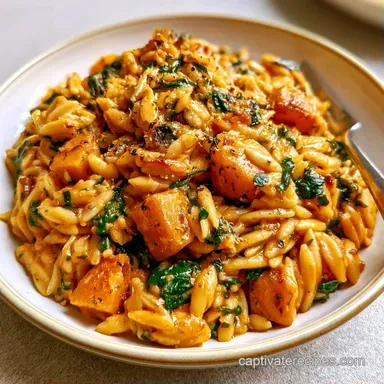
Creamy Butternut Squash Orzo with Spinach
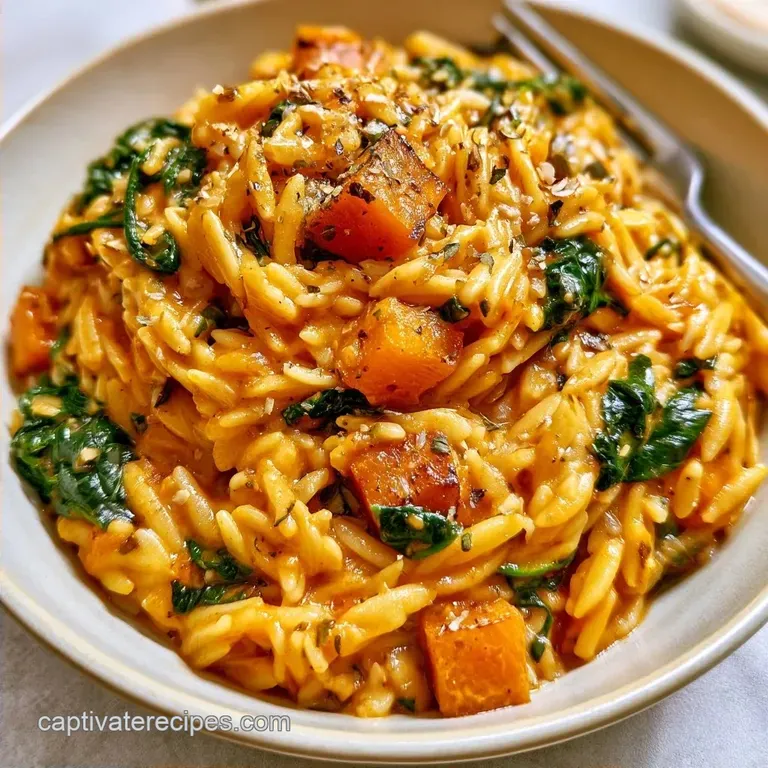
- Time: 15 min active + 40 min cooking
- Flavor/Texture Hook: Velvety sauce with mahogany roasted squash edges
- Perfect for: Cozy autumn weeknights or a vegetarian main
The smell of toasted sage and browned butter is enough to make anyone hungry. I once tried making a similar dish by just boiling the squash, but it turned into a bland, watery mess that felt more like baby food than dinner.
It lacked the depth and the slight "char" that makes autumn vegetables actually taste like autumn.
This version fixes that by using the oven to concentrate the sugars. You get a vibrant contrast between the bright lemon juice and the rich, roasted squash. This is the ultimate recipe for Orzo with Butternut Squash and Spinach and Parmesan.
Expect a dish that feels fancy but doesn't require you to stand over a stove stirring for an hour. We're using a few smart shortcuts to get that creamy consistency without relying on heavy cream.
What Makes the Flavor Pop
Roasting First: High heat transforms the squash sugars into nutty, caramelized notes. This prevents the Butternut Squash Orzo from tasting like a plain puree.
Toasting the Orzo: Sautéing the dry pasta in butter before adding liquid creates a toasted flavor and helps the grains hold their shape.
Natural Creaminess: Blending a portion of the roasted squash directly into the broth creates a thick, rich sauce without needing extra fats.
| Method | Time | Texture | Best For |
|---|---|---|---|
| Fast Simmer | 30 mins | Softer, more uniform | Quick lunch |
| Roasted Base | 55 mins | Contrast of smooth and charred | Dinner party |
The Flavor Components
Shallots offer a more subtle, sweet foundation than standard onions, keeping the overall profile refined. White wine is used to deglaze the pan, providing a crisp acidity that balances the creamy squash.
The lemon juice is the most frequently forgotten element of this Butternut Squash Orzo. Stirring it in at the very end brightens all the other flavors; without it, the meal can feel a bit too dense on the palate.
The Building Blocks
- 1 medium butternut squash, peeled and cubed (approx. 3 lbs / 1.3kg) Why this? The thick texture resists breaking down while roasting
- 2 tbsp extra virgin olive oil Why this? Stable at the high temperatures needed for roasting
- 1 tsp kosher salt
- ½ tsp cracked black pepper
- 1 tsp dried sage or thyme Why this? Woodsy flavors that suit the squash
- 1 tbsp unsalted butter Why this? Creates a rich, toasted foundation
- 1 medium shallot, finely diced (approx. 2 oz / 60g)
- 3 cloves garlic, minced (approx. 15g)
- 1 ½ cups uncooked orzo pasta Why this? Tiny shape creates a risotto like consistency
- 4 cups low sodium vegetable broth Why this? Acts as the primary poaching liquid
- ½ cup dry white wine Why this? Provides a necessary acidic lift
- 4 cups fresh baby spinach, washed Why this? Adds nutritional value and a pop of green
- ½ cup freshly grated Parmesan cheese Why this? Delivers a salty, umami kick
- 1 tbsp fresh lemon juice Why this? Freshens up the heavier notes
- ¼ cup fresh parsley, chopped
| Original Ingredient | Substitute | Why It Works |
|---|---|---|
| Butternut Squash | Kabocha Squash | Comparable texture. Note: More sugary and dense |
| White Wine | Veg Broth + Lemon | Mimics the tartness. Note: Lacks the complexity of fermentation |
| Parmesan | Pecorino Romano | Similar salt profile. Note: Pungent sheep's milk flavor |
| Vegetable Broth | Chicken Broth | Enhanced savoriness. Note: No longer vegetarian |
Tools for the Job
You'll need a large rimmed baking sheet for the squash. A wide, deep skillet is better than a pot because it allows the broth to evaporate more evenly, which helps the orzo thicken.
An immersion blender is the fastest way to get that creamy texture. If you don't have one, a standard blender works, but you'll have to transfer the roasted squash separately.
Making the Pasta
- Get your oven up to 400°F (200°C).
- Toss the cubed butternut squash with olive oil, salt, pepper, and dried herbs on a baking sheet.
- Roast for 20–25 minutes, flipping halfway through, until the edges are mahogany colored and the flesh is tender.
- Remove about 1 cup of the roasted cubes and set them aside for garnish. Note: These provide the "bite" in the final dish
- In a large skillet over medium heat, melt the butter. Sauté the shallots for 3 mins until translucent, then add garlic and cook until a toasty nut aroma fills the kitchen.
- Add the dry orzo and stir for 2 minutes until the grains look slightly golden.
- Pour in the vegetable broth and white wine, simmering until the orzo is tender and most liquid is gone.
- Use an immersion blender to blend a portion of the roasted squash directly into the pan. Note: This creates the sauce base
- Fold in the fresh baby spinach and Parmesan cheese, stirring until the spinach is just barely wilted.
- Stir in the lemon juice and fresh parsley, then garnish with the reserved roasted squash cubes.
Fixing Common Issues

Fixing Dry Pasta
Orzo absorbs liquid fast. If your Butternut Squash Orzo looks clumped or stiff before the spinach goes in, stir in an additional ¼ cup of warm broth. You want the sauce to flow, not stick.
Preventing Brown Spinach
Spinach turns a dull olive color if it cooks too long. Only fold it in at the very end. The residual heat from the pasta is enough to wilt it while keeping the green vibrant.
Stopping Pasta Sticking
If the orzo sticks to the bottom, it's usually because the heat is too high. Keep it at a gentle simmer. Stirring frequently during the first 5 minutes of adding broth prevents the starch from gluing to the pan.
Different Ways to Serve
For a bit more punch, you can add a pinch of red pepper flakes during the garlic sauté. If you want a meatier version, check out this Chicken Butternut Squash roast as a side.
For a twist on the sauce, my brown butter orzo is another great option. You could also swap the baby spinach for kale, but make sure to sauté the kale for a few minutes before adding the pasta, as it's heartier.
Decision Shortcuts:
- For more protein: stir in 1 cup of cooked chickpeas or grilled shrimp.
- For a nuttier finish: top with toasted pine nuts or crushed walnuts.
- For a vegan version: use olive oil instead of butter and nutritional yeast instead of Parmesan.
Adjusting the Batch
When cutting this Butternut Squash Orzo in half, use a smaller skillet. If the pan is too large, the broth will evaporate too quickly, leaving the pasta undercooked and dry.
For doubling the recipe, don't double the salt and pepper immediately. Start with 1.5x the seasoning and taste at the end. You'll likely need about 10% less liquid than a double batch would suggest because the larger volume of pasta traps steam more effectively.
Kitchen Misconceptions
Some people think you have to boil orzo in a separate pot of water like regular pasta. This is a mistake for this recipe. Cooking it in the broth allows the starch to stay in the pan, which is what makes the sauce thick and rich.
Another myth is that you need heavy cream to get a "risotto" texture. As we've seen, the starch from the pasta combined with blended roasted squash does the job perfectly.
Storage and Waste Tips
Store leftover portions in a closed glass jar in the fridge for up to 4 days. Because the pasta continues to absorb sauce while chilling, it will be thicker when reheated.
To warm it, add a bit of broth or water and heat over medium low on the stove. This helps release the starch and restores the creamy texture.
Don't throw away the squash seeds. Instead, clean them, coat with oil and salt, and roast at 325°F for 15 minutes for a crunchy snack. You can also simmer the leftover skins in water and onion to make a fast vegetable stock.
Best Side Pairings
This Butternut Squash Orzo is rich, so it needs something bright or crisp to balance it out. A simple arugula salad with a sharp lemon vinaigrette is the ideal match.
If you're looking for something heartier, a slice of toasted sourdough rubbed with a raw garlic clove works well. The crunch of the toast against the soft pasta creates a great texture contrast.
For a full autumn spread, serve this alongside some roasted Brussels sprouts with balsamic glaze. The bitterness of the sprouts cuts through the sweetness of the squash.
Recipe FAQs
Do butternut squash and spinach pair well?
Yes, they are a classic pairing. The sweetness of the roasted squash balances the earthy notes of the baby spinach. If you want a different way to serve the veg, try a brown butter variation.
Is it true that orzo is healthier than standard pasta?
Actually, no. Orzo is simply a rice shaped pasta made from the same durum wheat as other varieties, offering nearly identical nutritional value.
When should you add the spinach?
Fold it in at the very end. Stir the leaves in with the Parmesan just until they are barely wilted to maintain a bright color.
What spices best complement this dish?
Dried sage and thyme are ideal. These earthy herbs enhance the natural sweetness of the squash when roasted at 400°F.
Can Parmesan be added to this combination?
Yes, it adds essential salty depth. Mixing in freshly grated Parmesan helps thicken the sauce and balances the sweetness of the puree.
How does garlic improve the flavor profile?
Garlic creates a savory aromatic base. Sautéing minced garlic with shallots before toasting the orzo ensures a deep, fragrant foundation for the dish.
Butternut Squash Orzo