Chinese Lemon Chicken: Crispy & Zesty
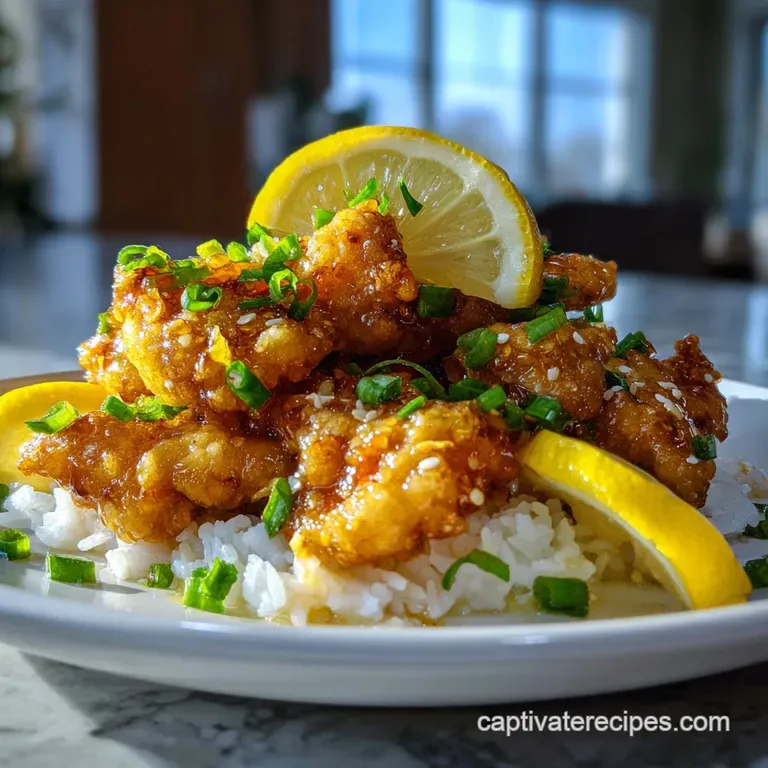
- Time: Active 20 minutes, Passive 15 minutes, Total 35 minutes
- Flavor/Texture Hook: Shatteringly crisp exterior with a velvety, zesty citrus glaze
- Perfect for: Weeknight "fakeout" cravings or a budget-friendly family dinner
- Why the Velvet Coating Stays Crispy Under Pressure
- A Systematic Component Analysis for Better Flavor
- Sourcing Pantry Essentials for Authentic Takeout Results
- Essential Kitchen Tools for Successful High Heat Frying
- Mastering the Double Fry for a Shattering Texture
- Avoiding Common Breading Disasters and Soggy Coatings
- Scaling the Batch for Families or Solo Meals
- Dietary Adaptations for Healthier or gluten-free Needs
- Debunking Misconceptions About Homemade Citrus Glaze Sauces
- Smart Storage and Zero Waste Strategies for Leftovers
- Perfect Pairings for a Balanced Takeout Style Dinner
- Recipe FAQs
- 📝 Recipe Card
Why the Velvet Coating Stays Crispy Under Pressure
The magic of this specific fry doesn't happen by accident; it's a bit of culinary physics working in your favor. By using the following principles, we ensure the chicken remains tender while the outside builds a rigid, airy structure that resists the moisture of the sauce.
- CO2 Aeration: The 1 tsp baking powder creates tiny carbon dioxide bubbles when it hits the heat, resulting in a lighter, crispier "honeycomb" structure in the breading.
- Starch Retrogradation: Using 0.75 cup cornstarch provides a higher amylose content than flour alone, which forms a more brittle, "shatter like" crust that doesn't soften as quickly.
- Protein Velveting: The egg white and Shaoxing wine marinade creates a thin protective film around the chicken fibers, preventing them from toughening up during the over high heat fry.
| Chicken Cut | Thickness | Internal Temp | Visual Cue |
|---|---|---|---|
| Breast Chunks | 1 inch (2.5 cm) | 165°F (74°C) | Golden brown and floating |
| Thigh Strips | 0.5 inch (1.3 cm) | 175°F (79°C) | Deep amber and firm |
| Tenderloin | Whole | 165°F (74°C) | Rigid coating, no bubbling |
Getting the oil temperature right is the difference between a greasy mess and a clean fry. Always wait for that first piece to dance and sizzle immediately upon entry; if it sinks and stays there, your oil is too cold, and the breading will just soak up fat like a sponge.
A Systematic Component Analysis for Better Flavor
Understanding what each part of your Chinese Lemon Chicken does allows you to make smart adjustments based on what is in your cupboard. You don't need fancy imported goods to get that authentic "zing" if you know how to balance the acidity and the sugars.
| Component | Science Role | Pro Secret |
|---|---|---|
| Cornstarch | Texture modifier | Mix it with flour to prevent the crust from being too hard/glassy. |
| Shaoxing Wine | Enzymatic tenderizer | If you're out, dry sherry is a nearly identical chemical match. |
| Honey | Maillard catalyst | Provides the "stick" for the sauce while rounding out the lemon’s sharp edge. |
| Baking Powder | Leavening agent | Creates microscopic air pockets for a "shatter" effect rather than a "crunch." |
Whenever I run out of chicken breast, I often look toward other crispy options to satisfy that texture craving. If you find yourself in a similar spot, you might enjoy my Chicken Fritters Recipe which uses a similar protein base but with a different batter style. It's a great way to use up smaller scraps of meat without the full deep frying setup.
Sourcing Pantry Essentials for Authentic Takeout Results
Keeping this budget friendly means using what you likely already have. I've found that expensive "organic" lemons aren't nearly as important as making sure you use fresh juice the bottled stuff has a metallic aftertaste that will ruin the sauce.
- 1.5 lbs chicken breast: Sliced into 1 inch pieces. Why this? Lean protein that cooks quickly and carries the lemon flavor perfectly.
- Substitute: 1.5 lbs chicken thighs for a juicier, richer bite.
- 1 tbsp light soy sauce: For the marinade. Why this? Adds essential salt and umami without darkening the meat too much.
- Substitute: Tamari for a gluten-free alternative.
- 1 tbsp Shaoxing wine: Traditional Chinese cooking wine. Why this? Neutralizes "meaty" odors and softens the protein fibers.
- Substitute: Dry Sherry or even a splash of white grape juice with a drop of vinegar.
- 0.75 cup cornstarch & 0.25 cup all purpose flour: The dredge. Why this? The starch provides the crunch, the flour provides the structural "grip."
- Substitute: Potato starch can replace cornstarch for an even lighter texture.
- 0.5 cup freshly squeezed lemon juice: The heart of the sauce. Why this? Provides the high acid backbone that cuts through the fried richness.
- Substitute: Lime juice (though it will change the flavor profile to "Lime Chicken").
- 3 tbsp honey: The sweetener. Why this? Gives the sauce a glossy, thick sheen that clings to the chicken.
- Substitute: Granulated sugar or maple syrup in a pinch.
Chef's Tip: Grate your ginger (1 tsp) while it's still frozen. It turns into a fine paste that melts into the sauce instantly, preventing those awkward woody chunks that sometimes ruin a bite.
Essential Kitchen Tools for Successful High Heat Frying
You don't need a dedicated deep fryer for this. In fact, a heavy bottomed pot is actually safer and holds heat better.
- Wok or Dutch Oven: A cast iron Dutch oven is my favorite for this because the thick walls prevent the oil temperature from crashing when you add the cold chicken.
- Spider Strainer: This is a game changer. It lets you lift all the chicken out at once so the small bits don't burn while you're fishing around with tongs.
- Microplane: Essential for getting that 1 tbsp of lemon zest without hitting the bitter white pith.
Mastering the Double Fry for a Shattering Texture
To get that authentic Chinese Lemon Chicken experience, we are going to use a two step frying process. It sounds like extra work, but it's the only way to ensure the middle is cooked while the outside stays rigid.
- Marinate the protein. Toss the 1.5 lbs chicken pieces with 1 tbsp soy sauce, 1 tbsp Shaoxing wine, 0.5 tsp white pepper, and the beaten egg white. Note: The egg white acts as a "glue" for the starch.
- Prepare the dredge. In a large bowl, whisk 0.75 cup cornstarch, 0.25 cup flour, and 1 tsp baking powder until combined.
- Coat the chicken. Press each piece of chicken firmly into the starch mixture until no bald spots remain.
- Heat the oil. Bring 2 cups of neutral oil to 350°F (175°C) in your pot.
- Initial fry. Add chicken in batches, frying for 3-4 minutes until pale gold and firm.
- The Rest. Remove chicken to a wire rack; let it sit for 2 minutes. Note: This allows internal steam to escape so the second fry can crisp the shell.
- Flash fry. Crank the heat to 375°F (190°C) and fry the chicken again for 1-2 minutes until deep golden and shattering.
- Simmer the sauce. In a separate pan, combine 1 cup chicken stock, 0.5 cup lemon juice, 1 tbsp zest, 3 tbsp honey, and 1 tsp ginger.
- Thicken the glaze. Whisk in the 1 tbsp cornstarch slurry and simmer until the sauce coats the back of a spoon.
- Final toss. Add the hot chicken to the sauce and toss quickly until every piece is glistening.
If you enjoy the process of breading and frying, you definitely need to try the Mochiko Chicken Bites recipe. It uses rice flour for a slightly different, more "chewy crisp" texture that is incredibly popular in Hawaii.
Avoiding Common Breading Disasters and Soggy Coatings
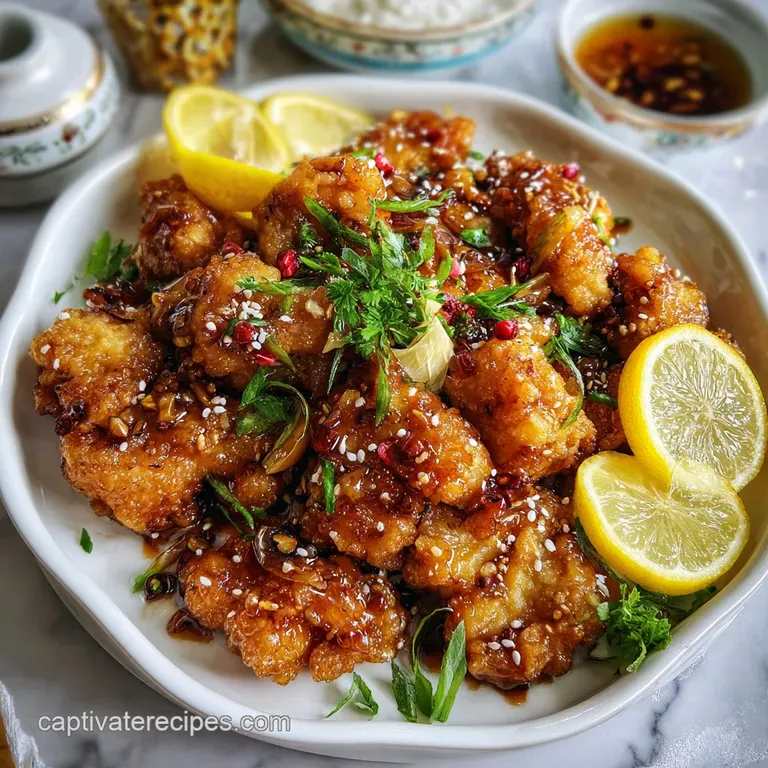
The most common complaint with this dish is that the chicken becomes "mushy" once the sauce is applied. This usually happens because the sauce is too watery or the chicken wasn't fried hot enough to create a moisture barrier.
Why Your Sauce Is Too Runny
If your sauce looks more like a soup than a glaze, you likely didn't cook the cornstarch slurry long enough. Cornstarch needs to hit a near boiling point to "gelatinize" and thicken. Give it another minute of bubbling, and you’ll see it transform into a thick, jewel like syrup.
Why Your Breading Is Falling Off
This usually stems from "wet" chicken. If the marinade hasn't had a chance to slightly soak in, or if you don't press the dredge into the meat firmly, the coating will slide off in the oil. Make sure you don't see any "wet" spots on the chicken before it hits the pan.
| Problem | Root Cause | Solution |
|---|---|---|
| Greasy Texture | Oil temp too low | Maintain 350°F; fry in smaller batches. |
| Bitter Aftertaste | Zested the pith | Only use the yellow part of the lemon skin. |
| Soggy Breading | Sauce was too thin | Reduce sauce further before adding chicken. |
Common Mistakes Checklist:
- ✓ Always pat the chicken dry before adding the marinade to ensure the egg white sticks.
- ✓ Never crowd the pan; if the pieces touch, they will steam instead of fry.
- ✓ Use a wire rack for cooling, not paper towels, to prevent bottom side sogginess.
- ✓ Add the lemon zest at the very end of the sauce simmering to keep the oils bright.
- ✓ Ensure the cornstarch slurry is stirred right before adding, as it settles quickly.
Scaling the Batch for Families or Solo Meals
Adjusting this recipe is fairly straightforward, but there are a few "gotchas" when it comes to the liquids and the frying time.
- Scaling Down (½ batch): Use just the egg white from a small egg. You don't need to reduce the oil by half; you just need enough depth (about 2 inches) to submerge the pieces.
- Scaling Up (2x-4x batch): Do not double the salt or white pepper immediately start at 1.5x and taste. You must fry in many small batches to keep the oil temp from dropping.
- Baking Alternative: If you're doubling the recipe for a crowd and don't want to fry all day, you can bake the breaded pieces at 425°F (220°C) with a heavy spray of oil, though you'll lose that specific "shatter" texture.
| Method | Time | Texture | Best For |
|---|---|---|---|
| Classic Deep Fry | 15 minutes | Maximum crunch | Traditional dinner |
| Air Fryer | 12 minutes | Drier, less fat | Healthy weeknights |
| Pan Sear | 10 minutes | Softer, patchy | Low effort prep |
Dietary Adaptations for Healthier or gluten-free Needs
Making this work for different diets is easier than you might think. Since cornstarch is naturally gluten-free, you are halfway there already!
Healthy Lemon Chicken Recipe (Air Fryer)
To make a lighter version, skip the 2 cups of oil. Toss the breaded chicken with 2 tablespoons of neutral oil until it looks "moist," then air fry at 400°F (200°C) for 10-12 minutes, shaking the basket halfway through.
The result is still very crispy but with significantly less fat.
gluten-free Modification
Swap the 0.25 cup all purpose flour for more cornstarch or a 1 to-1 gluten-free flour blend. Ensure your soy sauce is replaced with Tamari or coconut aminos. The texture will actually be even crispier because gluten-free starches tend to fry up very rigid.
Debunking Misconceptions About Homemade Citrus Glaze Sauces
A lot of people think you need to add yellow food coloring to get that vibrant "takeout" look. That's a total myth! If you use a high-quality honey and plenty of fresh zest, the sauce naturally turns a beautiful, translucent amber gold.
The "neon" yellow from restaurants is usually just dye and doesn't add a lick of flavor.
Another big one is the "boil the lemon" myth. Some recipes suggest boiling whole lemons to extract flavor, but this actually releases the bitter oils from the white pith. You only ever want the juice and the very top layer of the skin.
If you boil the whole fruit, you'll end up with a sauce that tastes like cleaning supplies.
Smart Storage and Zero Waste Strategies for Leftovers
Fried food is notoriously tricky to store, but it's not impossible if you follow the right reheating path.
- Fridge: Store the chicken and sauce separately if possible. It will last 3 days. If already tossed, it will lose its crunch, but the flavor remains.
- Freezer: You can freeze the fried chicken (before saucing) for up to 2 months. Reheat directly from frozen in a 400°F oven until sizzling.
- Zero Waste: Don't toss those squeezed lemon halves! Throw them into a jar of white vinegar for two weeks to make a natural, citrus scented kitchen cleaner. Also, any leftover cornstarch/flour dredge can be whisked with a little water and seasoning to make a quick "tempura" batter for veggie scraps in the fridge.
Perfect Pairings for a Balanced Takeout Style Dinner
To round out the meal, you want something that can soak up any extra lemon glaze without competing with the bold flavors of the chicken.
- Steamed Jasmine Rice: The classic choice. Its floral aroma complements the citrus perfectly.
- Garlic Bok Choy: A quick sauté of greens provides a fresh, bitter contrast to the sweet and sour sauce.
- Alternative Main: If someone at the table isn't a fan of chicken, this lemon sauce works beautifully on fish. I often use the same glaze for a Lemon Butter Cod recipe which is a bit lighter but just as satisfying.
Using these tips, you'll find that making this dish at home isn't just a budget saver it's a genuine upgrade. The control over the ingredients means a fresher, more vibrant plate that makes that old takeout menu look pretty uninspiring. Happy frying!
Recipe FAQs
Why must I use both cornstarch and flour in the coating?
The starch provides the crunch, while the flour provides structural grip. Cornstarch alone fries extremely brittle but lacks the cohesive binding power of flour. Using both ensures a lightweight yet durable crust.
Can I substitute the Shaoxing wine with regular cooking sherry?
Yes, dry sherry is a nearly identical chemical match. Shaoxing wine acts as an enzymatic tenderizer and flavor neutralizer for the meat. If you enjoy using this technique to tenderize proteins, see how the same principle works in our Sweet Savory Chicken recipe.
How do I prevent the lemon glaze from being too thin and runny?
Simmer the sauce longer until it coats the back of a spoon. The cornstarch requires near boiling temperatures to gelatinize fully and create the necessary thick, glossy syrup.
Is it true I must use a deep fryer to achieve the restaurant style crunch?
No, a Dutch oven or heavy bottomed pot works perfectly well. The key is maintaining the correct oil temperature of 350°F for the first fry. If you prefer a lighter, less oily crisp, try the air fryer method.
How to properly execute the double fry method for maximum crispness?
Fry the chicken initially at 350°F until pale gold, rest it for two minutes, then flash fry again at 375°F until deep amber. The initial fry cooks the interior; the second, hotter fry dehydrates and sets the crisp outer layer.
What is the correct internal temperature for the chicken pieces?
Cook chicken breast chunks to an internal temperature of 165°F (74°C). Since the meat is thin and the frying is fast, focus on the visual cue of a rigid, golden coating.
Can I use pre-squeezed lemon juice instead of fresh for the sauce?
No, stick with fresh. Bottled lemon juice often contains metallic aftertastes that significantly detract from the bright profile needed here. For other bright recipes using fresh citrus, check out the balance in the Mini Lemon Coconut recipe.
Chinese Lemon Chicken
Ingredients:
Instructions:
Nutrition Facts:
| Calories | 562 calories |
|---|---|
| Protein | 53.8 g |
| Fat | 16.1 g |
| Carbs | 43.3 g |
| Fiber | 0.3 g |
| Sugar | 12.8 g |
| Sodium | 475 mg |
