Boneless Skinless Chicken Thighs Recipe with Garlic and Herbs
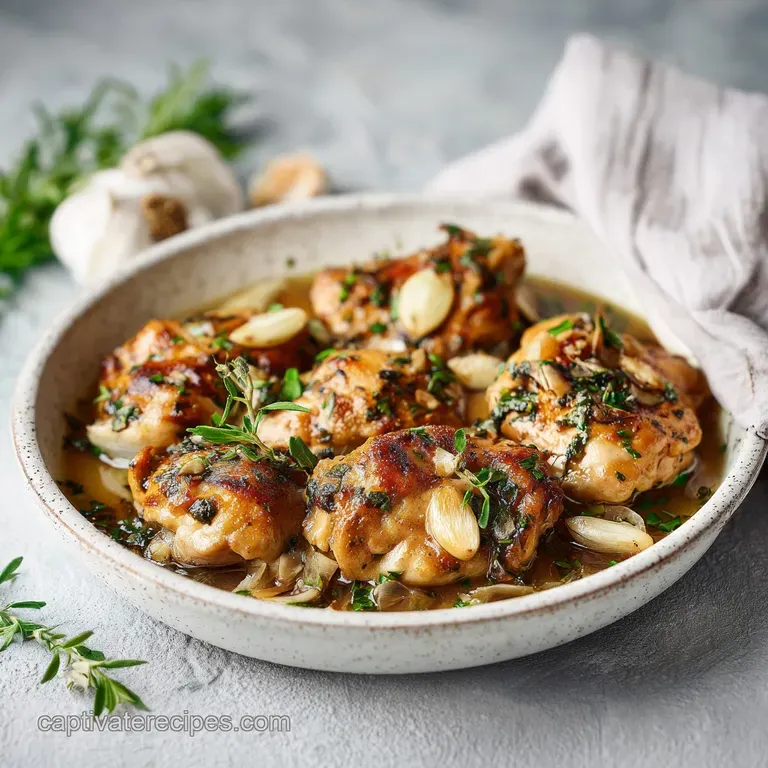
- Time: Active 5 minutes, Passive 15 minutes, Total 20 minutes
- Flavor/Texture Hook: Savory garlic infused crust with a velvety, juicy interior
- Perfect for: Stress free weeknight dinners or meal prep for the busy week ahead
- Boneless Skinless Chicken Thighs Recipe with Garlic and Herbs
- The Secret to Searing Chicken Thighs Correctly
- Key Preparation Numbers for Perfect Poultry
- Selecting Quality Elements for the Pan
- The Best Tools for Even Cooking
- Executing the Pan Sear Step by Step
- Mastering Temperature and Avoiding Mistakes
- Customizing Your Garlic and Herb Blend
- Adjusting the Recipe for Different Needs
- Debunking Searing Misconceptions
- Guidelines for Storage and Zero Waste
- Pairing Suggestions for a Complete Meal
- Recipe FAQs
- 📝 Recipe Card
Boneless Skinless Chicken Thighs Recipe with Garlic and Herbs
The first time I tried to make a quick chicken dinner, I used breasts and ended up with something resembling a dry sponge. It was disappointing, to say the least. Then I discovered the magic of the thigh. The moment those 1.5 lbs boneless skinless chicken thighs hit the hot olive oil, the sizzle is loud and promising.
As the fat renders, the kitchen fills with that heavy, savory aroma that tells everyone dinner is actually going to be worth the wait this time.
I used to be afraid of high heat, but that's where the magic happens. When you lay the chicken down, you hear that immediate crackle. It’s not just noise, it’s the sound of the Maillard reaction building a golden crust that traps all the juices inside.
By the time I toss in the smashed garlic and the fresh rosemary and thyme, the smell is enough to make the neighbors knock on the door. This boneless skinless chicken thighs recipe with garlic and herbs will become your new go to dinner.
We've all been there, standing over a pan wondering if the meat is done or just "almost" done. I’ve learned the hard way that poking it constantly doesn't help. You have to let it sit, let it develop that shatter crisp edge, and only then do you flip it.
It's a reliable, simple method that works every single time, even if you’re juggling three other things. Let's get into why this specific approach actually works for your kitchen.
The Secret to Searing Chicken Thighs Correctly
Fat Soluble Infusion: The rosemary and thyme essential oils are fat soluble, meaning they infuse into the butter and olive oil to coat every millimeter of the meat.
Protein Forgiveness: Unlike lean breasts, the higher fat content in 1.5 lbs boneless skinless chicken thighs prevents them from drying out even if you overshoot the temperature by a few degrees.
Thermal Momentum: Using a heavy pan allows the surface to stay hot even when cold meat is added, ensuring a sear rather than a slow steam.
| Chicken Thickness | Target Internal Temp | Rest Time | Visual Cue |
|---|---|---|---|
| 1.5 cm | 74°C (165°F) | 3 minutes | Firm to touch, juices run clear |
| 2.5 cm | 74°C (165°F) | 5 minutes | Golden crust, no pink in center |
| 3.5 cm | 74°C (165°F) | 5 minutes | Deep brown exterior, opaque throughout |
Understanding the thickness of your meat is the biggest shortcut to success. Most thighs vary in size, so I always look for the thickest part when checking for doneness. If you find yourself cooking for a larger crowd, you might want to look at our Greek Chicken Gyro Bowls recipe for a similar over high heat technique that handles bulk portions beautifully.
Key Preparation Numbers for Perfect Poultry
| Component | Science Role | Pro Secret |
|---|---|---|
| 1.5 lbs Chicken Thighs | Connective tissue breakdown | Pat completely dry to ensure a sear, not a steam |
| 4 Cloves Garlic | Aromatic base | Smash first to rupture cells and release all the allicin |
| 1 tbsp Unsalted Butter | Emulsification & Browning | Add at the end so the milk solids don't burn too early |
| 0.5 tsp Smoked Paprika | Color & Maillard Aid | The sugar in paprika caramelizes quickly for a deep red hue |
A common mistake I once made was adding the garlic at the very beginning. By the time the chicken was cooked, the garlic was black and bitter. Now, I wait until the final few minutes. This allows the garlic to soften in the 1 tbsp unsalted butter without losing its sweet, pungent character.
Selecting Quality Elements for the Pan
For this recipe, we are keeping things focused on high impact flavors that work together without any complicated steps.
- 1.5 lbs boneless skinless chicken thighs: These are the workhorse of the kitchen. Why this? They stay juicy at high heat unlike chicken breasts. (Substitute: Boneless skinless breasts, but reduce cook time by 4 minutes.)
- 1 tsp sea salt: Essential for drawing out moisture for a better crust. Why this? Coarse grains provide better coverage than fine table salt. (Substitute: Kosher salt.)
- 0.5 tsp freshly cracked black pepper: Provides a sharp bite to cut through the fat. Why this? Pre ground pepper loses its floral notes too quickly. (Substitute: White pepper.)
- 2 tbsp extra virgin olive oil: Our over high heat conductor. Why this? Adds a fruity undertone to the savory sear. (Substitute: Avocado oil for a higher smoke point.)
- 4 cloves fresh garlic: The aromatic backbone. Why this? Fresh garlic has a punch that jarred mince just can't match. (Substitute: 1 tsp garlic powder mixed with the spices.)
- 1 tbsp unsalted butter: For that velvety finish and basting. Why this? Controls salt levels while adding a rich mouthfeel. (Substitute: Ghee or vegan butter.)
- 1 tsp fresh rosemary: Adds an earthy, piney depth. Why this? Fresh sprigs hold up better under heat than dried. (Substitute: 0.5 tsp dried rosemary.)
- 1 tsp fresh thyme leaves: A classic citrusy herb note. Why this? Small leaves distribute evenly across the meat surface. (Substitute: 0.5 tsp dried thyme.)
- 0.5 tsp smoked paprika: For a hint of wood fired flavor. Why this? Gives the chicken an "all day" cooked look in 15 minutes. (Substitute: Sweet paprika or chili powder.)
- 1 fresh lemon: To brighten the entire dish at the end. Why this? Acid cuts through the butter and chicken fat. (Substitute: 1 tsp apple cider vinegar.)
| Fresh Herbs | Dried Shortcut | Impact on Dish |
|---|---|---|
| Fresh Rosemary/Thyme | Dried Rosemary/Thyme | Dried is more concentrated; use half the amount |
| Fresh Smashed Garlic | Garlic Powder | Powder gives a subtle hum; fresh gives a sharp bite |
| Fresh Lemon Wedge | Bottled Lemon Juice | Fresh has essential oils in the zest for more aroma |
The choice between fresh and dried herbs often comes down to what's in your pantry on a Tuesday night. If you go with dried, just remember they need a little moisture or fat to "wake up," so toss them in with the olive oil right at the start.
The Best Tools for Even Cooking
You don't need a professional kitchen, but a few specific items make this 20 minutes process much smoother.
- Cast Iron Skillet: If you have one, use it. It holds heat like nothing else, which is key for that crispy skin like texture on skinless meat. A heavy stainless steel pan also works.
- Tongs: Don't use a fork! Poking holes in the meat lets those precious juices escape.
- Meat Thermometer: This is the only way to be 100% sure you aren't serving raw or overcooked chicken.
- Small Whisk or Spoon: You'll need this to baste the chicken with the melted herb butter toward the end.
Executing the Pan Sear step-by-step
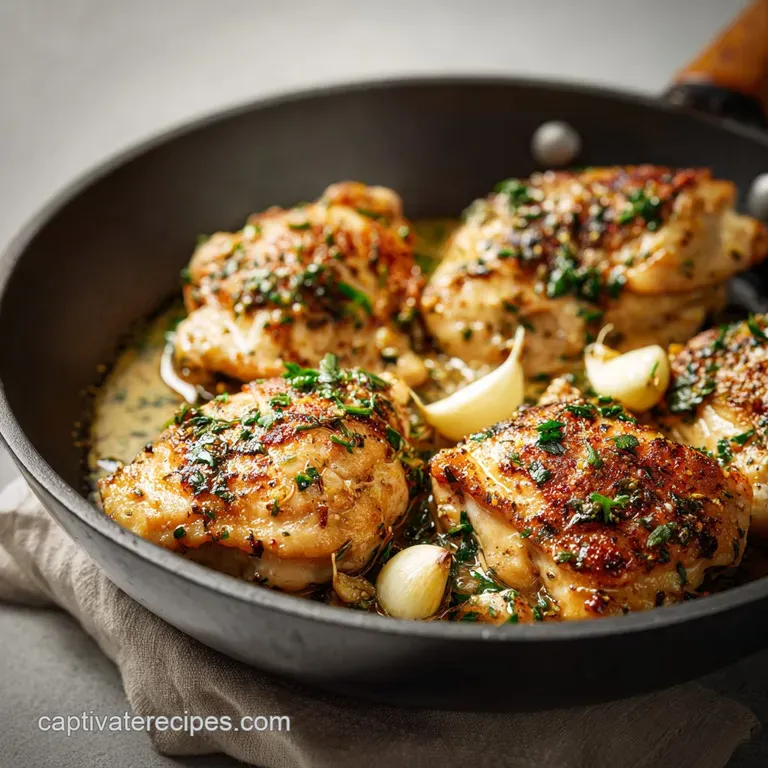
- Dry the meat. Take the 1.5 lbs boneless skinless chicken thighs out and pat them thoroughly with paper towels. Note: Surface moisture is the enemy of a good sear.
- Season generously. Mix the 1 tsp sea salt, 0.5 tsp black pepper, and 0.5 tsp smoked paprika in a small bowl, then coat both sides of the chicken.
- Heat the pan. Add the 2 tbsp olive oil to your skillet over medium high heat. Wait 3 minutes until the oil shimmers and barely wisps smoke.
- First sear. Lay the chicken in the pan, moving away from you to avoid splashes. Cook for 6 minutes until the edges are dark golden and the meat releases easily from the pan.
- Flip. Use tongs to turn the thighs over. Cook for another 5 minutes until the second side develops a deep brown crust.
- Prep the aromatics. While the chicken cooks, smash the 4 cloves of garlic with the side of your knife.
- Add the flavor. Drop the 1 tbsp unsalted butter, smashed garlic, 1 tsp rosemary, and 1 tsp thyme into the spaces between the chicken.
- Baste. Once the butter melts and begins to sizzle, tilt the pan slightly and spoon the foaming herb butter over the chicken for 2 minutes.
- Check temperature. Insert your thermometer into the thickest thigh; it should read 74°C (165°F).
- Rest and finish. Remove the chicken to a plate. Let it rest for 5 minutes until the fibers relax and reabsorb the juices. Serve with the 1 lemon wedges for squeezing.
Chef's Tip: If the garlic starts to turn brown too quickly, slide it on top of the chicken pieces. This stops the direct contact with the pan heat but lets the flavor continue to drip down into the meat.
Mastering Temperature and Avoiding Mistakes
Why Your Chicken Thighs Feel Rubbery
If the meat feels bouncy or tough, you likely didn't get the pan hot enough at the start. Without that initial over high heat sear, the chicken steams in its own juices, which results in a rubbery texture rather than a tender one. Always wait for that oil to shimmer before the meat touches the surface.
Avoiding the Bitter Burnt Garlic Trap
Garlic has a high sugar content and very little water, meaning it burns in seconds at high heat. If you see the garlic turning dark brown or black, immediately add a splash of water or chicken broth to the pan to drop the temperature and stop the burning.
| Problem | Root Cause | Solution |
|---|---|---|
| Chicken sticking to pan | Flipped too early | Wait until the protein naturally releases from the surface |
| Excess smoke in kitchen | Oil heat too high | Use an oil with a higher smoke point or slightly reduce heat |
| Pale, grey meat | Pan overcrowded | Cook in two batches to allow steam to escape |
Common Mistakes Checklist
- ✓ Don't skip the drying step; wet chicken will never get a crispy crust.
- ✓ Resist the urge to move the chicken for the first 5 minutes.
- ✓ Use a heavy bottomed pan to prevent hot spots that burn the herbs.
- ✓ Always let the meat rest; cutting it immediately lets the velvety juices run out.
- ✓ Ensure the butter is unsalted so you have total control over the seasoning.
Customizing Your Garlic and Herb Blend
The Main Protein Alternatives
While we are using 1.5 lbs boneless skinless chicken thighs, this method is surprisingly versatile. You can use the same herb and garlic butter technique for pork chops or even thick cut cauliflower steaks.
Just adjust the cook time pork usually needs about 2-3 minutes less per side than thighs.
Infusing Aromatics through Fat Soluble Extraction
If you want to move toward a Mediterranean vibe, swap the rosemary for dried oregano and add a teaspoon of lemon zest to the butter at the end. For another high flavor option, you might consider my Garlic Herb Butter recipe which uses a similar base but applies it to a different protein.
Adapting for a dairy-free Lifestyle
If you need to skip the butter, replace the 1 tbsp unsalted butter with an extra tablespoon of olive oil or a high-quality vegan butter substitute. To get that same "nutty" flavor that browned butter provides, add a teaspoon of nutritional yeast to the spice rub.
Adjusting the Recipe for Different Needs
When you are scaling this dish down for one or two people, it's pretty straightforward. Just use a smaller skillet so the oil and butter don't spread too thin and burn. The cooking times remain exactly the same because the thickness of the meat hasn't changed.
- Work in batches
- Don't crowd the pan. If you put too much meat in at once, the pan temperature drops, and you’ll end up boiling the chicken.
- Spice adjustments
- When doubling the recipe, only use 1.5x the salt and pepper initially. You can always add more at the end, but you can't take it away.
- Liquid control
- If you find the pan getting too dry between batches, add another tablespoon of oil to keep that sear consistent.
| Servings | Chicken Amount | Skillet Size | Total Cook Time |
|---|---|---|---|
| 2 People | 0.75 lbs | 20 cm (8 inch) | 15 minutes |
| 4 People | 1.5 lbs | 30 cm (12 inch) | 15 minutes |
| 6 People | 2.25 lbs | 2 batches | 30 minutes |
Debunking Searing Misconceptions
One of the biggest myths in the kitchen is that searing meat "seals in the juices." In reality, moisture loss happens regardless of the sear. What the sear actually does is create a complex layer of flavor through the Maillard reaction.
The "juiciness" comes from the internal fat of the thigh and the resting period, not the crust itself.
Another common thought is that you should wash your chicken before cooking. Please don't do this! Washing chicken actually spreads bacteria around your sink and counters. The heat of the pan will handle any safety concerns, and keeping the chicken dry is much more important for getting that beautiful golden color we're after.
Guidelines for Storage and Zero Waste
Storage: Keep any leftover chicken in an airtight container in the fridge for up to 4 days. When reheating, I recommend using a skillet over medium heat with a splash of water or broth to keep it from drying out. Avoid the microwave if you can, as it tends to make the texture a bit rubbery.
Freezing: This recipe freezes beautifully. Wrap the cooked thighs individually in foil and place them in a freezer bag for up to 3 months. Thaw in the fridge overnight before reheating.
Zero Waste: Don't throw away those herb stems! The stems of the rosemary and thyme still hold a ton of flavor. I throw them into a freezer bag with my onion skins and carrot tops to make a quick chicken stock later in the month.
Also, if you have extra lemon wedges, squeeze them into a bottle of water for a refreshing drink while you clean up.
Pairing Suggestions for a Complete Meal
This chicken is incredibly savory, so it needs sides that can either stand up to the garlic or provide a fresh contrast. I love serving this over a bed of fluffy rice or with some roasted potatoes that can soak up that leftover herb butter from the pan.
If you are looking for a complete one pan solution, you could adapt the sides from our Lemon Herb Chicken recipe, which uses similar aromatics but includes the starch in the same tray. For a lighter option, a simple arugula salad with a balsamic vinaigrette provides a peppery bite that cuts right through the richness of the chicken thighs.
Mastering the Side Pairing
If you have a few extra minutes, sauté some green beans in the same pan right after you remove the chicken. They will pick up all the browned bits (the fond) and the leftover garlic and herb butter, making for a side dish that tastes like it took much longer than 5 minutes to prepare.
Trust me, that pan flavor is liquid gold don't let it go to waste!

Recipe FAQs
Can I use frozen boneless skinless chicken thighs instead of fresh?
No, you must fully thaw them first. Frozen or partially frozen thighs will drastically lower the pan temperature, leading to steaming instead of searing and resulting in pale, rubbery meat.
How to prevent the garlic from burning before the chicken finishes cooking?
Add the smashed garlic during the last two minutes of cooking. Toss the smashed garlic in with the butter and fresh herbs, tilting the pan to baste the chicken without letting the garlic sit directly on the hot pan surface.
Is it true that searing meat seals in the juices?
No, this is a common misconception. Searing primarily creates flavor through the Maillard reaction; juiciness is maintained by cooking to the correct internal temperature and allowing the meat to rest properly.
What is the crucial step I must take before seasoning the thighs?
Pat the chicken thighs completely dry using paper towels. Excess surface moisture will boil off as steam when they hit the hot oil, actively preventing the development of the desirable crispy crust.
How do I check if the chicken thighs are fully cooked and safe to eat?
Insert a meat thermometer into the thickest part to confirm an internal temperature of 74°C (165°F). Visual checks like clear juices are helpful, but temperature is the only reliable measure for poultry safety.
How should I adjust the cooking time if I use chicken breasts instead of thighs?
Reduce the total searing time by approximately four minutes. Chicken breasts are much leaner and cook faster than thighs; if you master the temperature control required here, you will find similar success when learning the technique for our Vegan Chicken Sandwich recipe.
What is the best way to use the leftover pan drippings after serving?
Sauté quick cooking vegetables, like spinach or green beans, directly in the pan drippings. These flavorful remnants, mixed with the residual herb butter, will coat the vegetables perfectly, mimicking the complexity of our Mochiko Chicken Bites recipe technique.
Garlic Herb Chicken Thighs
Ingredients:
Instructions:
Nutrition Facts:
| Calories | 332 kcal |
|---|---|
| Protein | 34.2 g |
| Fat | 20.8 g |
| Carbs | 1.9 g |
| Fiber | 0.4 g |
| Sugar | 0.3 g |
| Sodium | 645 mg |
