Healthy Mason Jar Salad Recipe
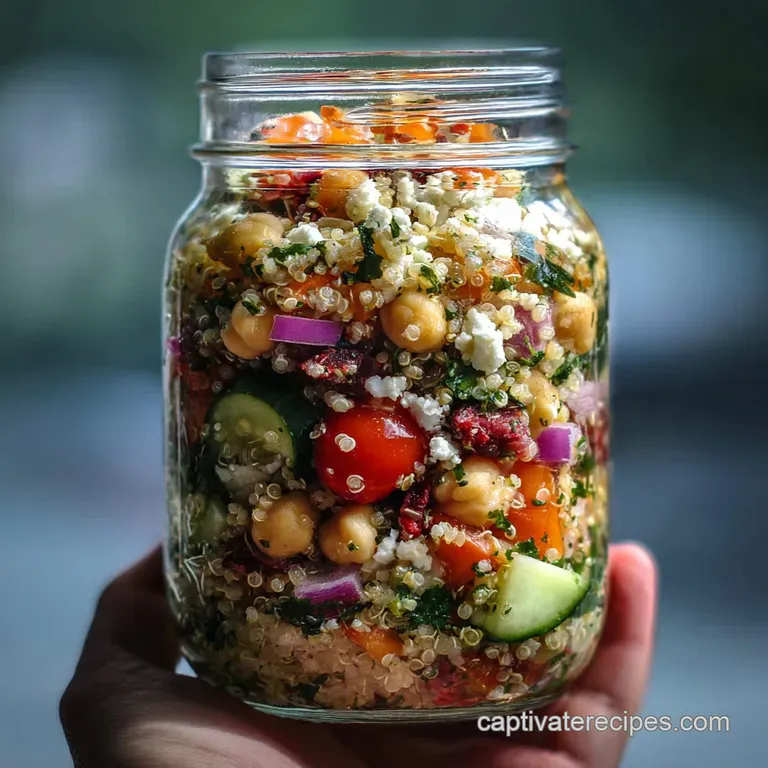
- Time: Active 20 mins, Passive 15 mins, Total 35 mins
- Flavor/Texture Hook: Zesty lemon tahini paired with shatter crisp kale and velvety chickpeas.
- Perfect for: High protein meal prep and busy office lunches.
- Master this Healthy Mason Jar Salad Recipe
- Vertical Layering Physics
- Essential Prep Specs
- Component Analysis Deep Dive
- Pantry Staples and Swaps
- Necessary Kitchen Gear
- Layering for Freshness
- Avoiding Lunchtime Disasters
- Flavor Profile Variations
- Scaling for the Week
- Storage and Waste
- Serving for Impact
- Debunking Jar Salad Lore
- Recipe FAQs
- 📝 Recipe Card
Master this Healthy Mason Jar Salad Recipe
The snap of a fresh English cucumber against the clink of a glass jar is the soundtrack to my Sunday afternoon meal prep. I used to be the person who brought a plastic tub of wilted greens to the office, only to find a soggy, gray mess by noon.
It was depressing, wasteful, and frankly, tasted like cardboard. Then I discovered the physics of vertical layering, and suddenly, my desk lunch felt like a high end bistro meal.
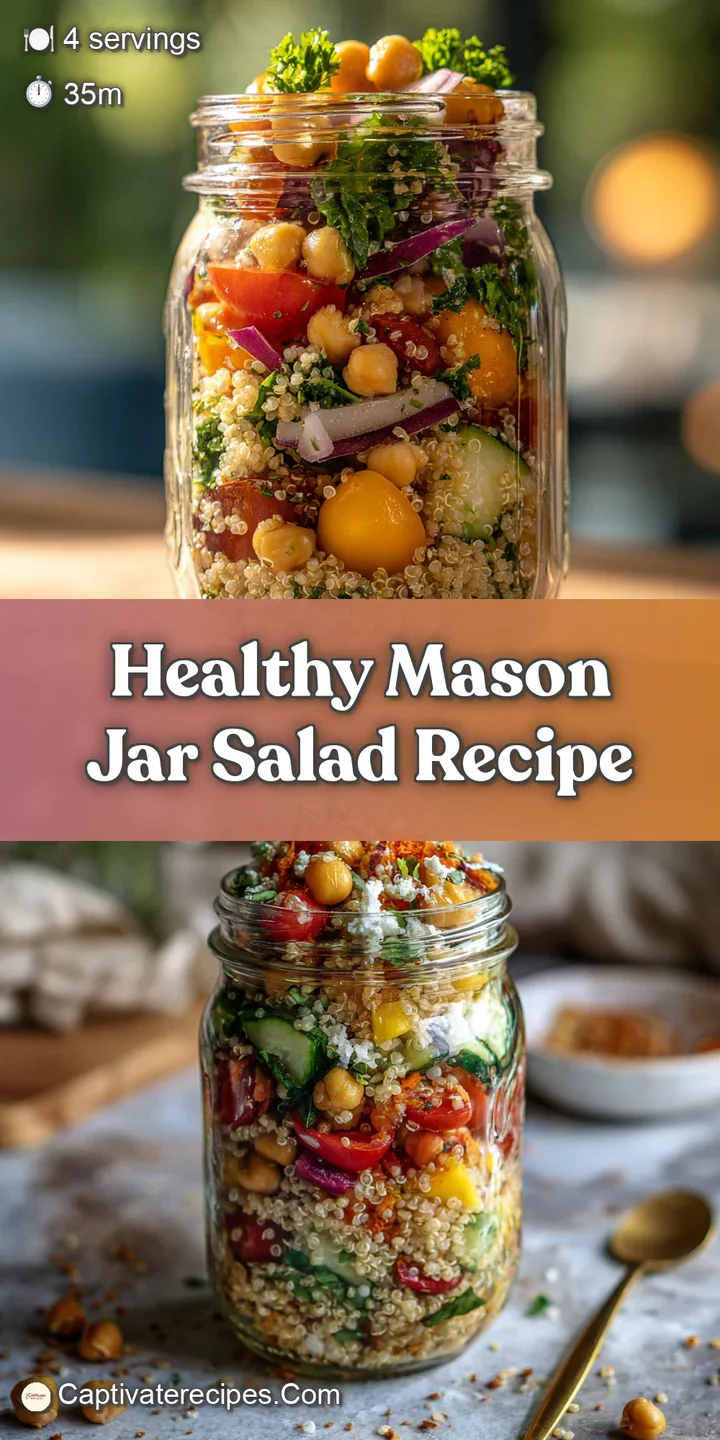
This healthy mason jar salad recipe with quinoa and chickpeas makes the perfect, easy work lunch. It solves the eternal problem of the "sad desk salad" by keeping the heavy hitters at the bottom and the delicate greens at the top.
When you finally unscrew that lid and shake it into a bowl, the dressing coats everything fresh, as if you just whipped it up. Trust me, the velvety texture of the tahini dressing combined with the hearty bite of quinoa is a massive upgrade from your standard vinaigrette.
We've all been there, staring at a pile of limp lettuce and wondering where it all went wrong. The secret isn't just the ingredients, it is the architecture of the jar itself. We are building a moisture proof bunker for your lunch.
By the time you finish this guide, you will be an expert at stacking textures and flavors that stay vibrant from Monday through Thursday. Let's get into the mechanics of why this works so well.
Vertical Layering Physics
Hydrophobic Barrier: The dressing sits at the absolute bottom, separated from the greens by dense, non porous proteins and grains. This prevents the "osmotic wilt" that occurs when salt and acid touch leafy cells prematurely.
Atmospheric Buffer: Packing the quinoa and chickpeas tightly creates a physical seal. This minimizes the air pockets that cause oxidation in the delicate vegetables higher up in the jar.
Structural Integrity: Placing heavy, water rich vegetables like tomatoes and cucumbers in the middle creates a weight distribution that keeps the light greens from being crushed.
| Method | Prep Time | Texture Result | Best For |
|---|---|---|---|
| Stovetop Quinoa | 15 mins | Fluffy and separated | Maximum volume and light texture |
| Oven Toasted Quinoa | 20 mins | Nutty and crunchy | Added depth for those who love "bite" |
| Pressure Cooker | 10 mins | Soft and tender | Quickest prep for large batches |
When choosing between stovetop and oven prep, I usually stick to the stovetop for this jar salad recipe for work lunch with quinoa and chickpeas. The grains stay individual and don't clump, which is vital for that even dressing distribution later on.
If you are in a rush, a pressure cooker works, but be careful not to over hydrate the grains, or they will turn into a mushy paste at the bottom of your jar.
Essential Prep Specs
For the best results, we need to focus on precision. These numeric checkpoints ensure your mason jar salad recipe for work lunch with quinoa and chickpeas stays safe and delicious. First, ensure your quinoa is cooled to exactly room temperature before layering.
Adding warm grains to a jar creates condensation, which is the absolute enemy of a crisp salad.
Second, aim for a 1:3 ratio of dressing to hearty ingredients. For this specific recipe, that means your 80ml of tahini based dressing is the perfect amount to coat the 425g of chickpeas and 370g of quinoa without drowning the vegetables. Finally, use 32 ounce wide mouth jars.
The wide mouth isn't just for aesthetics, it allows you to pack the layers firmly without bruising the produce.
Component Analysis Deep Dive
| Ingredient | Science Role | Pro Secret |
|---|---|---|
| Tahini (80ml) | Emulsifier | Whisk with warm water first to prevent the fat from seizing. |
| Chickpeas (425g) | Moisture Guard | These act as a sponge, soaking up flavor without losing structural shape. |
| Quinoa (370g) | Texture Buffer | High surface area catches every drop of lemon and maple syrup. |
| Kale (200g) | Structural Crown | Hardy cell walls withstand the "vacuum" effect of a sealed jar. |
Building a mason jar salad recipe for work lunch with quinoa and chickpeas requires high-quality components. Use a premium tahini that is pourable and smooth, not the chalky stuff at the bottom of the tub. For the chickpeas, make sure they are thoroughly rinsed to remove any metallic canned taste.
Pantry Staples and Swaps
- Tahini (80ml): Substitute with Almond Butter. Why this? Maintains the creamy, high fat emulsification needed for the base layer.
- Fresh Lemon Juice (60ml): Substitute with Apple Cider Vinegar. Why this? Provides the necessary acidity to cut through the heavy tahini.
- Maple Syrup (15ml): Substitute with Honey or Agave. Why this? Balances the bitterness of tahini and the tartness of lemon.
- Canned Chickpeas (425g): Substitute with Cooked Lentils. Why this? Provides similar protein density and holds up well against dressing.
- Cooked Quinoa (370g): Substitute with Farro or Couscous. Why this? Offers a chewy grain base that absorbs dressing efficiently.
- English Cucumber (200g): Substitute with Zucchini. Why this? Provides a similar crunch and water content for the mid layer.
- Kale (200g): Substitute with Romaine Hearts. Why this? Sturdy enough to stay crisp, though slightly less shelf stable than kale.
- Sunflower Seeds (30g): Substitute with Toasted Pepitas. Why this? Adds the necessary "shatter" texture to the final bite.
| Original Ingredient | Substitute | Why It Works |
|---|---|---|
| Chickpeas (425g) | Cannellini Beans | Similar creaminess. Note: Softer texture, pack slightly looser. |
| Tahini (80ml) | Greek Yogurt | High protein. Note: Adds tang; reduce lemon juice by 10ml. |
| Quinoa (370g) | Brown Rice | Nutty flavor. Note: Denser grain; increase dressing by 15ml. |
If you are looking for more protein packed ideas, you might enjoy my Mediterranean Chickpea Salad recipe. It uses many of these same budget friendly pantry staples but focuses on a fresh, immediate toss rather than the long term storage of the jar.
Necessary Kitchen Gear
You don't need a high end kitchen to pull this off, but a few specific tools make the process much more efficient. A standard whisk is essential for making that lemon tahini dressing velvety and smooth. I also recommend a wide mouth funnel.
It sounds like a "unitasker," but it prevents quinoa and dressing from sticking to the rim of the jar, which can compromise the seal.
A heavy bottomed pot (like a small Le Creuset or similar) is great for cooking the quinoa perfectly. You want even heat distribution so the bottom doesn't scorch while the top is still firm. Finally,, 32 ounce glass jars are the gold standard.
Plastic containers often absorb the smell of onions and garlic, but glass keeps your work lunch with quinoa and chickpeas tasting exactly as it should.
Layering for Freshness
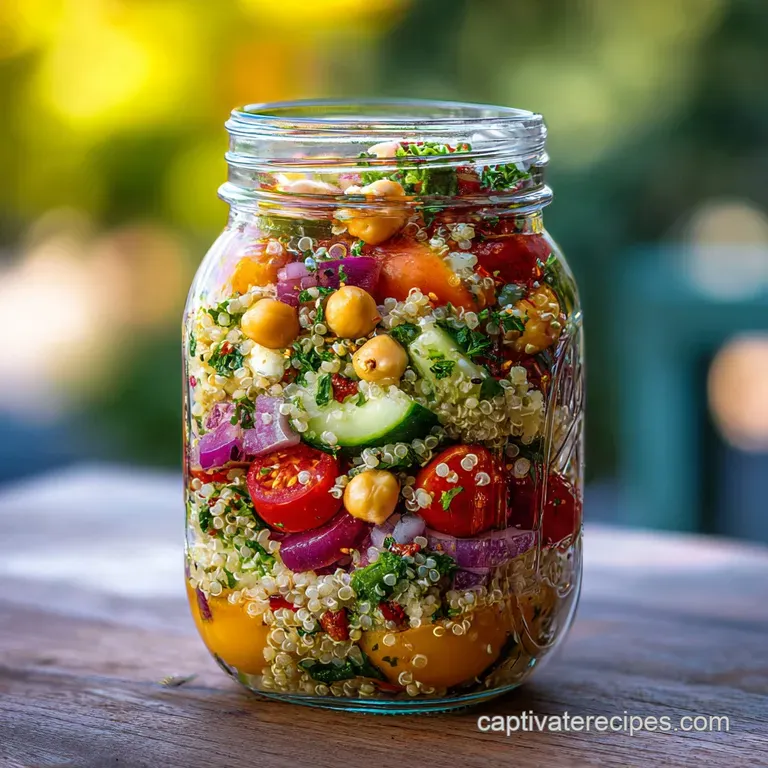
1. Tahini Dressing Foundation
Whisk the 80ml tahini, 60ml lemon juice, 15ml maple syrup, minced garlic, sea salt, and 30ml warm water until velvety and pourable. Divide this evenly among the bottom of four 32 ounce jars. Note: Keeping the liquid at the bottom is the key to crispness.
2. Hearty Chickpea Base
Add the 425g of drained chickpeas directly on top of the dressing. Shake the jar slightly to ensure they are submerged in the liquid. Note: This "marinating" stage makes the chickpeas incredibly flavorful.
3. Grain Insulation
Spoon the 370g of cooled quinoa over the chickpeas, pressing down firmly with the back of a spoon. Season this layer with the 5g of cracked black pepper. Note: The quinoa acts as a dry barrier between the wet chickpeas and the fresh veggies.
4. Vegetable Shield
Layer the 200g of diced cucumber and 250g of halved cherry tomatoes next. Ensure the tomatoes are skin side down to prevent their juice from leaking into the quinoa too quickly.
5. Flavor Accents
Add the 100g of chopped bell pepper and 40g of thinly sliced red onion. These smaller pieces fill the gaps between the larger cucumber chunks, creating a tighter seal.
6. Leafy Green Crown
Pack the 200g of chopped kale or romaine hearts into the remaining space. Tamp them down firmly; they will compress significantly. Note: Kale is superior for 4 day storage as it doesn't bruise as easily as romaine.
7. The Crunch Topping
Sprinkle the 30g of toasted sunflower seeds on top of the greens. Keep them at the very top to ensure they stay dry and maintain their signature shatter.
8. The Final Seal
Wipe the rim of each jar with a clean cloth to remove any debris. Screw the lids on tight and refrigerate immediately. Wait at least 2 hours before eating to let the flavors meld.
Chef's Tip: Freeze your lemon for 10 minutes before juicing. This breaks down the internal membranes and allows you to extract almost 20% more juice with less effort!
Avoiding Lunchtime Disasters
The most common issue with any jar salad recipe is the "Soggy Bottom Syndrome." This happens when the layers aren't packed tightly enough, allowing the dressing to migrate upward during transport. If you find your quinoa is getting mushy, you likely didn't drain your chickpeas well enough.
Water is the enemy of texture here.
Soggy Green Prevention
When greens go limp, it is usually due to moisture trapped at the top of the jar. Ensure your kale is bone dry after washing. I recommend using a salad spinner and then patting the leaves with a paper towel. Even a few drops of water can turn into steam inside a sealed jar on a warm commute, ruining the crunch.
Condensation and Steam
Never, ever layer warm quinoa into your jars. The residual heat will create condensation on the glass, which drips down and wilts the vegetables. Let the quinoa cool completely on a flat baking sheet to maximize surface area and speed up the cooling process.
Jar Size Selection
Using a jar that is too large leaves too much oxygen at the top, which leads to faster spoilage of the onions and peppers. If you only have smaller jars, scale the recipe down. A tightly packed jar is a fresh jar.
| Problem | Root Cause | Solution |
|---|---|---|
| Bitter Dressing | Tahini was old or unwhisked | Whisk with warm water; add a pinch more maple syrup. |
| Wilted Kale | Too much air in the jar | Pack the greens tighter to the very top rim. |
| Mushy Quinoa | Quinoa was warm when packed | Spread on a tray to cool for 15 mins before layering. |
Common Mistakes Checklist:
- ✓ Drain and pat dry chickpeas completely (prevents diluted dressing)
- ✓ Use wide mouth jars only (easier to pack and easier to empty)
- ✓ Store jars upright in the fridge (never lay them on their side)
- ✓ Cool all cooked grains to room temperature before assembly
- ✓ Whisk dressing until completely emulsified without lumps
For another quick meal prep option that doesn't involve jars, you might want to try our Spinach and Feta recipe. These egg bites are just as efficient for a work lunch with quinoa and chickpeas and can be made in the same Sunday window.
Flavor Profile Variations
The Mediterranean Twist
Swap the sunflower seeds for kalamata olives and add a tablespoon of dried oregano to the tahini dressing. This version leans heavily into the savory, briny notes. You can also replace half the cucumber with marinated artichoke hearts for a more complex flavor profile.
Spicy Southwest Alternative
Trade the tahini for a lime cilantro vinaigrette. Replace the chickpeas with black beans and add a layer of corn and jalapeños. This swap keeps the structural integrity of the jar salad recipe for work lunch with quinoa and chickpeas while completely shifting the taste toward a zesty, smoky finish.
Protein Power Boost
If you need extra fuel, add a layer of hard boiled eggs or shredded chicken directly above the quinoa. This adds about 10-15 grams of protein per serving. Just ensure the protein is dry; moist chicken will make the quinoa underneath it soggy over time.
Scaling for the Week
Downsizing for Two: If you only need two lunches, cut the ingredients exactly in half. Use two jars and follow the same layering process. The cook time for the quinoa remains the same, but you will use a smaller pot.
Bulk Meal Prep: To make 8 jars, double the ingredients, but be careful with the spices. Increase the sea salt and pepper to 1.5x rather than a full 2x to avoid over seasoning. Work in two batches for the quinoa to ensure it cooks evenly and doesn't get gummy in a crowded pot.
Baking the Quinoa (2x): If doubling the recipe, you can toast the quinoa in the oven at 350°F for 20 minutes with a bit of oil before boiling. This adds a "shatter" to the grain that holds up even longer in the fridge.
Storage and Waste
Fridge Life: These jars stay fresh for 4 days. On the fifth day, the cucumbers start to lose their crispness, and the onions can become a bit pungent. Always store them in the coldest part of the fridge, away from the door.
Zero Waste Tips: Don't toss those kale stems! Thinly slice them and sauté them with garlic for a quick side dish, or throw them into a morning smoothie. If you have leftover tahini dressing, it makes an incredible dip for raw carrots or a sauce for roasted sweet potatoes.
Serving for Impact
When you are ready to eat your healthy mason jar salad recipe, don't just eat it out of the jar. The layers are too tight for a good mix. Instead, grab a large bowl and invert the jar. Give it a vigorous shake if the chickpeas are stuck.
As the salad tumbles out, the tahini dressing will naturally pour over the kale and quinoa, creating a perfectly coated meal. The sunflower seeds will land on top, providing that essential crunch. If you're at the office, this little ritual is actually quite satisfying.
It's a quick, efficient way to refuel without the heavy feeling of a takeout burger.
If you find the dressing is too thick after being in the fridge, let the jar sit at room temperature for 10 minutes before shaking. The fats in the tahini can firm up when cold, and a little warmth brings back that velvety consistency.
It's a simple, budget smart way to ensure every bite is as good as the first one you prepped.
Debunking Jar Salad Lore
Myth: Glass jars create a "vacuum seal" that keeps food fresh for weeks. While the seal is tight, it isn't a true vacuum. The freshness comes from the layering strategy, not the air removal. Most jars will only keep greens truly "shatter crisp" for 4-5 days.
Myth: You must use kale because other greens will wilt. While kale is the sturdiest, romaine and even cabbage work beautifully. The key isn't the leaf type, it is ensuring the leaf never touches the dressing until the moment you eat.
Myth: Plastic jars are just as good as glass. Plastic is porous and can retain the smell of previous meals. Glass is non reactive and maintains a consistent temperature, which is vital for food safety during your commute.
Recipe FAQs
Can I make healthy mason jar salads ahead of time?
Yes, absolutely. These salads are designed for meal prep and can be assembled up to 4 days in advance. The key is the layering technique to keep ingredients separate and crisp.
How do I prevent my mason jar salad from getting soggy?
Pack ingredients strategically in layers. The dressing should be at the bottom, followed by dense grains or proteins, then vegetables, and finally delicate greens on top to prevent moisture transfer.
What is the best way to store mason jar salads?
Store them upright in the coldest part of your refrigerator. This ensures the layers remain stable and prevents any accidental spillage or premature mixing of ingredients.
Can I substitute the quinoa in this recipe?
Yes, farro or couscous are good substitutes for quinoa. These grains offer a similar chewy texture and will absorb dressing well, maintaining the integrity of the salad.
How do I serve a mason jar salad?
Invert the jar into a bowl and shake to mix. This allows the dressing to coat all the ingredients evenly, mimicking a freshly tossed salad.
Is it true that plastic jars are not ideal for mason jar salads?
Yes, glass jars are preferred. Plastic can absorb odors and is porous, potentially affecting the flavor over time, while glass is non-reactive and maintains ingredient integrity better.
What are the essential components for a long lasting mason jar salad?
A moisture barrier at the bottom and sturdy greens on top are crucial. Ingredients like quinoa, chickpeas, and hardier vegetables protect the delicate greens from the dressing's moisture.
Healthy Mason Jar Salad
Ingredients:
Instructions:
Nutrition Facts:
| Calories | 472 kcal |
|---|---|
| Protein | 15.5 g |
| Fat | 16.5 g |
| Carbs | 47 g |
| Fiber | 11 g |
| Sugar | 7.5 g |
| Sodium | 345 mg |
