Lemon Herb Chicken and Potatoes: One-Pan Crispy Baked
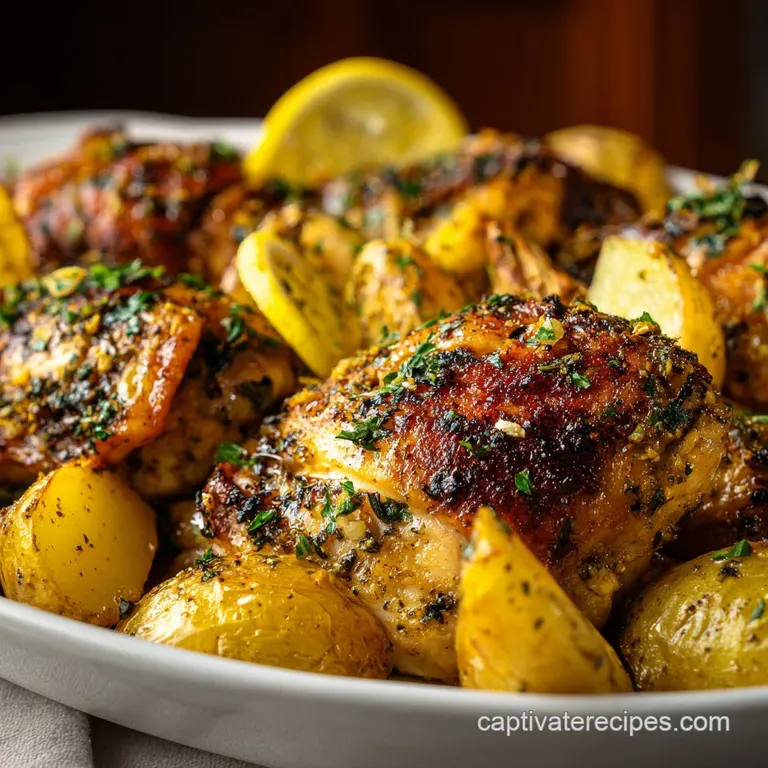
- Time: Active 15 minutes, Passive 45 minutes, Total 60 minutes
- Flavor/Texture Hook: Zesty lemon brightness paired with the shatter crisp texture of roasted chicken skin.
- Perfect for: Tired home cooks needing a reliable weeknight win that feels like a Sunday feast.
- Golden Roasted Lemon Herb Chicken and Potatoes
- The Logic Behind the Perfect One Pan Roast
- Ingredient Deep Dive for Reliable Results
- Essential Components for Savory Results
- Simple Tools for Reliable Roasting
- Step-by-Step Guide to the Perfect Sizzle
- Fixing Common Roasting Texture Issues
- Smart Swaps for Various Dietary Needs
- Smart Storage and Zero Waste Methods
- Plating Tips for Better Eye Appeal
- HIGH in Sodium
- Recipe FAQs
- 📝 Recipe Card
Golden Roasted Lemon Herb Chicken and Potatoes
The smell of roasting rosemary and garlic hitting a hot pan is the ultimate kitchen therapy. There is something about that specific sizzle when the chicken fat begins to render, dripping down to baste the potato wedges below, that makes all the stress of a long workday just melt away.
I remember the first time I tried making this; I crowded the pan so much the food basically boiled in its own steam. It was a soggy mess, but it taught me the most valuable lesson in roasting: give your ingredients some breathing room.
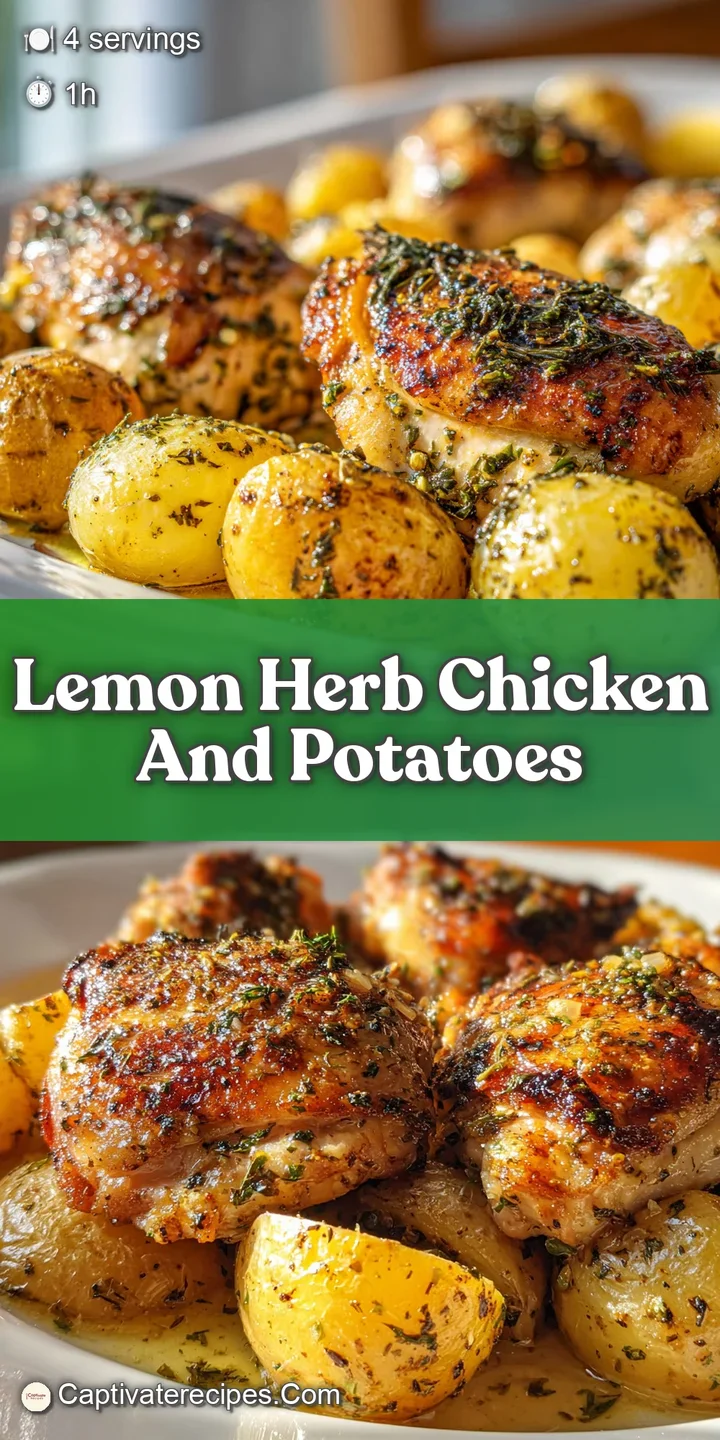
This recipe makes a ridiculously easy one pan lemon herb chicken and potatoes with garlic. We are going for those deeply browned, crispy edges on the potatoes and skin that practically shatters when you bite into it.
I’ve refined this method over dozens of Tuesday nights to ensure it works every single time, even if you’re half distracted by laundry or homework. You don’t need fancy equipment, just a decent sheet pan and the patience to let the oven do the heavy lifting.
We are focusing on high impact, budget friendly flavors here. By using bone in thighs, we get more flavor for less money compared to breasts, and the Yukon Gold potatoes provide a velvety interior that holds up to the high heat.
It’s a reliable, honest meal that fills the house with an aroma that says "someone actually cooked today," even if you only spent 15 minutes of active time on it.
The Logic Behind the Perfect One Pan Roast
Thermal Synergy: Placing the chicken skin side up allows the rendering fat to naturally baste the potatoes, creating a "confit" effect that prevents the starch from drying out.
The Physics of the Poultry Sizzle: over High heat roasting triggers the Maillard reaction on the skin while simultaneously steaming the potato interiors through the moisture released from the chicken meat.
| Chicken Thickness | Internal Temp | Rest Time | Visual Cue |
|---|---|---|---|
| 1.5 inches | 165°F (74°C) | 5 minutes | Juices run clear when pierced |
| 2 inches | 165°F (74°C) | 7 minutes | Bone pulls away slightly from meat |
| Under 1 inch | 165°F (74°C) | 3 minutes | Skin is dark gold and rigid |
Choosing the right pan is half the battle when you want to avoid a "steamed" result. A large, rimmed baking sheet often called a half sheet pan is the best tool here because it allows air to circulate around each piece of chicken and potatoes.
If you use a glass pyrex dish, the high sides trap moisture, which is the enemy of the crunch we are chasing.
Ingredient Deep Dive for Reliable Results
| Ingredient | Science Role | Pro Secret |
|---|---|---|
| Bone in Thighs | Fat Reservoir | Keeps the meat juicy at 400°F+ while providing fat for the potatoes. |
| Yukon Gold Potatoes | Medium Starch | Holds its shape better than Russets but remains creamier than red potatoes. |
| Fresh Rosemary | Volatile Oils | Heat stable herb that survives long roasting without turning bitter. |
| Smoked Paprika | Color Catalyst | Aids in browning and adds a "charcoal grill" depth without a grill. |
Using the right fat is just as important as the protein itself. Extra virgin olive oil is my go to because it has enough flavor to stand up to the lemon, but it also helps the salt and spices adhere to the smooth skin of the chicken.
Essential Components for Savory Results
- 1 kg (2.2 lbs) chicken thighs: Stick with bone in and skin on for the best texture.
- Substitute: Chicken drumsticks. Why this? They have a similar fat content and cook at the same rate.
- 1.5 lbs (680g) Yukon Gold potatoes: Cut these into 1 inch wedges so they cook in exactly 45 minutes.
- Substitute: Red bliss potatoes. Why this? They stay firm and waxy, though the skin is slightly thinner.
- 1 large head of garlic: We are halving this crosswise to roast alongside the meat.
- Substitute: Shallots halved. Why this? Provides a similar aromatic sweetness when caramelized.
- 1 large lemon: Use half for juice in the marinade and slice the other half for roasting.
- Substitute: 2 tbsp bottled lemon juice and a splash of vinegar. Why this? Acidity is vital to cut through the chicken fat.
- 1/4 cup (60ml) extra virgin olive oil: This is our primary conductor for heat and flavor.
- Substitute: Avocado oil. Why this? Higher smoke point but a more neutral flavor profile.
- 2 tbsp fresh rosemary & 1 tbsp fresh oregano: Fresh is non negotiable for that bright, forest like aroma.
- Substitute: 1 tbsp total dried poultry seasoning. Why this? Concentrated flavor, but use less as dried herbs are potent.
- 4 garlic cloves, minced: This goes into the liquid marinade for deep penetration.
- Substitute: 1 tsp garlic powder. Why this? Distributes evenly but lacks the "bite" of fresh cloves.
- 1.5 tsp sea salt & 1/2 tsp black pepper: Essential for drawing out moisture from the skin.
| Original Ingredient | Substitute | Why It Works |
|---|---|---|
| Smoked Paprika (1 tsp) | Sweet Paprika | Provides the same color. Note: You lose the smoky depth, so add a pinch of cumin. |
| Fresh Rosemary (2 tbsp) | Fresh Thyme | Similar woody profile. Note: Thyme is more floral and less piney than rosemary. |
| Yukon Gold Potatoes | Sweet Potatoes | Same cook time. Note: Adds significant sweetness; increase salt to balance. |
Always remember to pat your chicken dry with paper towels before you start. Any surface moisture on the skin will turn into steam in the oven, preventing that gorgeous, crackling crust from forming. It’s a small step that makes a massive difference in the final mouthfeel of the chicken and potatoes.
Simple Tools for Reliable Roasting
To get the best results, you'll want a heavy duty rimmed baking sheet. If the pan is too thin, it might warp under the high heat, causing the oil to pool in one corner and leaving half your potatoes dry.
A large mixing bowl is also helpful for tossing the potatoes in the herb oil to ensure every nook and cranny is coated.
Chef's Tip: Microwave your lemon for 10 seconds before juicing. It softens the internal membranes and ensures you get every single drop of zesty liquid for the marinade.
Finally,, a meat thermometer is your best friend. While 45 minutes is usually the sweet spot, oven calibrations vary wildly. Aiming for that 165°F internal temperature ensures the chicken is safe without becoming stringy.
step-by-step Guide to the Perfect Sizzle
- Preheat the oven. Set your rack to the middle position and crank it to 400°F (200°C). Note: This ensures the heat hits the pan evenly from top and bottom.
- Whisk the marinade. Combine olive oil, lemon juice, minced garlic, rosemary, oregano, paprika, salt, and pepper in a small bowl.
- Prep the chicken. Pat the 1 kg of thighs bone dry with paper towels. Note: This is the secret to skin that sounds like a cracker when you tap it.
- Toss the potatoes. Place the 1.5 lbs of wedges in a bowl and pour over half the marinade, tossing until they look glossy and coated.
- Coat the protein. Rub the remaining marinade over the chicken, making sure to get some under the skin if possible.
- Arrange the pan. Place the chicken on the sheet pan, then scatter potatoes around them. Ensure nothing is overlapping to allow for maximum crispness.
- Add the aromatics. Nestled the halved garlic head and lemon slices among the chicken and potatoes.
- Initial roast. Slide the pan into the oven for 30 minutes. Listen for the sizzle as the fat starts to render.
- The final crisp. Continue roasting for another 15 minutes until the skin is dark golden and the potatoes are fork tender.
- Rest before serving. Let the pan sit on the counter for 5 minutes. Note: This allows the juices to redistribute so they don't flood the plate when you cut in.
Fixing Common Roasting Texture Issues
Fixing Soggy Potato Wedges
If your potatoes look pale and feel soft rather than crispy, the oven was likely too crowded or the temperature was too low. The moisture released from the chicken creates a humid environment; if the potatoes are touching each other, they will steam instead of roast.
Next time, use a larger pan or two separate pans to give them space.
Preventing Burnt Minced Garlic
Minced garlic has a high sugar content and can burn quickly at 400°F, turning bitter. If you find your garlic bits are turning black, try tucking the minced garlic under the chicken skin or mixing it more thoroughly with the oil to provide a protective layer against the direct heat.
| Problem | Root Cause | Solution |
|---|---|---|
| Rubbery Chicken Skin | Residual moisture | Pat skin dry with paper towels; avoid covering with foil. |
| Dry Chicken Meat | Overcooking | Use a thermometer; pull at 160°F as carryover heat hits 165°F. |
| Potatoes Sticking | Not enough oil | Ensure every wedge is fully translucent with oil before roasting. |
Common Mistakes Checklist
- ✓ Forgot to pat the chicken dry (leads to rubbery skin).
- ✓ Crowded the pan so the pieces were overlapping (leads to steaming).
- ✓ Used a glass baking dish instead of a metal rimmed sheet (traps moisture).
- ✓ Sliced potatoes too small (they turn to mush before the chicken is done).
- ✓ Skipped the resting period (all the juices run out immediately).
Smart Swaps for Various Dietary Needs
If you are cooking for someone with specific needs, this dish is naturally quite flexible. For a low carb or Keto version, you can easily swap the Yukon Golds for cauliflower florets or radishes. Radishes might sound strange, but when roasted, they lose their peppery bite and take on a texture very similar to a potato.
For a Mediterranean twist, add half a cup of pitted Kalamata olives and some halved cherry tomatoes during the last 15 minutes of roasting. The tomatoes will burst and create a light "sauce" that mingles with the lemon and chicken fat, perfect for dipping crusty bread.
If you are scaling the recipe down for two people, use a smaller pan but keep the temperature the same. If you are scaling up for a crowd, do not try to squeeze everything onto one sheet. Use two separate pans on different racks and swap their positions halfway through the cooking time to ensure even browning.
Smart Storage and Zero Waste Methods
Storage Guidelines: This dish keeps remarkably well in the fridge for up to 4 days. Store the chicken and potatoes in an airtight container once they have cooled to room temperature. To reheat, I highly recommend using an air fryer or a toaster oven rather than a microwave.
Five minutes at 350°F will bring that skin back to life, whereas a microwave will make it soft and chewy.
- The Garlic Head
- Don't throw away that roasted garlic head! Squeeze the softened, caramelized cloves out of their skins and spread them on toast or whisk them into a salad dressing the next day.
- Lemon Rinds
- After juicing the lemon, toss the spent rinds into the pan. They will release even more citrus oils as they roast.
- Chicken Bones
- Save the bones in a bag in the freezer. Once you have a few pounds, they make a fantastic base for a lemon ginger chicken stock.
Plating Tips for Better Eye Appeal
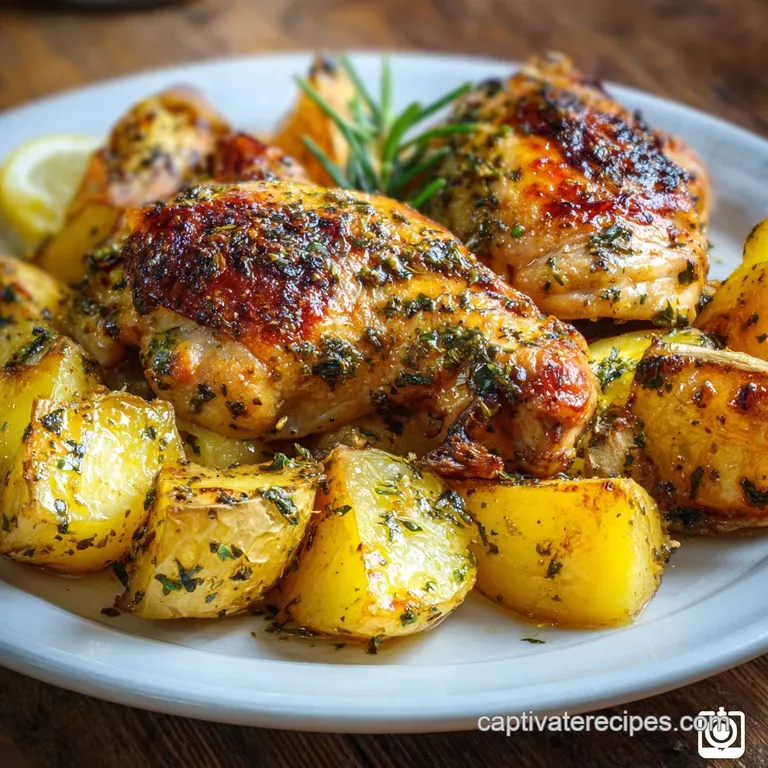
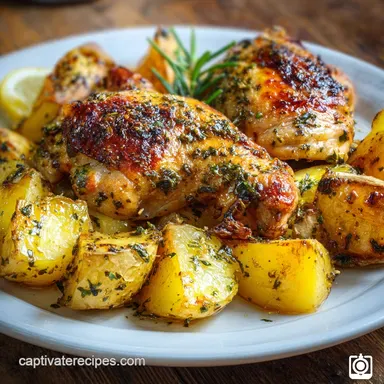
To make this look like it came from a bistro rather than a sheet pan, start by creating a bed of the roasted potatoes on a large platter. Place the chicken thighs on top so the crispy skin is the star of the show. Scatter the roasted lemon slices around the edges for a pop of bright yellow.
Finish the dish with a handful of fresh parsley or extra oregano leaves. The burst of green against the golden brown chicken and potatoes makes the whole meal look fresh and vibrant.
If you have any juices left on the baking sheet, pour them into a small bowl and serve them on the side as a "jus" for dipping the potatoes.
Chef's Note: Rub your fresh herbs between your palms before chopping. The friction releases the essential oils, making your lemon herb chicken and potatoes significantly more aromatic before they even hit the oven.
The contrast of the rustic, charred garlic head sitting next to the glistening chicken is enough to make anyone’s mouth water. It’s a simple, honest presentation that honors the ingredients and the minimal effort it took to bring them all together.
Common Questions About Roasting Poultry
Can I use chicken breasts instead of thighs? You can, but you have to be careful. Breasts are much leaner and cook faster than thighs. If you use breasts, I recommend keeping them whole and checking the internal temperature after 20-25 minutes.
You may need to remove the chicken and let the potatoes finish roasting on their own to prevent the meat from becoming dry and woody.
Should I peel the potatoes? I strongly suggest leaving the skins on, especially with Yukon Golds. The skin provides a structural barrier that helps the wedge hold its shape, and it becomes beautifully crisp and salty in the oven.
Plus, it saves you five minutes of prep time, which fits our goal of a reliable, easy meal.
Is it okay to use dried herbs? While fresh is best for the aroma, dried herbs work in a pinch. Just remember the 1:3 ratio use one teaspoon of dried herbs for every tablespoon of fresh called for in the recipe.
Dried herbs are more concentrated and can easily overpower the lemon if you use too much.
How do I get the skin even crispier? If you want that "glass like" crunch, you can leave the chicken uncovered in the fridge for a few hours (or overnight) before cooking. This air dries the skin completely.
Also, make sure you don't pour the marinade over the skin at the very end; instead, rub it in well so the oil can do its job of frying the skin while it roasts.
HIGH in Sodium
1038 mg mg of sodium per serving (45% of daily value)
The American Heart Association recommends limiting sodium intake to about 2,300mg per day.
Sodium Reduction Tips for Roasted Chicken and Potatoes
-
Reduce Added Salt-25%
This recipe relies heavily on sea salt. Reduce the amount of sea salt from 1.5 tsp to 0.75 tsp to significantly lower sodium. Taste and adjust after cooking.
-
Enhance Lemon Flavor-10%
Increase the lemon juice in the recipe to amplify the citrus flavor and reduce the need for salt. Try adding juice from the whole lemon instead of half.
-
Garlic Power-5%
Garlic boosts flavor naturally. Using more fresh or roasted garlic can offset the need for added salt. Roasting the garlic head beforehand will make it milder and sweeter.
-
Herb & Spice Boost
Experiment with different herbs and spices like thyme, parsley, or sage to enhance flavor without adding sodium. Fresh herbs generally provide a brighter flavor than dried.
-
Spice It Up!-5%
Consider replacing some of the salt with chili flakes or a pinch of cayenne pepper. The subtle heat will enhance the other flavors and potentially reduce the desire for salt. Start small and adjust to your liking.
Recipe FAQs
How to make one pan lemon garlic chicken and potato recipe?
Whisk marinade, toss potatoes, coat chicken, arrange on pan. Combine olive oil, lemon juice, minced garlic, herbs, salt, and pepper. Toss potato wedges in half the mixture. Rub remaining marinade onto bone-in chicken thighs.
Arrange chicken and potatoes on a rimmed baking sheet, ensuring they don't overlap. Add halved garlic head and lemon slices.
Can you bake raw chicken and potatoes in the same pan?
Yes, absolutely. When arranged properly on a single pan with adequate spacing, the chicken fat renders and drizzles down to baste and flavor the potatoes as they roast, creating a cohesive and delicious meal.
What is the secret to a flavorful chicken limone?
Use fresh lemon and don't overcrowd the pan. The zest and juice from fresh lemons provide bright acidity that cuts through the richness of the chicken. Ensuring space between ingredients allows for proper browning and caramelization, which intensifies flavor.
What herb goes best with lemon chicken?
Rosemary and thyme are excellent choices. Rosemary offers a robust, pine like aroma that stands up well to the lemon and chicken fat. Thyme provides a more subtle, earthy, and slightly floral note that complements the citrus beautifully.
How do I ensure crispy chicken skin in a one-pan meal?
Pat the chicken skin completely dry before seasoning. Any surface moisture will turn to steam in the oven, preventing crisping. Also, ensure adequate space around the chicken pieces on the baking sheet for hot air circulation.
Can I use chicken breasts instead of thighs?
Yes, but be cautious with cooking time. Chicken breasts are leaner and cook faster than thighs. Monitor their internal temperature closely, as they can dry out easily if overcooked; you may need to remove them earlier and let the potatoes finish.
Should I peel the potatoes for this recipe?
No, leave the skins on, especially for Yukon Golds. Potato skins help the wedges maintain their shape during roasting and become wonderfully crisp and flavorful. This also saves prep time, making the dish more efficient.
Lemon Herb Chicken Potatoes
Ingredients:
Instructions:
Nutrition Facts:
| Calories | 794 kcal |
|---|---|
| Protein | 47 g |
| Fat | 52 g |
| Carbs | 33 g |
| Fiber | 4 g |
| Sugar | 2 g |
| Sodium | 1038 mg |
