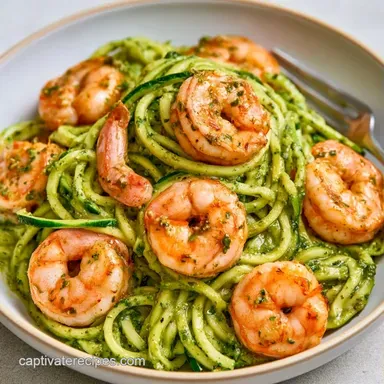
15-Minute Pesto Shrimp Zoodles
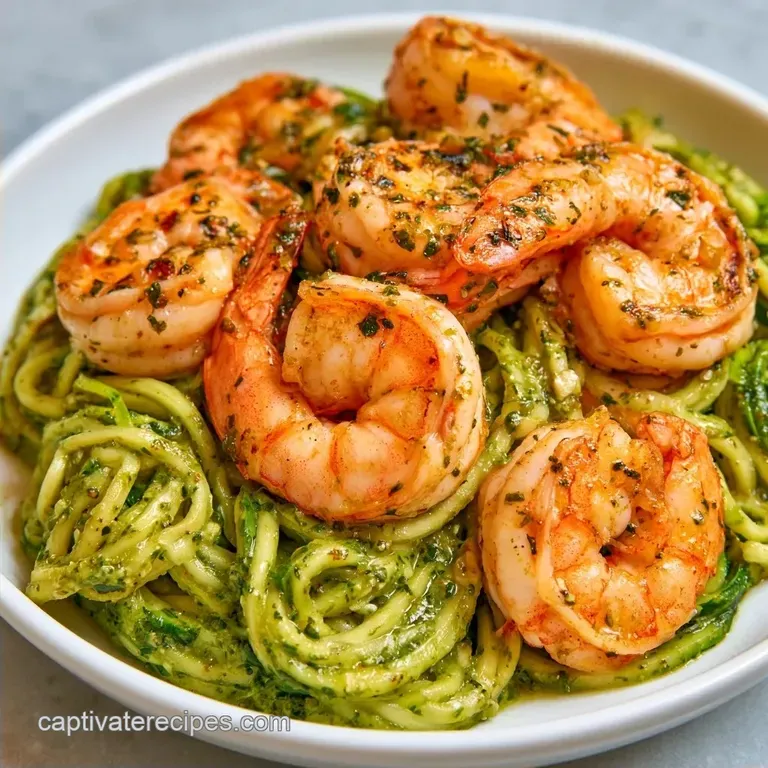
- Total Effort: 10 min active + 10 min cook
- Taste Profile: Fragrant garlic and herbs with the crunch of fresh zucchini
- Ideal for: An elegant low-carb dinner on a weeknight
Imagine that scent of fresh basil and garlic hitting a hot skillet a bright, peppery aroma that makes you hungry before the cooking is even done. But let's be honest, we've all struggled with zoodles.
You start with optimism, only to find yourself staring at limp, soggy ribbons floating in a puddle of green liquid.
It is a letdown, especially when you're using jumbo shrimp. The culprit isn't the produce; it's the water content. Zucchini is essentially a sponge, and throwing it directly into the pan causes it to dump all its moisture, steaming your shrimp into rubbery pieces.
That is where this Pesto Shrimp Zoodles recipe succeeds. I have refined a few specific steps to keep the texture firm and the tastes bold. We will treat the zucchini as a vegetable that needs proper preparation, not just a pasta swap, ensuring the meal keeps its structure.
Fresh and Bold Pesto Shrimp Zoodles
Listen for that immediate sear. When the shrimp hit the hot oil, they should sizzle right away that's the sound of flavor developing. Removing the shrimp before adding the zoodles keeps the pan temperature high, which is the secret to keeping those greens vibrant.
What I love about this meal is that it never feels like "diet food." The richness of the pesto and the saltiness of the Parmesan make it feel indulgent. It's a quick, bright dish that captures the essence of a summer evening on a patio, even if you're just grabbing a bite over the kitchen sink on a Tuesday.
What Makes This Work
There is a reason most zoodle recipes fail. It comes down to two things: moisture and heat.
- The Salt Draw: Salt pulls water out of the zucchini cells before they hit the pan. By letting them sit for 5 minutes and patting them dry, you remove the "swamp factor" from the start.
- High Heat Sear: Searing the shrimp first creates a brown crust. This adds a savory depth that balances the fresh, herbaceous notes of the basil.
- Short Sauté: Zucchini only needs 120 seconds of heat. Any longer and the cell walls collapse, turning your noodles into mush.
The Ingredient Deep Dive
Choosing the right stuff matters here. I always go for jumbo shrimp because they don't overcook as fast as the tiny ones. If you're using store-bought pesto, just check the label for a high olive oil content to keep things rich.
| Ingredient | Role | If You Don't Have It |
|---|---|---|
| Jumbo Shrimp | Main protein and savory bite | Scallops or sliced chicken breast |
| Zucchini | Low carb base and fresh crunch | Yellow squash or spaghetti squash |
| Basil Pesto | Primary flavor and fat source | Walnut pesto or a mix of basil and olive oil |
| Lemon Juice | Cuts through the fat and brightens | Lime juice or apple cider vinegar |
Tools You Will Need
While you don't need a professional kitchen, a few specific tools can streamline the prep. A spiralizer is the most efficient option, but a julienne peeler works just as well if you prefer simpler equipment.
The choice of pan is critical. For the best golden brown sear on the shrimp, choose stainless steel or cast iron. While non-stick pans are an option, they won't produce the same level of caramelization. Be sure to use a colander to drain the zucchini thoroughly, preventing excess moisture from watering down the dish.
Step by step Instructions
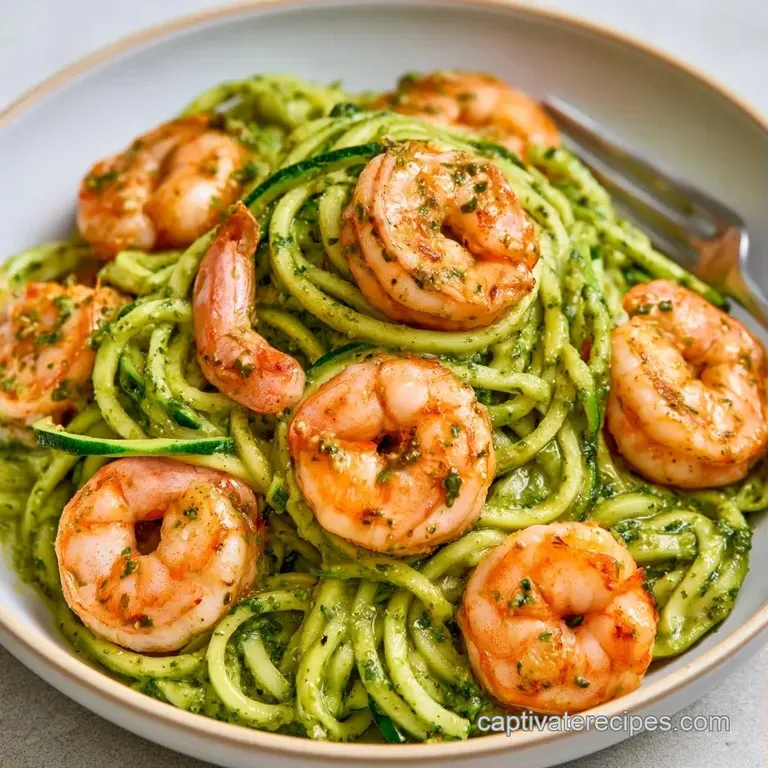
Time to begin. Ensure all ingredients are ready to go. Once the oil reaches temperature, the process moves quickly.
Phase 1: The Zoodle Prep
- Spiralize the zucchini, leaving about an inch at the end to serve as a handle.
- Place the zoodles in a colander, dust with a pinch of salt, let them rest for 5 minutes, then dry them with a paper towel. Note: This removes the excess moisture that causes sogginess.
- Mix the dried zoodles with lemon juice in a bowl and set them aside.
Phase 2: Searing the Shrimp
- Wipe the shrimp dry with paper towels and season with salt and pepper. Note: Wet shrimp will steam instead of sear.
- Bring olive oil to a shimmer in a wide pan over medium high heat. Lay the shrimp in a single layer.
- Sear for 2 minutes per side until opaque and golden brown. Transfer them to a plate.
Phase 3: The Final Toss
- Using the residual shrimp juices in the same pan, sauté the zoodles for 120 seconds. Listen for a light sizzle, not a boil.
- Fold in the basil pesto and return the seared shrimp to the pan, tossing until coated.
- Top with grated Parmesan cheese and red pepper flakes before serving.
Fixing Common Issues
Even with a plan, things can go sideways. Here is how to handle the most common hiccups when making Pesto Shrimp Zoodles.
Watery Zoodles
This usually happens if you skip the salt and pat step or let the noodles stay in the pan too long. If you see a pool of liquid forming, don't keep cooking it. Carefully tilt the pan and spoon out the excess water before folding in your pesto. The pesto needs to cling to the noodles, not swim in a soup.
Rubbery Shrimp
Rubbery shrimp come from overcooking. They only need about 2 minutes per side. Once they curl into a "C" shape and turn opaque, get them out of the pan. If they curl into a tight "O", they've stayed in too long. For a different protein vibe, you could try my Chicken Caprese Zoodles which uses a different searing method.
Dull Pesto Color
If your pesto turns a muddy brown, it's because it was exposed to too much heat for too long. Pesto is a raw sauce. Only add it at the very end of the process. The residual heat of the pan and the shrimp is enough to warm it through without killing that bright, vibrant green color.
Changing the Recipe
Feel free to customize this dish to suit your taste. I love tossing in a few halved cherry tomatoes right at the end to add a bright, acidic note.
For a different flavor, try replacing the pesto with a simple garlic butter sauce. My Butter Parmesan Zoodles recipe uses a similar technique but offers a more traditional feel.
Decision Shortcut:
- More zing? → add 1 tsp lemon zest
- Extra heat? → double the red pepper flakes
- Nutty vibe? → toast 1 tbsp pine nuts
To make the meal heartier, stir in some sautéed mushrooms or baby spinach during the final 60 seconds of cooking the zoodles. Just be careful not to overcrowd the pan, as this will lower the temperature and cause that dreaded pool of water to form.
Keeping Your Leftovers
Pesto Shrimp Zoodles are best enjoyed immediately. Because zucchini keeps releasing water after cooking, the texture changes quickly in the fridge.
Storage Guidelines: Place leftovers in a sealed glass jar and keep them chilled for up to 2 days. If you can, store the shrimp and zoodles separately; this prevents the shrimp from becoming rubbery during reheating.
Reheating: Try to avoid the microwave. Instead, heat the zoodles in a hot pan for 60 seconds. Add the shrimp at the very last second to ensure they don't overcook.
Sustainable Tip: Save the zucchini ends used as handles by chopping them into a smoothie or vegetable broth. You can also freeze leftover shrimp shells to make a quick seafood stock for a soup later in the week.
Ways to Serve
This dish is a complete meal on its own, but it loves a bit of company. I like to serve it with a crisp side salad of arugula and shaved radish to lean into those fresh, peppery notes.
If you're serving this to guests, plate it in wide, shallow bowls. Top with an extra sprinkle of Parmesan and a drizzle of high-quality olive oil. A glass of chilled Sauvignon Blanc or a sparkling water with a lime wedge cuts through the richness of the pesto beautifully.
The beauty of Pesto Shrimp Zoodles is the balance. You have the snap of the vegetable, the sear of the shrimp, and the creamy, salty hit of the cheese. It's a fast way to get a high energy meal on the table without feeling weighed down by heavy pasta.
Trust me, once you nail the drying process, you'll never go back to soggy zoodles again.
Recipe FAQs
Is pesto a good pairing for zoodles?
Yes, the bold basil flavor balances the mild taste of the zucchini. It creates a rich and satisfying meal without the heavy carbs of traditional pasta.
Do shrimp and pesto taste good together?
They pair perfectly because the nutty pesto enhances the natural sweetness of the seafood. It is a classic combination that feels gourmet but stays simple.
How to cook the shrimp and zoodles?
Sear the shrimp for 2 minutes per side until golden and opaque. Sauté the zoodles in the residual juices for 120 seconds before tossing everything with pesto.
Is it true that zoodles always turn mushy?
No, and here's why. Salting the zucchini and patting them dry removes the excess moisture that typically causes them to soften too much.
Should you cook the pesto over high heat?
No, this is a common misconception. Folding the pesto in at the very end preserves the fresh basil color and prevents the sauce from breaking.
Are there other easy keto dinner options?
This shrimp dish is a great low-carb staple for busy weeknights. You can also try a zucchini noodle salad for a refreshing cold alternative.
Can I swap the shrimp for scallops?
Scallops are a wonderful substitute that complement the basil pesto beautifully. Just use the same searing method to ensure you get a golden brown crust.
What is the trick for spiralizing zucchini?
Leave about an inch of zucchini at the end of the vegetable. This acts as a handle, giving you a much better grip while you spiralize.
Pesto Shrimp Zoodles