Polish Sausage Sauerkraut and Potatoes: One-Pot Method
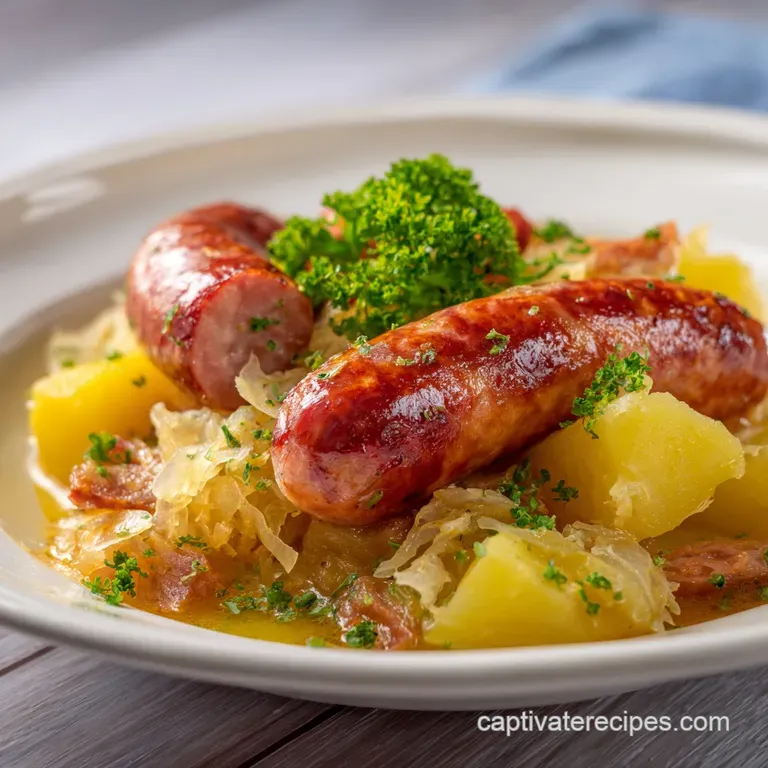
- Time: Active 15 minutes, Passive 35 minutes, Total 50 minutes
- Flavor/Texture Hook: Tangy, fermented kraut balanced by mahogany crisped sausage and buttery potatoes.
- Perfect for: Stress free weeknight dinners or a comforting weekend lunch.
- Master This Comforting Sausage Sauerkraut Potatoes Recipe
- Why This Recipe Works
- Component Analysis
- The Simple Pantry List Required
- Equipment Needed
- From Prep to Plate
- Common Mistakes & Troubleshooting
- Adjusting for Different Batch Sizes
- Myths About Sauerkraut and Sausage
- Keeping It Fresh
- How to Serve and Enjoy
- Recipe FAQs
- 📝 Recipe Card
Master This Comforting Sausage Sauerkraut Potatoes Recipe
The sound of sliced Polish sausage hitting a hot pan with a tablespoon of butter is probably one of the most reassuring noises in my kitchen. It’s that first sizzle, followed by the aroma of garlic and woodsmoke, that lets everyone know something hearty is on the way.
Most people think you need to spend all Sunday afternoon over a stove to get a deep, savory flavor from sauerkraut, but that’s actually a myth I’m happy to bust. You can get that same mellow, rich result in exactly 50 minutes total if you treat the ingredients with a little bit of respect.
For a long time, I struggled with this dish because the potatoes would end up either waterlogged or the kraut would be so acidic it made our eyes water. I used to just throw everything into a pot and hope for the best, which is a mistake I’ll never make again.
The trick isn't in the time spent; it’s in the order of operations and a few smart layering choices. We're talking about a meal that costs very little but provides a massive return on flavor, especially when you use Yukon Golds that hold their shape while soaking up just enough fat.
This version of sausage sauerkraut and potatoes is all about balance. We are going to rinse that kraut to control the salt, sear the meat to get those crispy edges, and use a "steam on-top" method for the potatoes. This prevents them from turning into a mushy soup and ensures every bite has a distinct texture.
It’s a reliable, grounded recipe that I’ve leaned on during many busy Tuesday nights when the fridge looked empty but I had a jar of kraut and a pack of kielbasa hiding in the back.
Why This Recipe Works
- Maillard Reaction: Searing the sausage rounds first creates a deep brown crust that adds a savory complexity to the entire pot.
- pH Balancing: Rinsing the sauerkraut removes excess brine, preventing the acidity from overpowering the delicate sweetness of the onions and potatoes.
- Ambient Steam Cooking: By nestling the potatoes on top of the kraut rather than submerging them, they cook through the rising steam, resulting in a velvety texture rather than a boiled, soggy one.
- Fat Emulsification: The rendered fat from the sausage combined with the chicken bone broth creates a light, flavorful glaze that coats the vegetables without feeling heavy or greasy.
| Servings | Ingredient Adjustments | Pan Size | Cook Time |
|---|---|---|---|
| 2 People | 0.33 kg sausage, 0.5 kg potatoes | 20 cm skillet | 40 minutes |
| 4 People | 0.45 kg sausage, 0.68 kg potatoes | 30 cm skillet | 50 minutes |
| 6 People | 1 lb sausage, 1.5 lbs potatoes | 5 quart Dutch oven | 50 minutes |
| 10 People | 2 lbs sausage, 3 lbs potatoes | 8 quart stockpot | 1 hour 10 mins |
This serving size table helps you adjust based on your family's needs. If you're cooking for a larger crowd, I usually recommend working in batches for the sausage searing step. If you overcrowd the pan, the meat will steam instead of getting that beautiful mahogany color we're after.
For the best results, stick to the 50 minutes total time for the standard 6 serving batch, as the potato density changes how the steam moves through the pot.
Component Analysis
| Ingredient | Science Role | Pro Secret |
|---|---|---|
| Yukon Gold Potatoes | High starch content provides structure and a buttery mouthfeel. | Keep chunks at 1.5 inches to ensure they finish at the exact same time as the kraut. |
| Sauerkraut | Provides the acidic base that cuts through the rich fat of the sausage. | Always rinse in cold water to remove the "tinny" taste from canned or jarred versions. |
| Caraway Seeds | Acts as a digestive aid and provides an earthy, anise like aromatic bridge. | Crush them slightly between your fingers before adding to release the essential oils. |
| Chicken Bone Broth | Provides the liquid necessary for steam while adding protein rich body. | Use an unfiltered cider if you prefer a sweeter, more autumnal profile. |
The Simple Pantry List Required
- 1 lb Polish Kielbasa: Use a high-quality smoked sausage for the best flavor snap. Why this? The smoking process adds a depth that fresh sausage simply cannot match.
- Substitute: Smoked turkey sausage for a leaner option (will be less juicy).
- 1.5 lbs Yukon Gold potatoes: These are the gold standard for stew like dishes. Why this? They hold their shape perfectly under steam without disintegrating.
- Substitute: Red potatoes; they have a similar waxiness but a slightly thinner skin.
- 1 large Yellow onion: Adds the necessary sweetness to balance the kraut. Why this? Yellow onions have a higher sugar content which caramelizes beautifully.
- Substitute: White onion or two large shallots for a milder, sharper bite.
- 2 cloves Garlic: Essential for the aromatic base. Why this? Garlic bridges the gap between the savory meat and the tangy cabbage.
- Substitute: 1 teaspoon of garlic powder if you're in a pinch (add with the pepper).
- 2 lbs Sauerkraut: The heart of the dish. Why this? Fermented cabbage provides a unique tang that defines the recipe profile.
- Substitute: Shredded fresh cabbage with 2 tablespoons of apple cider vinegar (will be less "funk").
- 1 cup Chicken bone broth: The steaming liquid. Why this? Bone broth adds a silky texture that plain water lacks.
- Substitute: Unfiltered apple cider for a traditional German style sweetness.
- 1 tsp Caraway seeds: The secret aromatic. Why this? It provides the classic flavor associated with traditional Eastern European kraut dishes.
- Substitute: Dill seeds or a pinch of fennel seeds for a similar aromatic profile.
- 1/2 tsp Cracked black pepper: For a subtle, woody heat. Why this? Coarse cracks provide little bursts of flavor unlike fine powder.
- Substitute: White pepper if you want the heat without the black specks.
- 1 tbsp Unsalted butter: The cooking fat. Why this? Butter enhances the natural creaminess of the Yukon Gold potatoes.
- Substitute: Duck fat or lard for a more traditional, intensely savory flavor.
Equipment Needed
- Large Skillet or Dutch Oven: A heavy bottomed pan like a Lodge cast iron or a Le Creuset is perfect here. It holds heat consistently, which is vital for getting that initial sear on the sausage without the temperature dropping.
- Wooden Spoon: Ideal for scraping the "fond" (those delicious brown bits) off the bottom of the pan after deglazing.
- Colander: You’ll need this to properly drain and rinse the sauerkraut. Don't skip the rinsing step; it's the difference between a balanced meal and one that’s overwhelmingly salty.
- Tight fitting Lid: This is non negotiable. Since we are steaming the potatoes on top of the kraut, we need to trap every bit of moisture inside the pot.
From Prep to Plate

- Sear the sausage. Heat your large skillet or Dutch oven over medium high heat and melt the 1 tbsp of butter. Add your 1 lb of sliced sausage rounds in a single layer. Cook 3-4 minutes per side until they are mahogany colored and crispy. Note: This step renders out the fat which we'll use to flavor the onions.
- Sauté the aromatics. Remove the sausage and set it aside on a plate. Lower the heat to medium. Toss in the sliced yellow onion. Sauté for about 5 minutes until the onion is translucent and soft.
- Activate the spices. Stir in the 2 cloves of minced garlic and 1 tsp of caraway seeds. Cook for exactly 60 seconds until the kitchen smells incredible.
- Deglaze the pan. Pour in the 1 cup of chicken bone broth. Use your wooden spoon to scrape the bottom of the pan vigorously until all the brown bits are dissolved into the liquid.
- Prepare the kraut bed. Add the 2 lbs of drained and rinsed sauerkraut to the pan. Stir it well to incorporate the onions and spices, then smooth it out into an even layer.
- Layer the potatoes. Place the 1.5 lbs of Yukon Gold potato chunks on top of the sauerkraut. Do not stir them in! Season the tops with 1/2 tsp cracked black pepper.
- Steam to tenderness. Place the lid on the pot. Simmer on medium low for 20-25 minutes until a fork easily slides into the largest potato chunk.
- Reincorporate the meat. Once the potatoes are tender, take the lid off. Add the seared sausage back into the pot, nestling it among the potatoes.
- The final warm through. Let everything sit together for 2-3 minutes over low heat until the sausage is hot and the flavors have melded.
- Dish it up. Serve the sausage sauerkraut and potatoes in shallow bowls, ensuring everyone gets a mix of the crispy meat and the steamed potatoes.
Common Mistakes & Troubleshooting
Why Your Potatoes Stay Crunchy
If you find that your potatoes are still hard after 25 minutes, it’s usually a moisture or heat issue. The potatoes in this recipe cook via steam, not submersion. If your lid isn't tight fitting, the steam escapes, and the potatoes won't soften.
Similarly, if the heat is too low, you aren't generating enough steam to penetrate the starch. Check the liquid level; if the pan is dry, add another splash of broth and ensure the lid is sealed.
Avoiding a Salt Bomb
Sauerkraut is fermented in brine, which means it is incredibly salt heavy right out of the jar. If you forget to rinse it, the dish will likely be inedible. If you've already cooked it and find it too salty, you can try adding a splash of apple cider vinegar and a pinch of sugar.
The acid and sweet can help distract the palate from the salt, but the real fix is always the initial rinse under cold water.
| Problem | Root Cause | Solution |
|---|---|---|
| Soggy Potatoes | Stirring the potatoes into the liquid | Keep them layered on top of the kraut to steam only |
| Burnt Bottom | Heat was too high during the simmering phase | Keep it at a low simmer; add broth if liquid evaporates |
| Greasy Texture | Too much rendered fat left in the pan | Drain all but 1 tablespoon of fat after searing sausage |
Common Mistakes Checklist
- ✓ Pat the sausage dry before searing to ensure you get a crust rather than just grey meat.
- ✓ Rinse the kraut for at least 30 seconds under cold running water to remove the harsh brine.
- ✓ Don't peek! Every time you lift the lid, you lose the steam needed to cook the potatoes.
- ✓ Cut potatoes evenly so they all finish at the same time; 1.5 inch chunks are the sweet spot.
- ✓ Scrape the pan thoroughly during deglazing that's where all the hidden flavor lives.
Adjusting for Different Batch Sizes
When you need to scale this recipe down for just two people, you can easily use a smaller 20 cm skillet. You'll want to reduce the total cooking time by about 20% because a smaller volume of food heats through faster.
When using half an egg for other recipes, I usually beat it first, but here you don't have to worry about that just halve the sausage and potatoes.
Scaling up is a bit more of a project. If you are making this for a crowd of 10, use a large 8 quart stockpot. When doubling or tripling the spices like caraway and pepper, only increase them by 1.5x. Spices can become overwhelming when scaled linearly. Also, be sure to reduce the total liquid by about 10% because a larger pot traps more moisture, and you don't want the bottom layer to become a soup. Much like when I'm making a massive batch of my Sausage Hash Brown Casserole, I find that working in stages for the searing ensures the best texture.
Myths About Sauerkraut and Sausage
The "Hours of Simmering" Myth: Many people believe that sauerkraut needs to cook for three or four hours to become "sweet." In reality, prolonged cooking can make the cabbage mushy and cause it to lose its structural integrity.
A 25 minute steam is actually the sweet spot for maintaining a slight bite while allowing the flavors to penetrate the cabbage.
The "Sausage Sealing" Myth: Searing the sausage does not "seal in the juices." In fact, moisture is lost during the searing process. However, the reason we do it is for the flavor.
The crust created by the high heat provides a complex, toasted taste that you simply won't get if you just boil the sausage in the kraut liquid.
The "Potato Submersion" Myth: It is often assumed that potatoes must be covered in liquid to cook properly. This is false for waxy varieties like Yukon Golds. Steaming them on a bed of sauerkraut actually preserves their natural buttery flavor and prevents them from becoming waterlogged, which is a technique I also use when making my Potatoes Au Gratin.
Keeping It Fresh
Store any leftovers in an airtight container in the fridge for up to 4 days. In fact, many people (myself included) think this dish tastes even better the next day because the caraway and garlic have more time to really get to know the cabbage. For freezing, this dish holds up surprisingly well.
You can freeze it for up to 3 months. Just be aware that the potatoes might become slightly softer upon thawing. To reheat, I recommend a skillet over medium heat with a tiny splash of water to regenerate the steam.
For a zero waste approach, don't throw away the stems of your onions or the garlic skins. Keep a bag in your freezer for vegetable scraps to make your own broth later. Also, if you have leftover sauerkraut liquid from the jar that you didn't use, it’s a probiotic powerhouse.
I sometimes use a tablespoon of it in salad dressings or even as a brine for chicken breasts to tenderize them before grilling.
How to Serve and Enjoy
When it comes to serving sausage sauerkraut and potatoes, simplicity is your best friend. I love placing the entire Dutch oven in the middle of the table so everyone can help themselves. It’s a rustic meal that feels right at home with a side of thick cut rye bread and a high-quality grainy mustard.
The mustard provides a sharp, vinegar based counterpoint to the richness of the sausage and the starch of the potatoes.
If you want to change things up, this recipe is incredibly versatile. You could try adding a sliced tart apple (like a Granny Smith) during the onion sautéing phase for a bit of sweetness. Or, if you're feeling adventurous, a splash of beer instead of the chicken broth can add a lovely hoppy bitterness that complements the smoked meat. If you're looking for other ways to use up extra sausage, my Creamy Sausage Tortellini Soup is another 30 minute winner that the family always asks for.
| Method | Time | Texture | Best For |
|---|---|---|---|
| Stovetop (Standard) | 50 minutes | Crispy meat, fluffy potatoes | Everyday family dinner |
| Crock Pot | 4-6 hours | Very soft, melded flavors | Hands off meal prep |
| Instant Pot | 25 minutes | Uniformly tender, juicy | When you're in a massive rush |
If you want X, do Y
- If you want a sweeter dish: Use unfiltered apple cider as the deglazing liquid instead of broth.
- If you want more crunch: Brown the potatoes in the sausage fat for 5 minutes before layering them on the kraut.
- If you want it spicy: Add 1/2 teaspoon of red pepper flakes when sautéing the garlic and caraway.
Utilizing the Instant Pot Polish Sausage and Sauerkraut
If you're using a pressure cooker, the order of operations changes slightly. Use the "Sauté" function to sear the sausage and cook the onions. Once you deglaze, add the kraut and potatoes. Seal the lid and set it to Manual High Pressure for 8 minutes.
Do a quick release of the steam to prevent the potatoes from turning to mush. This is a great shortcut, though you do lose a bit of the texture control you get on the stovetop.
Converting to a Crock Pot Polish Sausage and Sauerkraut
For a slow cooker version, sear the sausage and sauté the onions in a pan first don't skip this, or the dish will be bland! Place the onions and garlic at the bottom of the Crock Pot, add the kraut and broth, then the sausage, and finally the potatoes on top. Cook on Low for 4-6 hours.
The potatoes will be incredibly tender, almost like they've been confited in the sausage fat and kraut juices. It's a "set it and forget it" version of sausage sauerkraut and potatoes that smells like heaven when you walk through the door after work.
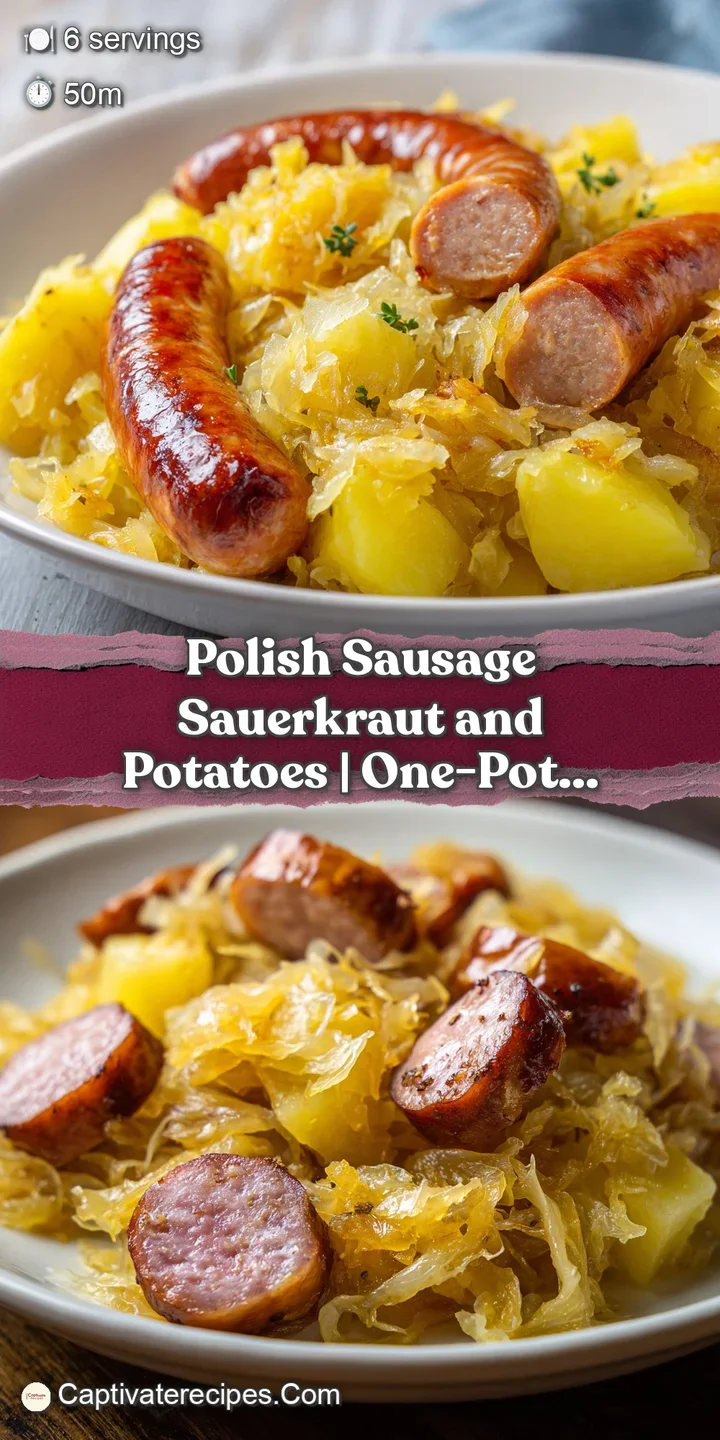
Recipe FAQs
What goes with sauerkraut and Polish sausage for dinner?
Serve this with crusty rye bread or a simple side salad. Because this dish is hearty and acidic, it pairs perfectly with mild sides that soak up the flavorful juices.
What do Polish eat with sauerkraut?
They often pair it with potatoes, smoked sausages, and rye bread. This traditional combination balances the tanginess of the fermented cabbage with the savory richness of the meat and the starch of the potatoes.
What meat is good with sauerkraut and potatoes?
Smoked Polish Kielbasa is the gold standard. Its snap, fat content, and wood smoke flavor hold up exceptionally well against the sharp acidity of the sauerkraut during the simmering process.
What is a sauerkraut and sausage meal called?
It is often referred to as Choucroute Garni or a variation of Bigos. While those are specific regional terms, many home cooks simply know it as a classic "sausage and kraut" skillet meal.
How to ensure the potatoes cook evenly without turning mushy?
Nestle the potato chunks on top of the sauerkraut layer rather than mixing them in. Keeping them above the liquid allows them to cook via ambient steam, which preserves their structure much better than boiling them directly in the broth. If you enjoyed the precision of layering here, you can use similar moisture management techniques to perfect your vegetable textures in other dishes.
Is it true I should stir the potatoes into the sauerkraut at the start?
No, this is a common misconception. Mixing the potatoes into the acidic sauerkraut liquid can cause them to break down prematurely or become grainy; keeping them separate until the end ensures a fluffy, firm texture.
How to get the best flavor from the sausage?
Sear the sliced sausage in the butter until it is mahogany colored and crispy. This browning process creates a deep, savory fond on the bottom of your skillet, which you then lift with the broth to create a rich, complex sauce.
Polish Sausage Sauerkraut Potatoes

Ingredients:
Instructions:
Nutrition Facts:
| Calories | 381 calories |
|---|---|
| Protein | 15 g |
| Fat | 23 g |
| Carbs | 30 g |
| Fiber | 5 g |
| Sugar | 6 g |
| Sodium | 785 mg |
