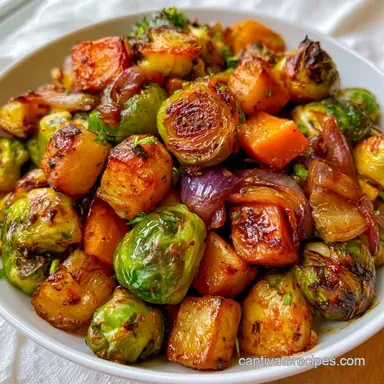
Roasted Fall Vegetables with Baby Potatoes
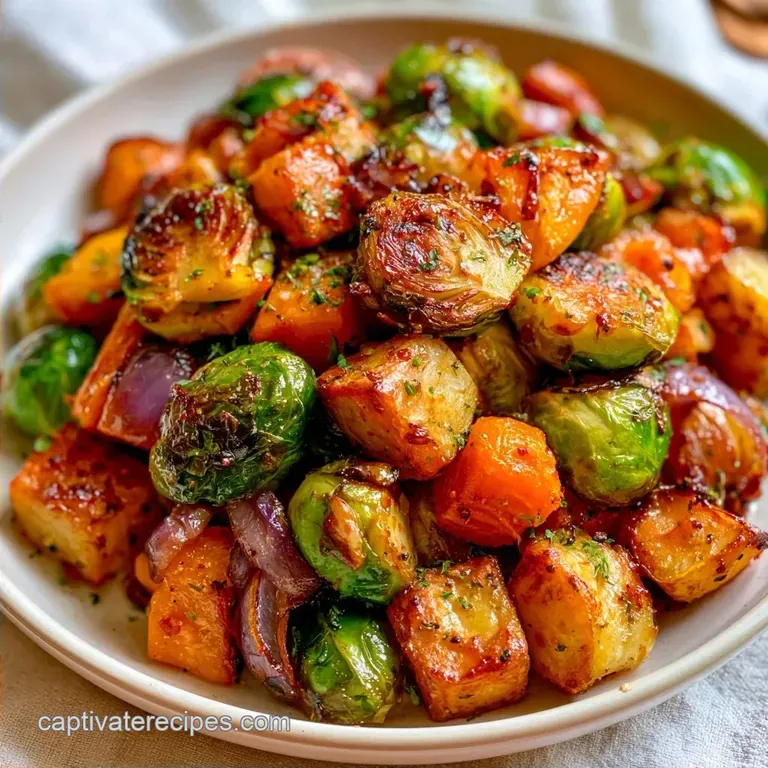
- Time: 15 min active + 40 min roasting
- Flavor/Texture Hook: Charred, caramelized edges with a glossy sweet finish
- Perfect for: Holiday side dishes, meal prep, or a hearty weekday dinner
Making Easy Roasted Fall Vegetables
The smell of maple syrup bubbling against charred carrots always hits me first. It's that specific scent that means autumn has actually arrived. I used to think I had to roast every vegetable on a separate tray or blanch the carrots first just to get them to finish at the same time.
It was a nightmare of dirty pans and uneven cooking.
Forget the idea that you need a complex system or multiple oven racks. You can throw everything on one sheet if you get the chop right. This recipe for Roasted Fall Vegetables focuses on high heat and a late stage glaze to get that deep brown color and concentrated flavor.
You'll get a mix of textures here. The baby potatoes get a little crusty, the sprouts get those crispy outer leaves, and the squash stays tender. It's a reliable, one pan approach that doesn't leave you stuck in the kitchen while everyone else is eating.
Why This Roast Actually Works
The Maple Glaze: Adding the syrup at the end prevents the sugar from burning during the long roast. It creates a glossy coating in just a few minutes.
High Heat: 400°F (200°C) is the sweet spot. It's hot enough to brown the skin but not so hot that the centers stay raw.
Uniform Sizing: Cutting everything into roughly 1 inch pieces means they all hit that soft but-charred stage at the same time.
Method Comparison
| Prep Style | Time Spent | Texture Result | Best For |
|---|---|---|---|
| Fresh Chopped | 15 mins | Firm, charred edges | Maximum flavor |
| Pre cut Mix | 2 mins | Softer, more moisture | Weeknight rush |
Shopping List Breakdown
Gather these staples before you head to the store. I recommend a heavy bottomed bowl for tossing to ensure nothing splashes out. While you can experiment with other oils if you prefer, extra virgin olive oil is the most dependable choice here.
What Each Ingredient Does
| Ingredient | What It Does | Best Swap |
|---|---|---|
| Butternut Squash | Brings creamy sweetness | Pumpkin chunks |
| Brussels Sprouts | Offers earthy, charred flavor | Cauliflower florets |
| Maple Syrup | Forms the glossy glaze | Honey (Note: don't heat honey past ~285ºF) |
| Baby Potatoes | Adds heartiness and starch | Parsnips |
The Full List 1 lb butternut squash, peeled and cubed Why this? Maintains shape better than pumpkin 1 lb carrots, peeled and sliced into rounds 1 lb Brussels sprouts, halved 1 lb baby potatoes, halved or quartered Why this? Keep skin on for more
Texture 200g red onion, cut into wedges 3 tbsp extra virgin olive oil 2 tbsp maple syrup 1 tsp dried thyme 1 tsp kosher salt 1/2 tsp black pepper
Ingredient Swaps
| Original Ingredient | Substitute | Why It Works |
|---|---|---|
| Maple Syrup | Honey | Comparable sweetness. Note: slightly more floral |
| Dried Thyme | Dried Rosemary | Earthy profile. Note: use a bit less as it is more potent |
| Butternut Squash | Sweet Potato | Similar starchiness. Note: softer texture than squash |
I've discovered that blending various root vegetables is what turns Roasted Fall Vegetables into a satisfying, complete meal. If you happen to have leftover parsnips in the crisper, feel free to toss those in as well.
Essential Kitchen Tools
Simple equipment will do. A deep sided baking tray is key here; if the edges are too low, oil and syrup can leak onto the oven floor, creating a messy cleanup you'll want to avoid.
I recommend lining the pan with parchment paper. Besides making cleanup easier, it allows the vegetables to move more freely during tossing. Reach for your largest mixing bowl, as attempting to stir four pounds of vegetables in a cramped pot usually results in carrots spilling onto the floor.
Keep a strong spatula or tongs handy for the 15 minute flip. Shift the vegetables from the middle to the outer edges to achieve an even brown across the batch.
Step by step Roasting
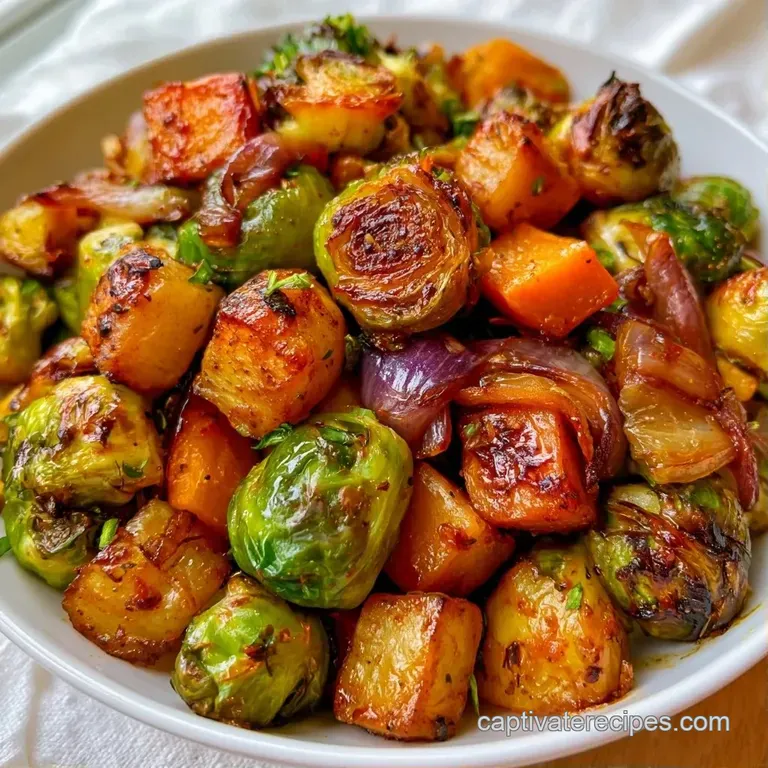
Time to get started. Ensure the oven has reached temperature before sliding in your tray.
- Get your oven hot at 400°F (200°C) and prep a large rimmed baking sheet with a layer of parchment paper.
- Use an extra large mixing bowl to combine the cubed butternut squash, sliced carrots, halved Brussels sprouts, quartered baby potatoes, and red onion wedges.
- Pour the olive oil over the mix, tossing in salt, black pepper, and dried thyme until well combined. Note: Ensure every piece is glistening to prevent sticking
- Arrange the vegetables in a single layer on the prepared sheet, making sure there is plenty of space between them.
- Roast for 30 to 35 minutes, flipping and rotating the contents every 15 minutes for a uniform brown. until edges are mahogany and sprouts are charred
- Take the pan out, drizzle on the maple syrup, and toss gently to distribute.
- Place the pan back in the oven for another 5 to 7 minutes until the syrup bubbles and forms a glossy glaze.
Chef's Tip: For a more intense flavor profile, stir in a pinch of smoked paprika during the initial oil toss. Additionally, try freezing maple syrup in ice cube trays to easily portion out glazes for other dishes.
This approach prevents your Roasted Fall Vegetables from steaming. Water pooling on the pan suggests the heat is too low or the vegetables are too crowded.
Fixing Common Roast Issues
The biggest enemy of a good roast is moisture. When vegetables are packed too tightly, they release steam that gets trapped between the pieces. This is why you end up with soggy carrots instead of caramelized ones. If you're doubling the recipe, use two separate sheets.
Another common issue is the "burnt sprout syndrome." Because Brussels sprouts are smaller and have more surface area, they can go from charred to charcoal quickly. Rotating the pan every 15 minutes helps mitigate this.
Dealing with Soggy Veggies
If your vegetables look pale and wet, they're steaming. Crank the heat up by 10 degrees or spread them out more.
Fixing Uneven Browning
This usually happens when the vegetables are piled on top of each other. Make sure there is a small gap between each piece.
Preventing Burnt Glaze
If the maple syrup smells like it's burning, you've left them in too long for the final step. Watch for the bubbles to become thick and slow.
Troubleshooting Guide
| Problem | Root Cause | Solution |
|---|---|---|
| Soggy texture | Pan too crowded | Use two baking sheets |
| Burnt sprouts | Uneven heat | Rotate pan every 15 mins |
| Glaze is too thin | Not roasted long enough | Add 2 more mins to final roast |
Serving Your Harvest Veg
These Roasted Fall Vegetables are great on their own, but they shine as a side. I love serving them alongside a roast chicken or a piece of seared salmon. The sweetness of the maple glaze cuts through the saltiness of a roast perfectly.
For a vegetarian main, pile these onto a bed of quinoa or farro. You can top the whole thing with some crumbled goat cheese or feta for a bit of tang. The creamy cheese against the charred vegetables is a winning combo.
If you're doing a big holiday spread, keep these warm in a low oven (around 200°F) for up to 30 minutes. Just don't cover the pan tightly with foil, or you'll lose that lovely crust.
- For crunchier sprouts
- roast 5 minutes longer during the first phase.
- For a sweeter glaze
- add 1 tbsp extra maple syrup.
- For softer carrots
- cut into thinner rounds.
Storage and Scrap Tips
Store these in a glass dish in the refrigerator for roughly 4 days. When warming them up, try to avoid the microwave, as it tends to make them soggy. Instead, use a toaster oven or a hot skillet for a few minutes to restore that crisp texture.
I recommend skipping the freezer for this recipe, as the sprouts and squash lose their structure during the process.
For a zero waste approach, save your veggie peels. I keep potato and carrot skins in a freezer bag; once full, I simmer them with herbs to create a vegetable broth base. If you're interested in making a more robust base, check out my soup stock guide. It's an excellent way to utilize every part of your vegetables.
Fresh Flavor Twists
Once you've mastered the Roasted Fall Vegetables base, feel free to experiment with seasonings. I often replace the thyme with rosemary and stir in some minced garlic during the final 10 minutes of the first roast.
The Zesty Version Drizzle the juice of half a lemon over the pan immediately after the final maple roast. The acid balances the sweetness and brightens the entire dish.
The Smoky Version Use melted coconut oil instead of olive oil and add a teaspoon of chipotle powder. This creates a lingering heat that complements the maple beautifully.
The Savory Version Skip the maple syrup entirely and finish with a dusting of grated Parmesan and fresh parsley. This creates a more traditional roast that pairs perfectly with my garlic roasted sprouts.
Myth Busting "You must blanch carrots first." False. If you cut them to 1 inch, they'll be done at the same time as the squash. "Higher heat burns vegetables." Not true. High heat is what caramelizes the sugars, providing the best flavor. "Maple syrup makes it a dessert." Wrong.
Salt and thyme keep this dish firmly in the savory category.
Roasted Fall Vegetables are a foolproof way to bring autumn flavors to your table without spending all evening scrubbing pans. Just remember: avoid crowding the pan, and don't forget to flip. Happy roasting!
Recipe FAQs
Which vegetables should I avoid roasting together?
Avoid mixing high moisture vegetables with dense root crops as they steam rather than brown.
Tip: cut harder vegetables like carrots smaller than softer ones to ensure even cooking.
What makes roasted vegetables taste so flavorful?
The combination of high heat and a maple syrup glaze creates a sweet and savory caramelization.
Tip: ensure every piece is coated in olive oil to prevent sticking and promote browning.
Is it true that 425°F is always better than 400°F?
Actually, no. 400°F allows dense vegetables like baby potatoes to soften completely without burning the exterior.
Tip: use a rimmed baking sheet with parchment paper for the easiest cleanup.
Are certain vegetables better for roasting than others?
Root vegetables like butternut squash and carrots, along with Brussels sprouts, develop the best texture.
Tip: spread them in a single layer so they roast instead of steaming.
How do these pair with fried pork chops?
These roasted fall vegetables provide a sweet contrast to the salty crust of the pork.
Tip: serve with a dollop of sour cream or Greek yogurt on the side.
Could these accompany roasted chicken?
This medley is a classic pairing for roast chicken because the maple glaze complements the savory skin.
Tip: toss the vegetables in the chicken drippings for extra depth of flavor.
How to serve these as a full meal?
Add a protein like chickpeas or serve them over a simple flatbread for a hearty dish.
Tip: top with toasted nuts or feta cheese for added protein and texture.
Roasted Fall Vegetables