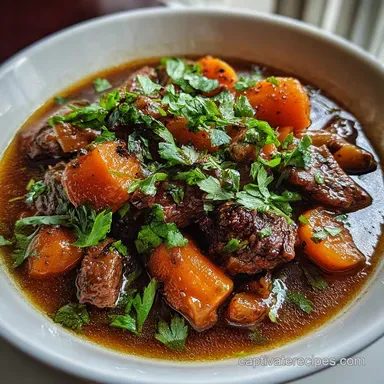
Fall-Apart Tender Beef Stew

- Time: 20 min active + 8 hours cooking
- Flavor & Texture: Deeply savory and rich with a thick, glossy gravy
- Perfect for: Cold weather family dinners or meal prep
Beef Stew
One-pot meals like this have always been about making the most of humble ingredients. Across Europe and North America, these kinds of slow-cooked pots started as a way to soften the cheapest cuts of meat using just a bit of water and whatever root vegetables were in the cellar.
It's the kind of meal that smells like home before you even walk through the front door. The goal is a deep, dark gravy and vegetables that hold their shape but give way the second you touch them with a fork.
This version focuses on a few key moves that make a huge difference in the final result. You'll get a deep amber sauce and beef that doesn't require any chewing.
The Logic of the Pot
- Tough Cuts: Using beef chuck is a smart move because the connective tissue breaks down over eight hours, turning into gelatin. This makes the meat tender and gives the sauce a velvety body.
- The Sear: Browning the meat in a skillet first adds a deep, savory layer of flavor that you just can't get from simmering alone. According to The Kitchn tested four popular beef stew recipes side by side, getting that initial brown crust is a key factor in the depth of the final dish.
| Approach | Prep Time | Texture | Best For |
|---|---|---|---|
| Fresh Veg & Herbs | 20 mins | Crisp-tender vegetables | Traditional Sunday dinner |
| Frozen/Dried Mix | 10 mins | Softer, blended taste | Maximum speed |
Recipe Specs
This is a budget-friendly meal that uses standard pantry staples to create a high-impact result. By focusing on the sear and the slow cook, you don't need expensive cuts of meat.
What Each Ingredient Does
| Ingredient | Role | If You Don't Have It |
|---|---|---|
| Beef Chuck | Adds heartiness and depth | Pre-cut stew beef, though chuck is more flavorful |
| Tomato Paste | Brings tang and a rich hue | 2 tbsp tomato puree (will be slightly thinner) |
| Beef Broth | Essential for the gravy base | Water combined with a bouillon cube |
The Shopping List
- 2 lbs beef chuck, cubed into 1-inch pieces Why this? Collagen ensures a tender result
- 1/4 cup all-purpose flour Why this? Used as a thickening agent
- 1 tsp kosher salt
- 1/2 tsp black pepper
- 2 tbsp vegetable oil
- 3 large carrots, sliced into thick rounds Why this? Provides natural sugar and vibrant color
- 1½ lbs baby Yukon Gold potatoes, cut in half Why this? They maintain their structure better than Russets
- 1 medium yellow onion, finely chopped
- 4 garlic cloves, minced
- 4 cups low-sodium beef broth
- 2 tbsp tomato paste
- 1 tbsp alcohol-free Worcestershire sauce
- 2 sprigs of fresh thyme
- 1 sprig of fresh rosemary
Smart Substitutions
| Original Ingredient | Substitute | Why It Works |
|---|---|---|
| Baby Yukon Gold | Red Potatoes | Comparable texture. Note: These may be smaller in size |
| Fresh Thyme/Rosemary | 1 tsp dried Mixed Herbs | Closely matches the flavor. Note: Missing that fresh, resinous aroma |
| All-purpose Flour | Cornstarch (2 tbsp) | Effective thickener. Note: Stir in as a slurry at the end rather than coating the meat |
The Essential Gear
You only need a few basics here. A heavy skillet (cast iron is great) for the searing and a standard slow cooker. If you don't have a crockpot, a Dutch oven in a 300°F (150°C) oven works just as well.
Bringing It Together
1. Searing for Depth
Dry the beef with paper towels. In a bowl, coat the meat evenly with 1/4 cup flour, 1 tsp salt, and 1/2 tsp pepper. Set a pan to medium-high and warm 2 tbsp vegetable oil. Brown the beef in batches to avoid crowding the pan, searing until a chestnut brown crust forms on all sides.
Transfer the meat to the slow cooker.

2. Building the Flavor Base
Using the same pan, sauté the diced onion for 3 minutes until translucent. Stir in the minced garlic and 2 tbsp tomato paste, cooking for 60 seconds until the paste turns a deep brick red. Deglaze with a splash of beef broth to loosen the browned bits, then pour the mixture into the slow cooker.
3. The Slow Simmer
Toss in the sliced carrots, halved potatoes, thyme sprigs, and rosemary sprig. Pour in the remaining beef broth and 1 tbsp Worcestershire sauce, stirring gently to combine. This is the stage where the beef stew develops its character.

4. The Final Touch
Cover and cook on Low for 8 hours or High for 4 hours. The beef is done when it reaches an internal temperature of 195–205°F (90–96°C) and yields easily to a fork with zero resistance.. Discard the woody herb stems. For a thicker sauce, mash two of the cooked potato chunks and stir them back in.

If Something Goes Wrong

It's hard to mess this up, but sometimes the texture isn't quite where you want it. Most issues come down to the amount of liquid or the cut of meat.
The broth is too thin
If the sauce feels more like a soup than a gravy, you can thicken it at the end. Mix a cornstarch slurry (equal parts cornstarch and cold water) and stir it in during the last 30 minutes on high.
The beef is still tough
If the meat is rubbery, it usually means it hasn't cooked long enough for the collagen to break down. Give it another hour, even if the vegetables are soft.
The vegetables are mushy
This happens if carrots or potatoes are cut too small. Keep them in thick coins or halves to ensure they survive the long cook.
| Problem | Root Cause | Solution |
|---|---|---|
| Watery Gravy | Too much broth or no flour | Mash a few potatoes into the sauce |
| Bland Taste | Under-seasoned broth | Add a splash more Worcestershire or salt |
| Meat is Dry | Cooked on High for too long | Stick to the Low setting for 8 hours |
Easy Swaps and Add-Ins
To customize your stew, stir in frozen peas or pearl onions during the last 30 minutes of simmering. For an extra boost of umami, I recommend mixing in a teaspoon of soy sauce at the end.
If you're looking for a side to accompany this beef stew, homemade pretzel rolls are ideal for mopping up the rich gravy.
For a gluten-free alternative, replace the flour with cornstarch or arrowroot powder. Simply remember to stir it in as a slurry at the end rather than dredging the meat in it.
Storing Your Leftovers
Store this beef stew in an airtight container in the refrigerator; it will keep for 4 days. It actually tastes even better on the second day as the flavors develop.
This recipe is also great for freezing. Let the stew cool completely before placing it in airtight freezer bags, where it will last for 3 months. To reheat, let it thaw overnight in the refrigerator and warm it slowly over the stove until it reaches 165°F (74°C) throughout.
If the sauce has become too thick, stir in a small amount of beef broth to reach your desired consistency. When reheating cooked leftovers, check with a food thermometer that the centre reaches 165°F (74°C); the appliance temperature and time alone do not confirm this.
Reduce waste by saving the carrot tops and stems. You can freeze these to whip up a quick vegetable stock for your next batch of soup.
High Sodium Content
958 mg of sodium per serving (42% of daily value)
To support cardiovascular health, the American Heart Association suggests limiting daily sodium intake to 2,300mg or less.
Ways to Lower Sodium
-
Swap the Broth
Instead of low-sodium beef broth, use a no-salt-added version or a homemade unsalted stock.
-
Reduce Added Salt
Significantly cut back on or skip the kosher salt used to season the beef.
-
Modify the Sauce
Opt for a low-sodium Worcestershire sauce or a dash of balsamic vinegar for similar richness.
-
Check the Paste
Make sure to use no-salt-added tomato paste to avoid hidden sodium.
-
Boost Fresh Aromatics
Add more fresh garlic, rosemary, and thyme to create a savory profile without needing extra salt.
Before You Start Cooking
How to prepare stew meat for the best result?
Pat the beef dry and toss it in flour, salt, and pepper before searing.
Tip: sear in batches to avoid crowding the pan and ensure a rich brown crust.
What differentiates beef stew from goulash?
Stews generally use a variety of root vegetables and a brown broth, while goulash focuses on paprika and onions.
Tip: use tomato paste to get a deep, savory base.
Why is beef stew different from beef soup?
Stews have a thicker consistency and use less liquid than soups.
Tip: mash two of the cooked potato chunks into the sauce to thicken it naturally.
When is stewing beef considered fully cooked in a slow cooker?
Beef is done when it reaches an internal temperature of 195–205°F and yields easily to a fork.
Tip: cook on Low for 8 hours or High for 4 hours for the best texture.
Can this beef stew be made using traditional methods?
Slow-simmering seared chuck and root vegetables is a traditional, time-tested approach.
Tip: Refrigerate the dish for a day to allow the flavors to deepen and harmonize.
Is this recipe designed for a slow cooker?
This recipe uses a slow cooker for the long braising process after the meat and aromatics are seared.
Tip: always sear the beef in a skillet first for a richer flavor profile.
Slow-Cooked Beef Stew