Soft Pretzel Bites: Chewy Crust Recipe

- Time: Active 33 minutes, Passive 12 minutes, Total 45 minutes
- Flavor/Texture Hook: Savory, chewy crust with a velvety, pillowy interior
- Perfect for: Game day snacks, kid friendly treats, or a movie night appetizer
- Achieving the Best Soft Pretzel Bites
- Why These Bites Actually Work
- Essential Baking Success Metrics
- The Pantry Staples You Need
- Simple Tools for Success
- Step by Step Baking Guide
- Solving Common Baking Hurdles
- Adjusting the Batch Size
- Easy Flavor Customizations
- Traditional Baking Wisdom Debunked
- Smart Storage and Reheating Tips
- The Best Dips and Pairings
- High in Sodium
- Recipe FAQs
- 📝 Recipe Card
Achieving the Best Soft Pretzel Bites
There is something about that specific, malty aroma of baking dough that just stops you in your tracks. I remember walking through the mall as a teenager and the scent of the pretzel stand would practically pull me toward the counter.
For years, I thought that dark, shiny crust and that distinct "snap" when you bite into it was some kind of industrial secret that regular home cooks couldn't touch. I tried making them once and they just tasted like regular dinner rolls in the shape of a knot honestly, it was a bit of a letdown.
But then I learned the trick. It isn’t about some fancy oven or a secret ingredient you can’t find; it’s all about the chemistry of the water. Once I realized that a quick dip in an alkaline solution is what creates that beautiful mahogany color and the signature chew, the game changed.
Now, I make these Soft Pretzel Bites whenever we have people over for a game, and the tray is usually empty before I even get a chance to sit down. Trust me on this, once you see how easy the boiling step is, you’ll never go back to the frozen bags again.
Why These Bites Actually Work
- The Maillard Reaction: The alkaline bath (water and baking soda) raises the pH of the dough's surface, which speeds up the browning process during baking to create that deep color.
- Gluten Development: Using 4.25 cups of all purpose flour provides enough protein to create a sturdy, chewy structure that holds up during the boiling phase.
- The Sugar Catalyst: Brown sugar doesn't just add sweetness; it provides immediate food for the yeast, ensuring a rapid and reliable rise in just minutes.
- Moisture Retention: Boiling the dough briefly "sets" the outside, trapping moisture inside so the interior stays velvety while the outside gets that classic crust.
Stovetop Finishing vs Oven Baking
| Method | Step Purpose | Texture Result | Time Required |
|---|---|---|---|
| Stovetop (Boil) | Gelatinizes the starch on the dough surface. | Signature chewy "skin" and dark color. | 30 seconds per batch |
| Oven (Baking) | Sets the internal structure and browns the crust. | Pillowy soft crumb with a matte or glossy finish. | 12 minutes total |
Essential Baking Success Metrics
Getting the science right is the difference between a soggy roll and a proper snack. I’ve found that using warm water specifically at 110°F/43°C is the "sweet spot" for yeast any hotter and you'll kill it, any cooler and it’ll take forever to wake up.
This recipe uses a high ratio of baking soda in the water to mimic the effects of professional lye without the safety hazards.
| Ingredient | Science Role | Pro Secret |
|---|---|---|
| Active Dry Yeast | Leavening agent that creates carbon dioxide bubbles. | Ensure it bubbles in the sugar water before adding flour. |
| Baking Soda | Creates an alkaline environment for browning. | Use a wide pot to prevent the bites from sticking together. |
| Egg Wash | Provides a protein rich coating for the salt to stick. | Whisk until no streaks remain for an even, golden shine. |
Right then, before we get our hands messy, let's talk about the dough itself. If you've ever felt like your dough is too sticky, don't just dump more flour in right away. Sometimes it just needs a few minutes to rest and hydrate.
It’s a reliable trick I’ve used for years to keep the bread from getting too dense.
The Pantry Staples You Need
- Warm Water (1.5 cups): Temperature is key here; aim for 110°F/43°C. Why this? Activates yeast perfectly without damaging the delicate cultures.
- Brown Sugar (1 tbsp): Adds a hint of molasses flavor. Why this? Provides glucose for the yeast to feast on quickly.
- Active Dry Yeast (1 packet/7g): The engine of the rise. Why this? Offers a reliable, consistent lift for a pillowy texture.
- Unsalted Butter (2 tbsp): Melted and cooled slightly. Why this? Adds fat to the dough for a richer, more tender bite.
- Kosher Salt (1 tsp): For the dough itself. Why this? Controls yeast growth and enhances the overall flavor profile.
- All Purpose Flour (4.25 cups): The structural foundation. Why this? Standard protein content creates the ideal balance of chew and softness.
- Baking Soda (0.5 cup): For the boiling water. Why this? The essential alkaline component that creates the pretzel crust.
- Pretzel Salt (2 tbsp): For the topping. Why this? Large grains don't melt as easily, providing a nice crunch.
Component Substitutions
| Original Ingredient | Substitute | Why It Works |
|---|---|---|
| Unsalted Butter | Neutral Oil (Canola/Grapeseed) | Keeps the dough moist but lacks the dairy richness. |
| Brown Sugar | Honey or Granulated Sugar | Provides the necessary sweetness and food for the yeast. |
| Pretzel Salt | Flaky Sea Salt | Provides a similar shatter and crunch, though it may melt faster. |
Simple Tools for Success
You don't need a bakery grade kitchen to make these Soft Pretzel Bites. A large mixing bowl and a sturdy wooden spoon are actually all I use most of the time. While a stand mixer (like a KitchenAid) makes the kneading easier, doing it by hand gives you a better "feel" for when the gluten is ready.
You will also need a large pot for the alkaline bath and a slotted spoon this is non negotiable for getting the bites out of the water without bringing a gallon of liquid with them.
For the baking portion, two large baking sheets lined with parchment paper are essential. Don't try to crowd them all onto one sheet, or they’ll steam each other instead of browning. I’ve made that mistake before, and you end up with pale, sad looking pretzels that stick together.
step-by-step Baking Guide
Phase 1: Rapid Rise Dough
- Activate the yeast. Combine 1.5 cups warm water (110°F/43°C) and 1 tbsp brown sugar in a bowl, then sprinkle 1 packet of yeast on top. Note: Wait 5 minutes until it looks foamy and smells like fresh bread.
- Mix the base. Stir in 2 tbsp melted butter and 1 tsp kosher salt until combined.
- Incorporate the flour. Gradually add 4.25 cups of all purpose flour, stirring with a wooden spoon until a shaggy dough forms.
- Knead the dough. Turn the dough onto a floured surface and knead for 5 minutes until it feels smooth and elastic. Note: It should spring back when poked.
- Let it rest. Place the dough in an oiled bowl, cover it, and let it rise in a warm spot for about 30 minutes until it has doubled in size.
Phase 2: Shaping and Cutting
- Prep the station. Preheat your oven to 425°F (220°C) and bring 9 cups of water to a boil in a large pot.
- Roll the ropes. Divide the dough into 8 equal pieces and roll each into a long rope about 1 inch thick.
- Cut the bites. Use a bench scraper or knife to cut the ropes into 1 inch pieces.
Phase 3: The Alkaline Dip
- Add the soda. Carefully whisk 0.5 cup baking soda into the boiling water. Note: It will foam up aggressively, so add it slowly.
- Boil the bites. Drop the dough pieces into the water in batches and boil for 30 seconds until they float and look slightly puffed.
- Drain and transfer. Remove with a slotted spoon and place onto parchment lined baking sheets.
Phase 4: The Golden Bake
- Coat and salt. Brush the tops with 1 beaten egg and immediately sprinkle with 2 tbsp pretzel salt.
- Bake until dark. Place in the oven for 10-12 minutes until the crust is deep mahogany and the bottoms are firm.
Solving Common Baking Hurdles
Pale Bites Lack Flavor
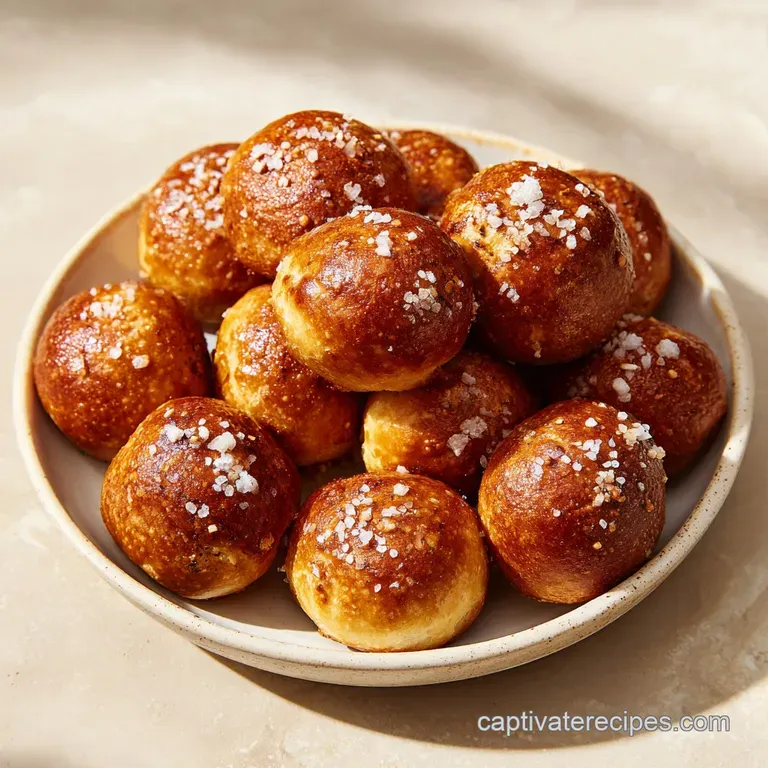
If your pretzels come out looking like dinner rolls, it usually means the water wasn't alkaline enough or the boil was too short. The baking soda is what triggers the browning. If you’re worried about them being too light, make sure the water is at a rolling boil when you add the soda and don't skimp on the 30 second dip.
Metallic or Bitter Aftertaste
This happens if you leave the bites in the baking soda water for too long or if the soda isn't fully dissolved. It’s a fine balance you want the chemical reaction, but you don't want to eat the chemicals! Stick strictly to that 30 second timer to keep the flavor clean and savory.
Salt Melting Into Crust
If you notice your salt disappearing into the dough, you might be waiting too long after the egg wash. The egg acts as a glue. I like to brush and salt in small batches (maybe 5-10 bites at a time) to ensure the salt stays on the surface for that perfect crunch.
| Problem | Root Cause | Solution |
|---|---|---|
| Dough is too tough | Over kneaded or too much flour. | Let the dough rest longer; use a lighter touch next time. |
| Bites are soggy | Not drained well after boiling. | Use a slotted spoon and let excess water drip off before baking. |
| Bottoms are burnt | Oven rack is too low. | Move the baking sheet to the middle or top third of the oven. |
Common Mistakes Checklist:
- ✓ Check water temperature with a thermometer (110°F/43°C) to avoid killing yeast.
- ✓ Add baking soda slowly to the boiling water to prevent a "volcano" overflow.
- ✓ Don't overcrowd the pot; boil in small batches so they don't stick.
- ✓ Ensure the egg wash covers the entire top surface for even browning.
- ✓ Use parchment paper or a silicone mat; these will stick to a greased pan.
Adjusting the Batch Size
Scaling Down (Making 4 servings): If you’re just cooking for two, you can easily halve this. Use 3/4 cup water, 1.5 tsp sugar, half a yeast packet (about 3.5g), 1 tbsp butter, and roughly 2 cups plus 2 tablespoons of flour.
You still need the full amount of water and baking soda for the bath, as the concentration is what matters for the reaction. Reduce baking time by about 2 minutes since the oven won't be as crowded.
Scaling Up (Making 16 servings): Doubling the recipe is great for parties. Keep the spices and salt to about 1.5x the original amount (1.5 tsp salt in the dough) to avoid it being overly salty. You’ll need to work in much larger batches for the boiling phase.
Make sure to refresh the boiling water and add another 1/4 cup of baking soda halfway through if the water starts looking too cloudy or "thick."
Easy Flavor Customizations
| Variation Style | Flavor Impact | Best For |
|---|---|---|
| Cinema Sweet | Toss in cinnamon sugar after baking. | Dessert or movie nights. |
| Everything Bagel | Swap pretzel salt for "everything" seasoning. | Breakfast or savory snacking. |
| Garlic Parmesan | Brush with garlic butter and dust with cheese. | Italian themed appetizers. |
If you are looking for more fun ways to use pretzels in your snacks, you might want to try my Peanut Butter Pretzels recipe which hits that sweet and salty craving perfectly. Or, for a quick holiday treat, the Rolo Pretzel Recipe is a literal lifesaver when you need a gift in minutes.
Traditional Baking Wisdom Debunked
Many people believe you absolutely must use food grade lye to get a real pretzel crust. While lye is traditional in Germany, baking soda is a much safer and highly effective alternative for home use. The secret isn't just the ingredient, but the concentration and the heat of the water.
Another myth is that you need to let the dough rise for hours. Because we are making small "bites" rather than large, intricate loaves, a short 30 minute rise is plenty. The boiling process provides a secondary "oven spring" that fluffs the dough up instantly, so don't feel like you need to wait all afternoon to start snacking.
Smart Storage and Reheating Tips
Storage: These are best eaten the day they are made, ideally while still warm from the oven. However, you can store leftovers in an airtight container at room temperature for up to 2 days.
The salt will eventually start to pull moisture from the air, making the crust a bit sticky, so don't be surprised if they lose their crunch.
Freezing: These freeze beautifully! Once completely cooled, place them in a freezer bag for up to 3 months. To reheat, just pop them in a 350°F (180°C) oven or an air fryer for 5 minutes until heated through.
Zero Waste: If you have bites that have gone a bit stale, don't throw them out. You can pulse them in a food processor to make "pretzel crumbs" which are an incredible coating for fried chicken or as a crunchy topping for a mac and cheese bake.
The Best Dips and Pairings
You can’t have Soft Pretzel Bites without a good dip. The classic choice is a sharp yellow mustard or a spicy brown variety. If you want to go the extra mile, a warm beer cheese sauce made with sharp cheddar and a splash of lager is the ultimate companion.
It adds a creamy, tangy element that cuts through the saltiness of the pretzel.
For something a bit different, you could serve these alongside a Spinach and Feta recipe for a Mediterranean style snack spread. The salty feta and earthy spinach actually complement the malty flavor of the pretzel dough surprisingly well. If you’re feeling adventurous, a spicy maple mustard just honey mustard with a dash of cayenne and maple syrup is a crowd pleaser that people always ask for the recipe for.
Spicy Maple Mustard Shortcut
- 3 tbsp Dijon Mustard
- 1 tbsp Maple Syrup
- 1 tsp Yellow Mustard
- Pinch of Cayenne Pepper
- Instruction: Whisk until smooth and serve at room temperature.
Decision Shortcut
- If you want maximum chew, knead the dough for the full 5 minutes to build strong gluten.
- If you want a darker crust, don't skip the egg wash and use the full 0.5 cup of baking soda.
- If you want a soft interior, avoid over baking past 12 minutes; they will firm up as they cool.

High in Sodium
980 mg 980mg of sodium per serving (43% 43% of daily value)
The American Heart Association recommends limiting sodium intake to about 2,300mg per day for better heart health.
Easy Ways to Reduce Sodium in Your Pretzel Recipe
-
Reduce Pretzel Salt-25%
Cut the amount of pretzel salt used for topping in half, from 2 tbsp to 1 tbsp. This significantly reduces the sodium content. The original recipe includes 2 tbsp of pretzel salt, so cutting back on this component will provide a great impact on the sodium level.
Consider using a coarse sea salt alternative, but use it sparingly.
-
Omit Kosher Salt-15%
Eliminate the 1 tsp of kosher salt from the dough recipe. The pretzel salt topping provides enough saltiness. Taste test before adding it again!
-
Baking Soda Adjustment-10%
Ensure you are using fresh baking soda, and consider reducing it slightly (e.g., from 0.5 cup to 0.4 cup). While baking soda contributes to the pretzel's texture, it also contains sodium. Be mindful of texture changes.
-
Enhance with Herbs & Spices
Experiment with adding sodium free herbs and spices to the dough or as a topping for added flavor complexity. Examples include garlic powder, onion powder, or everything bagel seasoning (check sodium content).
Recipe FAQs
What is the secret ingredient which makes a pretzel taste like a pretzel?
The alkaline bath, specifically baking soda. This raises the pH on the dough's surface, which rapidly accelerates the Maillard reaction during baking, producing the signature dark color and malty flavor.
What makes a pretzel bite chewy?
The brief boiling step in the baking soda solution. This step gelatinizes the starches on the surface, creating a firm, chewy "skin" while the interior remains soft and pillowy.
Is it better to bake or boil pretzels?
You must do both for true pretzel texture. Boiling briefly sets the crust and imparts the characteristic flavor, while baking finishes cooking the inside and sets the final structure.
What are the common pretzel making mistakes?
Failing to properly activate the yeast or over boiling the bites. Ensure your water is exactly 110°F for activation, and never boil the dough pieces for longer than 30 seconds, or they will become tough and rubbery.
How to ensure the pretzel salt sticks to the surface after baking?
Brush with the egg wash immediately before sprinkling. The egg provides a sticky protein layer that adheres to the salt grains, ensuring they don't fall off during the bake or handling.
Can I substitute the brown sugar with something else?
Yes, honey or granulated sugar work as substitutes. These ingredients serve as the necessary quick food source for the yeast, and mastering the yeast activation technique here is key to success in many dough recipes, similar to our Dough Handling technique.
How to store leftovers to maintain texture?
Store at room temperature in an airtight container for up to two days. For the best results and to restore some of the crust's crispness, reheat frozen bites in a 350°F oven for 5 minutes.
Soft Pretzel Bites Recipe

Ingredients:
Instructions:
Nutrition Facts:
| Calories | 281 kcal |
|---|---|
| Protein | 7.8 g |
| Fat | 3.9 g |
| Carbs | 52.3 g |
| Fiber | 1.8 g |
| Sugar | 1.9 g |
| Sodium | 980 mg |
