Cheesy Hasselback Potato Gratin
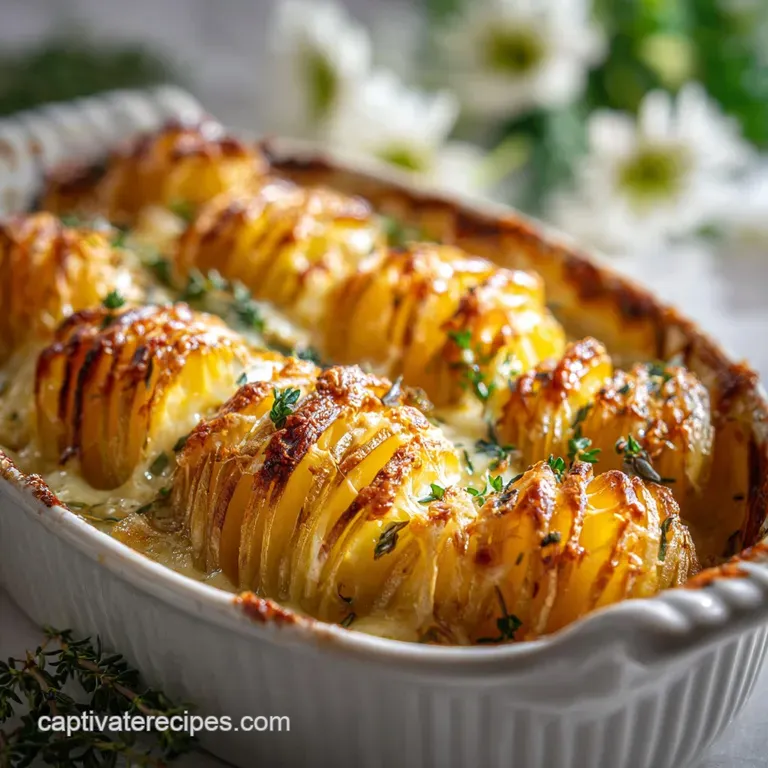
- Time: Active 25 minutes, Passive 1 hours 15 mins, Total 1 hours 40 mins
- Flavor/Texture Hook: Silky cream custard meets a shattering, golden brown potato crust.
- Perfect for: Holiday centerpieces or a high impact weekend side dish.
- Making Perfect Cheesy Hasselback Potato Gratin
- Why Vertical Slicing Creates Better Potato Texture
- Choosing High Starch Potatoes and Strong Cheeses
- Essential Kitchen Tools for Slicing and Baking
- The Timeline for Prepping and Baking Success
- Fixing Sogginess and Solving Sauce Separation Issues
- Swapping Ingredients to Fit Different Dietary Needs
- Smart Storage and Efficient Reheating Methods
- Garnishing and Pairing for the Best Dinner
- Precision Checkpoints for Success
- Recipe FAQs
- 📝 Recipe Card
Making Perfect Cheesy Hasselback Potato Gratin
The first time I pulled a tray of this Cheesy Hasselback Potato Gratin out of the oven, the sound was what hit me first. As I tapped the edges with a spoon, there was a distinct "shatter" a sharp, crispy crackle that you just don't get with traditional flat layered potatoes.
The kitchen smelled like roasted garlic and nutty Gruyère, and I knew I could never go back to the mushy, heavy casseroles of my past.
We've all been there: you spend an hour peeling and slicing, only for the middle of the gratin to turn into a dense, starchy block while the cream curdles around the edges. It’s frustrating. This method, inspired by the Kenji Hasselback Potato Gratin technique, solves that by standing the potatoes on their sides.
It sounds like a small tweak, but it completely changes how the heat moves through the dish.
In this guide, I'm sharing the tricks I learned after three failed attempts and one very messy "cream explosion" in my oven. You'll get the exact flow for a reliable result every single time.
Trust me, once you see those upright edges turn deep mahogany and crispy, you'll be the designated "potato person" for every family gathering from now on.
Why Vertical Slicing Creates Better Potato Texture
Surface Area Maximization: Standing slices vertically exposes the top edges to direct dry heat, allowing them to dehydrate and crisp into a "shatter" texture.
Convection Channels: The gaps between upright slices act as tiny chimneys, letting steam escape so the cream reduces into a thick, velvety sauce rather than staying watery.
Starch Gelatinization Control: By simmering the bottom half of the potato in cream while roasting the top, we achieve a dual texture of tender custard and crispy chip.
| Servings | Potato Amount | Cream Needed | Pan Size |
|---|---|---|---|
| 4-5 People | 0.9 kg (2 lbs) | 235 ml (1 cup) | 20x20 cm Square |
| 9 People | 1.8 kg (4 lbs) | 475 ml (2 cups) | 23x33 cm Rectangle |
| 12-15 People | 2.7 kg (6 lbs) | 710 ml (3 cups) | Large Roasting Pan |
The vertical arrangement is particularly helpful when you're feeding a crowd. Because the potatoes are packed tightly, you can fit nearly double the amount of food into a standard 9x13 inch pan compared to traditional flat layering. If you love that sharp cheese hit, you'll definitely want to try my Cheddar Herb Crackers recipe as a snack while you wait for this to bake.
Choosing High Starch Potatoes and Strong Cheeses
| Component | Science Role | Pro Secret |
|---|---|---|
| Russet Potatoes | High starch content | Provides the "glue" that thickens the cream sauce naturally. |
| Heavy Cream | Fat emulsion | Use minimum 36% fat to prevent the sauce from splitting under high heat. |
| Gruyère Cheese | Melting point/Flavor | Contains high oil content which creates that "lacey" browned crust. |
For this Cheesy Hasselback Potato Gratin recipe, we need specific players to get that "liquid gold" sauce. You'll need 1.8 kg (4 lbs) of Russet potatoes, which I prefer to peel, though you can leave the skins on if you want a more rustic vibe.
Don't forget the seasoning: 10g (2 tsp) Kosher salt and 2g (1 tsp) freshly cracked black pepper are non negotiable for 4 pounds of starch.
The sauce is a cold infusion of 475 ml (2 cups) heavy cream, 3 large smashed garlic cloves, 1 large minced shallot, and 2 sprigs of fresh thyme.
A little 1.5g (0.5 tsp) of freshly grated nutmeg adds a professional depth that makes people wonder what your secret is. Finally, the cheese trio: 180g (1.5 cups) Gruyère, 120g (1 cup) sharp white cheddar, and 50g (0.5 cup) Parmigiano Reggiano.
Why this? Gruyère provides the melt, Cheddar the tang, and Parmigiano the salty, crispy "shatter" on top.
Essential Kitchen Tools for Slicing and Baking
To make this truly an easy Cheesy Hasselback Potato Gratin, a mandoline slicer is your best friend. Trying to cut 4 pounds of potatoes into 3mm (1/8 inch) slices with a knife is a recipe for a hand cramp and uneven slices mean uneven cooking.
If you do use a mandoline, please use the safety guard; I've learned that lesson the hard way!
You will also need a solid 9x13 inch (23x33 cm) baking dish. Ceramic or glass works best here as they distribute heat more evenly than thin metal pans. A small saucepan is necessary for steeping your cream with the aromatics, and a box grater is a must. Honestly, don't even bother with the pre shredded cheese in bags.
It’s coated in potato starch to prevent clumping, which stops it from melting into that silky, velvety pool we're after.
Why Use Starchy Russets?
Russets are the kings of the gratin world because their starch cells rupture easily. When they meet the heavy cream, they release that starch, which acts as a natural thickener. Waxy potatoes like Red Bliss will stay too firm and won't "marry" with the sauce as effectively.
How Does Vertical Packing Improve Texture?
When you pack slices horizontally, the weight of the top layers squeezes the moisture out of the bottom ones, leading to a soggy base. Vertical packing allows the fat from the cheese and cream to drip down between every single slice, seasoning the potato from top to bottom.
The Timeline for Prepping and Baking Success
1. Infuse the cream.
Combine the heavy cream, smashed garlic, minced shallot, thyme sprigs, and nutmeg in a small saucepan. Bring it to a bare simmer over medium heat, then immediately remove it from the stove. Note: This "cold steeping" lets the aromatics flavor the fat without scorching the dairy.
2. Prep the potatoes.
Peel the Russet potatoes and slice them into 3mm (1/8 inch) rounds using a mandoline. Place the slices in a large bowl and toss them thoroughly with the salt and pepper. The slices should look slightly wet as the salt draws out some moisture.
3. Arrange the slices.
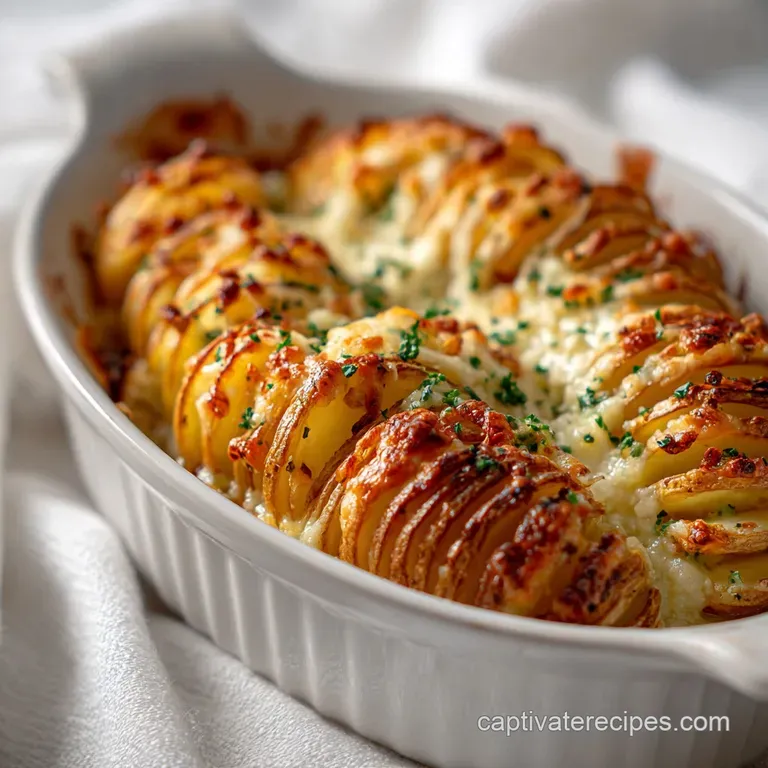
Grab a handful of potato slices and stand them up on their edges in your baking dish. Continue until the pan is packed tightly. Don't worry if they aren't perfectly straight; a little lean actually helps the edges crisp up better.
4. Add the liquid.
Strain the garlic and thyme out of your infused cream and pour the liquid evenly over the potatoes. It should come about halfway or two thirds of the way up the sides of the potatoes.
5. First bake.
Cover the dish tightly with foil. Bake at 200°C (400°F) for 30 minutes until the potatoes are tender when pierced with a knife. This "steams" the starch so the centers aren't crunchy.
6. The cheese layer.
Remove the foil. Mix your Gruyère and White Cheddar together and sprinkle them generously over the top, making sure to get cheese into the little crevices between slices.
7. Final crisp.
Return the pan to the oven uncovered. Bake for another 40 to 45 minutes until the tops are mahogany brown and the sauce is bubbling and thickened.
8. The Parmigiano finish.
In the last 5 minutes of baking, sprinkle the Parmigiano Reggiano over the top. This creates a final, salty crust that won't burn if added late.
9. The crucial rest.
Let the dish sit on the counter for at least 15 minutes before serving. The sauce will look thin at first, but it thickens significantly as it cools slightly, turning into a velvety custard.
Chef's Tip: For an even deeper flavor, brown 2 tablespoons of butter and brush it over the potato edges before you add the cheese. It adds a nutty, toasted note that cuts through the richness of the cream.
Fixing Sogginess and Solving Sauce Separation Issues
One of the most common "why did this happen" moments with a potato gratin is seeing a pool of oil on top or a thin, watery sauce at the bottom. Usually, this comes down to the temperature of the oven or the type of cream used.
If your oven is too hot, the proteins in the cream can tighten and "break," releasing the fat.
| Problem | Root Cause | Solution | | :--- | :--- | :--- :| | Curdled Sauce | Oven too hot or low-fat milk used | Use 36% heavy cream and keep temp at 200°C (400°F).
| | Hard Potato Centers | Slices too thick or not enough foil time | Use a mandoline for 3mm slices; ensure foil is airtight. | | Greasy Surface | Too much cheddar cheese | Mix sharp cheddar with Gruyère to balance the oil content. |
Why Is My Sauce Curdling or Grainy?
This usually happens if you use "Half and Half" or milk instead of heavy cream. The lower fat content makes the dairy less stable when it meets the acid in the shallots or the high heat of the oven.
If it happens, you can sometimes save it by stirring a tablespoon of hot heavy cream into the liquid areas before serving to re emulsify.
What If the Center Potatoes Are Still Hard?
If your 30 minute covered bake didn't soften the potatoes, your slices might be too thick. Add another 10 minutes of covered baking time. You can also "hack" this by par boiling the potato slices in the cream for 5 minutes on the stove before putting them in the baking dish.
Common Mistakes Checklist
- ✓ Never wash the starch off your sliced potatoes; that starch is what thickens your sauce.
- ✓ Use a kitchen scale to ensure you actually have 1.8 kg of potatoes; too few potatoes will result in a "soup."
- ✓ Always grate your own cheese to avoid the anti clumping powders found in pre shredded bags.
- ✓ Don't skip the resting period — 15 minutes is the difference between a mess and a masterpiece.
- ✓ Make sure the foil seal is tight to trap the steam during the first phase of baking.
Swapping Ingredients to Fit Different Dietary Needs
If you need to scale this recipe down for a smaller dinner, just halve everything and use a 20x20 cm (8x8 inch) pan. The cook time for the covered portion stays about the same, but the uncovered portion might finish 10 minutes faster.
For a massive holiday spread, you can double the recipe in a large roasting pan. Just be careful not to double the salt exactly start with 1.5x the salt and taste a slice after tossing.
| Original Ingredient | Substitute | Why It Works |
|---|---|---|
| Heavy Cream | Full fat Coconut Milk | High fat content creates a similar creamy texture. Note: Adds a tropical flavor. |
| Gruyère | Emmental or Jarlsberg | Both have great melting properties and a similar nutty profile. |
| Shallots | Yellow Onion (minced) | Provides the same aromatic base but with a slightly sharper bite. |
This gratin is quite flexible. If you're looking for a simpler way to cook, you might compare the fresh method to a shortcut.
| Feature | Fresh Potato Gratin | Shortcut (Pre sliced/Frozen) |
|---|---|---|
| Texture | Crispy edges, creamy center | Often softer/mushier texture |
| Flavor | Bright aromatics, sharp cheese | Can have a "processed" aftertaste |
| Effort | 25 mins prep time | 5 mins prep time |
Smart Storage and Efficient Reheating Methods
Leftover Cheesy Hasselback Potato Gratin is honestly a gift. It stays fresh in the fridge for up to 4 days when kept in an airtight container. Because of the high fat and starch content, it actually holds its structure quite well. To reheat, avoid the microwave if you want to keep those crispy edges.
Instead, put a portion in a small oven safe dish, cover with foil, and bake at 175°C (350°F) for 15 minutes. Remove the foil for the last 5 minutes to re crisp the top.
I don't recommend freezing this dish. Potatoes tend to become "mealy" or grainy when frozen and thawed in a creamy sauce. The sauce also has a high chance of breaking (separating into oil and solids) upon reheating from frozen. If you have extra potato peels from the prep, don't toss them! Toss them in oil and salt and air fry them for 10 minutes to make "peel chips" the ultimate zero waste snack. For another cozy meal idea, this gratin is a dream next to a Lemon Herb Chicken recipe.
Garnishing and Pairing for the Best Dinner
Presentation is where the Hasselback style really shines. Because the potatoes are standing up, they look like a work of art. I like to finish the dish with a handful of fresh chives or flat leaf parsley right before serving. The green pop against the mahogany brown cheese is stunning.
If you want to go full "gourmet," a tiny drizzle of truffle oil just before it hits the table will send the aroma through the roof.
If you want X, do Y: If you want a smokier flavor, swap the white cheddar for smoked gouda. If you want it even crispier, use the "broil" setting for the final 2 minutes. If you want a lighter version, replace 1 cup of cream with chicken stock (though it will be less velvety).
This dish is very rich, so it pairs best with something acidic or bright. A simple arugula salad with a lemon vinaigrette works wonders to cut through the heavy cream and cheese. If you're doing a full Sunday roast, this is the perfect companion for a Simple Slow Cooker recipe or a prime rib.
Myths About Potato Gratin
- Myth 1: You must soak potatoes in water. Actually, for a gratin, soaking is the enemy! You want that surface starch to stay on the slices so it can thicken the cream into a custard.
- Myth 2: You need to boil the cream first. While some recipes call for boiling, a "cold steep" (bringing to a simmer then removing) is safer. It prevents the cream from reducing too much before it even hits the oven, which can lead to a dry gratin.
- Myth 3: More cheese is always better. If you add too much cheese (especially oily ones like cheddar), it can weigh down the potato edges and prevent them from getting that signature "shatter" crispiness. Stick to the ratios!
Precision Checkpoints for Success
- The Thickness: Ensure slices are exactly 3mm (1/8 inch). Any thicker and they won't stand up well; any thinner and they turn into mush.
- The Temperature: The internal temp of the center potato should be 98°C (210°F) when it’s fully cooked and tender.
- The Weight: You need 1.8 kg (4 lbs) of potatoes for a standard 9x13 dish to ensure they are packed tightly enough to stay upright.
This simple Cheesy Hasselback Potato Gratin takes a bit of time, but the "hands on" work is actually quite low. Once you get those potatoes sliced and the cream infused, the oven does all the heavy lifting.
It's a reliable, crowd pleasing side that looks like you spent hours on it, but we'll keep the "easy" secret between us!
Recipe FAQs
What kind of potatoes are best for Cheesy Hasselback Potato Gratin?
Russet potatoes are ideal. Their high starch content helps thicken the cream sauce naturally, providing a superior creamy texture and binding.
Can I use pre-shredded cheese?
No, always grate your own cheese. Pre-shredded cheeses contain anti clumping agents that prevent them from melting smoothly into the sauce.
Why is my gratin sauce curdling or separating?
You likely used low-fat dairy or the oven was too hot. Stick to heavy cream (at least 36% fat) and maintain the recommended oven temperature to prevent the sauce from breaking.
How thick should the potato slices be?
Aim for 3mm (1/8 inch) thick slices. This thickness is crucial for them to stand upright, cook evenly, and achieve both tender interiors and crispy edges.
How long should the gratin rest before serving?
Rest for at least 15 minutes. This resting period allows the sauce to thicken and set, preventing a watery consistency when you serve.
Can I substitute the heavy cream?
Yes, full fat coconut milk is a good substitute. It has a high fat content that mimics heavy cream's texture, though it will impart a slight tropical flavor.
How do I reheat leftovers without making them soggy?
Reheat in the oven, not the microwave. Cover with foil at 175°C (350°F) for 15 minutes, then uncover for the last 5 minutes to re-crisp the top.
Cheesy Hasselback Potatoes
Ingredients:
Instructions:
Nutrition Facts:
| Calories | 479 kcal |
|---|---|
| Protein | 15.6 g |
| Fat | 29.6 g |
| Carbs | 39.3 g |
| Fiber | 2.7 g |
| Sugar | 1.9 g |
| Sodium | 711 mg |
