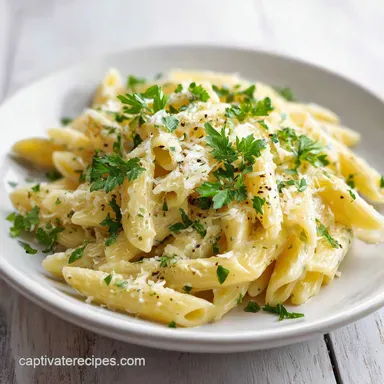
Creamy Garlic Parmesan Penne Pasta: Rich and Velvety
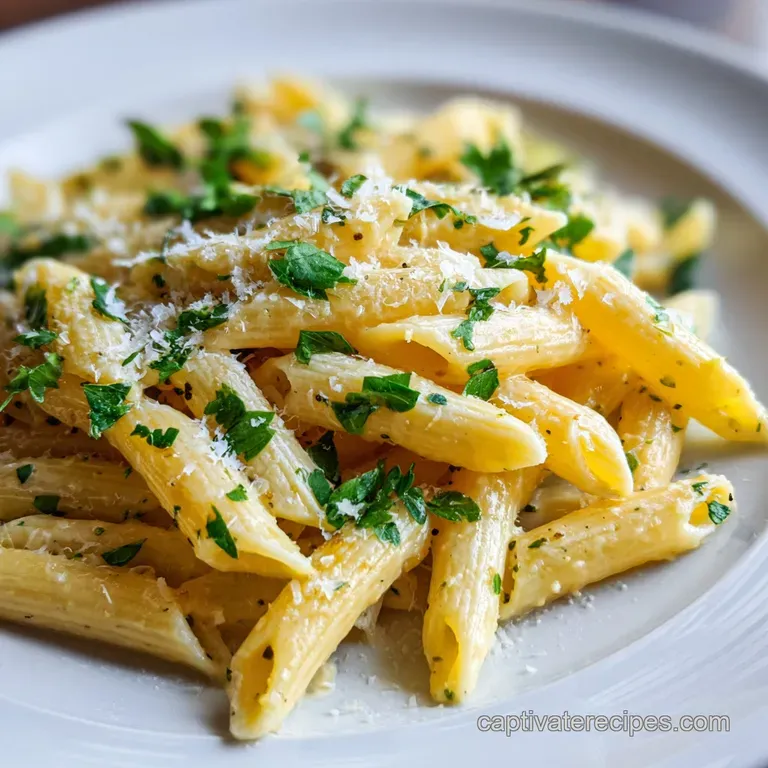
- Time: 10 min prep + 20 min cook = Total 30 minutes
- Flavor/Texture Hook: Velvety, garlic forward cream sauce with a slight parmesan tang
- Perfect for: Exhausted weeknights, beginner cooks, or a comforting date night dinner
- Best creamy garlic penne pasta recipe
- Secrets For a Silky Sauce
- Quick Recipe Overview
- The Essential Ingredient List
- The Right Kitchen Gear
- The Step-by-Step Process
- Fixing Common Pasta Errors
- Swaps For Different Diets
- Storage and Leftover Guide
- The Best Side Pairings
- Pasta Truths
- Recipe FAQs
- 📝 Recipe Card
The smell of garlic hitting hot butter is, for me, the ultimate "I'm home" scent. But let's be real, we've all been there: you're rushing a dinner together, and suddenly the garlic turns a suspicious shade of dark brown, or the sauce breaks into an oily mess just as you're about to plate it.
It's frustrating when a simple comfort meal turns into a kitchen disaster.
I remember one Tuesday night where I tried to rush my sauce by cranking the heat to high. The result? A grainy, split sauce that looked more like curdled milk than a creamy dream. I almost ordered pizza.
Instead, I spent a few minutes whisking in a splash of pasta water and lowering the heat, which is where I realized that the secret isn't fancy equipment, it's just managing the temperature and the starch.
This recipe is the fix for all that. We're focusing on a reliable method that ensures the sauce stays silky and the garlic remains sweet and fragrant. You're going to get a meal that's consistently velvety every single time, without the stress of the sauce breaking.
Best creamy garlic penne pasta recipe
The goal here is a sauce that actually clings to the pasta rather than pooling at the bottom of the bowl. To get that, we rely on a basic roux based method. It's the most reliable way to ensure the milk and butter don't separate, especially when you add the salty punch of Parmesan.
Trust me, don't skip the reserved pasta water. That cloudy, starchy liquid is basically liquid gold. According to the experts at Serious Eats, that starch helps emulsify the fats in the butter and cheese, binding everything together into a cohesive sauce. If your sauce feels too thick, a tablespoon of that water brings it back to life instantly.
Right then, let's get into how this actually comes together. We aren't doing anything fancy or "professional grade" here, just using a few basic tricks to make sure your dinner is a win.
Secrets For a Silky Sauce
Most people just throw cream and cheese in a pan and hope for the best. But there's a logic to the order of operations here that keeps things smooth.
- The Roux Method
- Cooking flour in butter before adding milk creates a stable base that prevents the sauce from thinning out or breaking.
- Temperature Control
- Keeping the heat medium low prevents the garlic from burning and stops the cheese from seizing into clumps.
- Starch Binding
- Adding a bit of the salty pasta water acts as a bridge between the fat of the cream and the starch of the pasta.
- Cheese Integration
- Stirring in the Parmesan at the very end ensures it melts into a velvety texture rather than becoming rubbery.
The difference between a "good" pasta and a "great" one often comes down to whether you used a shortcut or took the extra few minutes for the base.
| Component | Shortcut Method | Fresh Roux Method | Impact |
|---|---|---|---|
| Sauce Base | Heavy cream only | Butter + Flour + Milk | Roux is more stable and less likely to split |
| Garlic | Garlic powder | Freshly minced cloves | Fresh garlic has a sweeter, more complex aroma |
| Pasta Water | Drained completely | Reserved 240ml | Reserved water creates a glossier finish |
Since we're using a roux, we can use whole milk instead of heavy cream. This makes the dish feel slightly less heavy while maintaining that rich, velvety mouthfeel.
Quick Recipe Overview
Before we crack on, let's look at the logic of the build. I like to think of this as a three phase plan: the foundation, the emulsion, and the marriage.
Phase 1: The Foundation Get your water boiling and your pasta started. While the penne is softening, you'll prep your garlic. This ensures the pasta is ready exactly when the sauce hits its peak thickness.
Phase 2: The Emulsion This is where the butter, flour, and milk combine. You're looking for a sauce that coats the back of a spoon. If it's too thin, it'll slide off the penne; too thick, and it'll feel like paste.
Phase 3: The Marriage The final toss is where the magic happens. You're not just mixing them; you're vigorously tossing the pasta in the sauce over heat for about a minute. This allows the penne to absorb some of the sauce into its ridges.
The Essential Ingredient List
Stick to the measurements here. Too much flour makes it gummy, and too little means the sauce won't hold together.
- 450g penne pasta Why this? Ridges hold onto the creamy sauce perfectly
- 3.8L water Why this? Plenty of room for pasta to move
- 30g salt Why this? Seasons the pasta from the inside out
- 56g unsalted butter Why this? Provides the fat base for the roux
- 20g garlic, minced (about 4 cloves) Why this? Fresh garlic is non negotiable for flavor
- 16g all purpose flour Why this? Thickens the sauce and prevents splitting
- 480ml whole milk Why this? Creates a creamy texture without being too heavy
- 100g grated Parmesan cheese Why this? Adds saltiness and a velvety finish
- 3g salt Why this? Adjusts the final seasoning
- 1g cracked black pepper Why this? Adds a subtle heat to cut through the fat
- 2g Italian seasoning Why this? Adds herbal depth
- 8g fresh parsley, chopped Why this? Brightens the flavor and adds color
| Original Ingredient | Substitute | Why It Works |
|---|---|---|
| Whole Milk (480ml) | Half and Half (480ml) | Higher fat content. Note: Makes it richer/heavier |
| Parmesan (100g) | Pecorino Romano (100g) | Similar hardness. Note: Much saltier and tangier |
| Penne (450g) | Rigatoni (450g) | Similar shape. Note: Larger holes for more sauce |
| Butter (56g) | Olive Oil (56g) | Same fat role. Note: Lacks the creamy flavor of butter |
The Right Kitchen Gear
You don't need a professional kitchen, but a couple of the right tools make this much easier. Honestly, don't bother with a small pot for the sauce; you want room to toss the pasta.
- Large Pot: For boiling the penne. Use something wide so the pasta doesn't clump.
- Large Skillet: A 12 inch pan is best. This gives you the space to toss the pasta vigorously without it flying over the edges.
- Whisk: A fork works, but a whisk is essential for the roux to ensure there are no flour lumps.
- Colander: For draining, though a spider strainer is even better so you can easily save the pasta water.
The step-by-step Process
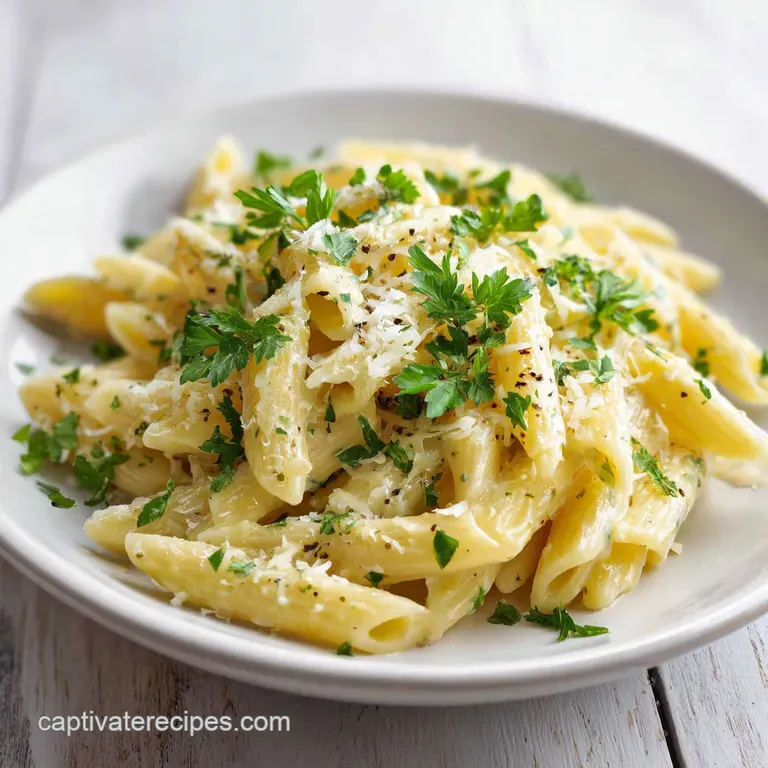
Let's get cooking. Follow these steps, and keep an eye on the cues.
- Bring 3.8L of salted water to a rolling boil. Add 450g penne and cook for 1-2 minutes less than the package instructions until it's slightly firm to the bite (al dente).
- Reserve 240ml of the starchy pasta water before draining the penne. Note: Do this first so you don't forget!
- Melt 56g butter in a large skillet over medium low heat. Add 20g minced garlic and sauté for 1-2 minutes until soft and translucent.
- Whisk in 16g flour and cook for 1 minute until the raw flour smell disappears.
- Gradually pour in 480ml milk, whisking constantly to prevent lumps from forming.
- Simmer for 3-5 minutes until the sauce thickens enough to coat a spoon.
- Stir in 100g Parmesan, 2g Italian seasoning, 3g salt, and 1g pepper until the sauce is velvety and smooth.
- Transfer the drained penne into the skillet. Toss vigorously over medium heat for 60 seconds, adding reserved pasta water one tablespoon at a time until the sauce clings perfectly to the pasta.
- Garnish with 8g chopped parsley and optional red pepper flakes.
Chef's Tip: To get the garlic just right, don't let it brown. If it starts to turn gold, pull the pan off the heat for 10 seconds. Burnt garlic is bitter and will ruin the whole batch.
Fixing Common Pasta Errors
Even with a good plan, things happen. The most common issue is the sauce texture. If it looks "broken" (separated oil and solids), it's usually because the heat was too high or you added the cheese too quickly.
Broken Sauce Fixes
If your sauce separates, don't panic. Remove it from the heat immediately and whisk in a tablespoon of the reserved pasta water. The starch helps re bind the emulsion.
Grainy Texture Fix
Graininess usually happens when Parmesan is added to boiling liquid, causing the proteins to clump. Always turn the heat down before stirring in your cheese. For more on roux stability, Bon Appétit suggests keeping the liquid temperature consistent.
Burnt Garlic Fix
If you've accidentally burnt the garlic, there's no way to "un burn" it. The bitter taste will permeate the sauce. Your best bet is to start the sauce over. It's a 5 minute fix that saves the whole meal.
| Problem | Root Cause | Solution |
|---|---|---|
| Sauce is too thick | Not enough liquid/over reduced | Add reserved pasta water 1 tbsp at a time |
| Pasta is mushy | Overcooked in the pot | Undercook pasta by 2 mins; finish in the sauce |
| Sauce tastes bland | Lack of salt/acid | Add a squeeze of lemon or more Parmesan |
Common Mistakes Checklist
- ✓ Did you reserve the pasta water before draining?
- ✓ Is the garlic translucent, not brown?
- ✓ Did you whisk the flour into the butter for a full minute?
- ✓ Did you toss the pasta over heat for 60 seconds?
Swaps For Different Diets
This recipe is flexible. Depending on what you have in the fridge, you can easily tweak it. If you're looking for more protein, I highly recommend trying a creamy chicken penne pasta approach by adding seared breast pieces at the end.
For Extra Protein
Add 200g of grilled shrimp or sliced chicken. Sauté the protein separately first, then stir it in during the final marriage phase. If you're feeling fancy, you can saute mushrooms in the same pan before starting the roux for an earthy flavor.
For a Lighter Version
Swap the whole milk for 2% milk or unsweetened almond milk. You'll lose a bit of the velvetiness, but it's still satisfying. You can also reduce the butter to 30g and add a splash of pasta water to make up the volume.
For dairy-free Needs
Use a plant based butter and cashew milk (which has the fat content to mimic dairy). Replace Parmesan with nutritional yeast or a vegan parmesan alternative. Note: The texture will be slightly different, but the garlic flavor remains.
Decision Shortcut
- If you want it richer, use heavy cream instead of milk.
- If you want it zesty, add 1 tsp of lemon zest and a squeeze of juice at the end.
- If you want it spicy, add 1/2 tsp of red pepper flakes during the garlic sauté.
Storage and Leftover Guide
Creamy sauces are notorious for thickening in the fridge. When you reheat this creamy garlic penne pasta, it might look like a solid block of pasta. That's normal.
- Fridge Storage
- Store in an airtight container for up to 3 days.
- Freezer Storage
- I don't recommend freezing this. The dairy in the roux tends to separate and become grainy when thawed, which kills the velvety texture.
- Reheating
- Heat in a pan over medium low heat. Add a splash of milk or water to loosen the sauce back up. Avoid the microwave if you can, as it tends to overcook the pasta.
Zero Waste Tips Don't throw away the parsley stems! Finely mince them and add them to the sautéing garlic for extra flavor. If you have a bit of leftover roux (butter/flour) in the pan, splash some water in it to deglaze and use that liquid in your next soup.
The Best Side Pairings
Because this dish is so rich, you need something to cut through the fat. A bright, acidic side is the way to go.
A simple arugula salad with a lemon vinaigrette is the classic choice. The bitterness of the greens and the zing of the lemon balance the heavy cream and garlic perfectly. Alternatively, some roasted broccoli or steamed asparagus adds a necessary crunch to the meal.
If you're serving this for a crowd, a piece of crusty sourdough bread is a must. You'll want it to mop up every last drop of that garlic sauce from the plate. Trust me, the bread is the only way to ensure zero waste in your bowl.
Pasta Truths
Myth: You must use heavy cream for a creamy sauce. Truth: As this recipe shows, a roux with milk creates a stable, creamy result that is often more satisfying and less cloying than pure heavy cream.
Myth: Adding oil to pasta water prevents sticking. Truth: Oil just floats on top of the water and prevents the sauce from sticking to the pasta later. Use plenty of water and a good stir instead.
Myth: Fresh pasta is always superior for cream sauces. Truth: For a creamy garlic penne pasta, dried penne is actually better. The ridges are more defined and the structure holds up better against the weight of the sauce without becoming mushy.
Recipe FAQs
Is it true this pasta freezes well for meal prep?
No, this is a common misconception. The dairy in the roux separates and becomes grainy when thawed, which destroys the velvety texture.
How to thin the sauce if it becomes too thick?
Stir in reserved pasta water one tablespoon at a time. Toss the pasta vigorously over medium heat to emulsify the starchy water into the sauce.
Should I cook the penne completely before draining?
No, cook for 1 2 minutes less than the package instructions. This prevents the pasta from becoming mushy when it finishes cooking in the skillet.
Can I use a different pasta shape instead of penne?
Yes, most short pasta shapes work well. If you enjoy the creamy cheese based texture here, see how we use a similar principle in our baked ziti.
How to keep the garlic from burning in the butter?
Sauté over medium low heat for only 1 2 minutes. The garlic should be soft and translucent rather than brown or bitter.
Is it necessary to cook the flour before adding the milk?
Yes, whisk the flour for one minute. This step removes the raw flour taste and creates a stable roux for the sauce.
How to reheat leftovers without them getting dry?
Heat in a pan over medium low heat. Add a splash of milk or water to loosen the sauce and avoid the microwave to prevent overcooking the noodles.
Creamy Garlic Penne Pasta