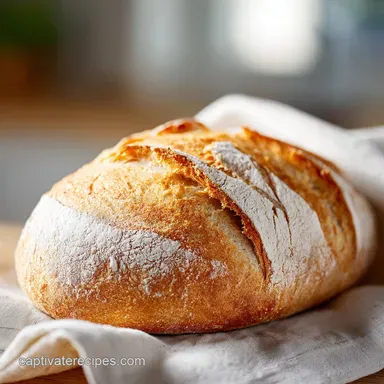
Authentic Homemade Italian Bread

- Time: 30 min active + 90 min rising + 30 min baking
- Flavor & Texture: Deep golden crust with a creamy white, airy center
- Perfect for: Dipping in pasta sauce or making hearty sandwiches
That crackle when you first press into the crust is the best part. It's that specific sound of a well-baked loaf, and you can get it at home without a professional steam oven.
The payoff for making Italian bread is huge compared to the actual effort. You don't need to spend days tending to a starter. You just need a few basic ingredients and a bit of patience while the dough rises.
I like this Italian bread recipe because it hits the balance between a chewy interior and a shattering exterior. It's an accessible way to bring an artisanal vibe to your dinner table.
Easy Homemade Italian Bread
- Water Temp: Keeping the water between 105-115°F wakes up the yeast quickly without killing it.
- Surface Steam: Spraying the loaf with water right before baking creates a moist environment. This keeps the surface flexible longer, allowing the bread to expand and the crust to thin out and crisp up.
- Oil Finish: Brushing the crust immediately after baking traps a bit of moisture and adds a glossy gold shine.
| Method | Time | Texture | Best For |
|---|---|---|---|
| This Method | 2.5 hours | Crisp & Airy | Weeknight dinners |
| Long Ferment | 12+ hours | Tangy & Chewy | Slow weekend projects |
Quick Baking Specs
Baking is all about hitting your marks. Keep an eye on these three checkpoints to make sure your loaf stays on track. First, the yeast must be foamy within 10 minutes. Second, the dough should double in size during the first hour. Finally, the internal temperature isn't the goal here, but the "hollow tap" is.
When you flip the loaf and tap the bottom, it should sound like a drum, not a thud.
Ingredients You'll Need
Why These Ingredients Work
| Component | Purpose | Substitute Notes |
|---|---|---|
| Bread Flour | High protein for structure | All-purpose: Makes a softer, shorter loaf |
| Active Dry Yeast | Provides the lift | Instant yeast: Mix directly with flour |
| Olive Oil | Softens the crumb | Melted butter: Richer, milkier flavor |
The Shopping List
- 3 cups (375g) bread flour Why this? Extra protein creates that classic chew
- 2 ¼ tsp (7g) active dry yeast
- 1 tsp (5g) granulated sugar Why this? Feeds the yeast for a faster rise
- 1 ½ tsp (9g) fine sea salt
- 1 cup (235ml) warm water (105-115°F)
- 2 tbsp (30ml) extra virgin olive oil
- 1 tbsp (15ml) water (for spraying)
- 1 tbsp (15ml) extra virgin olive oil (for brushing)
Bringing It Together

Activating the Yeast
Combine 1 cup (235ml) warm water (105-115°F) and 1 tsp (5g) granulated sugar in a mixing bowl. Sprinkle 2 ¼ tsp (7g) active dry yeast on top. Allow it to bloom for 5-10 minutes until a foamy layer forms.
Mixing and Kneading
Stir 2 tbsp (30ml) extra virgin olive oil into the yeast mixture. Gradually stir in 3 cups (375g) bread flour and 1 ½ tsp (9g) fine sea salt. Mix until a rough dough forms. Transfer to a floured surface and knead for 5-7 minutes until the dough is smooth and elastic.
Don't overcomplicate the kneading; simply continue until it doesn't stick to your hands.
The First Rise
Place the dough in a lightly oiled bowl. Cover it with a damp kitchen towel and leave it in a warm, draft-free spot for 60 minutes until the volume has doubled.
Shaping and Final Proof
Gently punch down the dough to release excess air. Form it into one oval loaf or two smaller baguettes. Place them on a parchment lined baking sheet, cover, and let rise for another 30 minutes.
Baking for the Crunch
Set the oven to 425°F (220°C). Lightly spray the tops of the loaves with 1 tbsp (15ml) water. Bake for 25-30 minutes until the crust is deep golden brown and the loaf sounds hollow when tapped on the bottom.
The Final Touch
Take the bread from the oven and immediately brush the crust with 1 tbsp (15ml) extra virgin olive oil. This gives it a professional sheen and keeps the crust from becoming too hard.
If Something Goes Wrong
If your bread didn't rise, it usually comes down to the yeast. If the water was too hot, it killed the yeast. If it was too cold, the yeast just stayed asleep. Always look for that foam in the first step.
Another common issue is a pale crust. This usually happens if the oven temperature is too low or if you forgot to spray the water on top. The water is what allows the crust to brown and crisp properly.
Fixes for Common Issues
| Problem | Root Cause | Solution |
|---|---|---|
| Dense, heavy crumb | Expired yeast or wrong water temp | Check for foam during activation |
| Pale, soft crust | Oven too cool or no steam | Use a thermometer and spray water |
| Dough too sticky | Too much moisture/low flour | Knead in 1 tbsp of flour at a time |
Great Pairings
For a real showstopper, serve this warm with a bowl of pomodoro sauce. The contrast between the deep red sauce and the creamy white interior of the bread is a visual win.
I like to add a bit of color to the table by garnishing the loaf with toasted sesame seeds or a sprinkle of coarse sea salt before baking. It adds a light tan accent to the deep gold crust.
Storage and Reheating
Store the loaf in a paper bag or wrap it in a clean kitchen towel at room temperature for up to 2 days. Avoid plastic bags, as they trap moisture and make the crisp crust soft.
This bread freezes beautifully. Slice it first and store the pieces in an airtight bag for up to 3 months. To bring back that shattering crust, skip the microwave and instead toast the slices at 350°F (175°C) for 5-8 minutes.
Swaps and Variations
If you want to change the flavor of your Italian bread, keep the ratios the same but swap a few ingredients. Adding roasted garlic or fresh rosemary into the dough during the kneading phase turns this into a great appetizer loaf.
For a more traditional Italian bread feel, you can replace the sugar with a teaspoon of honey, which adds a subtle floral note.
| Original Ingredient | Substitute | Why It Works |
|---|---|---|
| Bread Flour | All-Purpose Flour | Accessible. Note: Result is softer and less chewy |
| Granulated Sugar | Honey | Similar sweetness. Note: Adds slight moisture |
| Olive Oil | Melted Butter | High fat. Note: Makes the crumb richer |
Common Questions
How to cut Italian bread?
Use a serrated knife to saw gently through the crust without crushing the crumb.
Tip: slice into 1-inch pieces to make it a perfect base for easy pizza sauce.
Can I use all-purpose flour instead?
Yes, though the resulting loaf will be softer and less chewy.
Tip: stick to bread flour to achieve the best height and structure.
Where should I store the loaf for freshness?
Keep the bread in a paper bag or a clean towel at room temperature for up to 2 days.
Tip: avoid plastic bags as they trap moisture and soften the crust.
Why spray the dough with water before baking?
Spraying creates steam that helps the bread expand and develop a crisp crust.
Tip: use a spray bottle for a light, even mist across the tops of the loaves.
Crusty Italian Bread