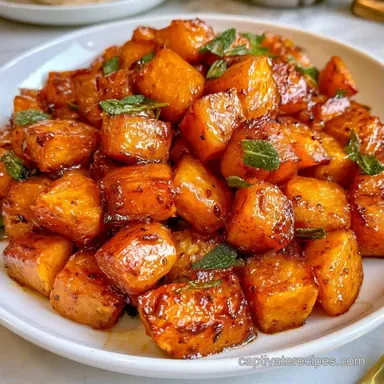
Mahogany Roasted Brown Butter Butternut Squash

- Time: 10 min active + 30 min roasting
- Flavor/Texture Hook: Nutty, toasted aroma with mahogany edges
- Perfect for: Thanksgiving side or a cozy weeknight dinner
The aroma of browned butter and crisp sage is essentially autumn captured in a pan. Across North America, butternut squash is a harvest staple, symbolizing the shift toward colder months when we crave warm, grounding comfort. It is a traditional dish that feels special without being overly complicated.
I used to simply toss all the ingredients onto one tray, but that usually resulted in mushy cubes and burnt butter. The real improvement happens when you separate the roasting oil from the finishing fat, which creates a superior sear and a deeper flavor profile.
This version of Brown Butter Butternut Squash emphasizes a rich, nutty taste without any of the bitterness associated with overcooked dairy. It's an easy way to achieve a gourmet result on a budget using basic pantry staples.
Brown Butter Butternut Squash Basics
The goal here is a contrast in textures. You want the outside of the squash to be slightly chewy and caramelized, while the inside is velvety and tender. By using avocado oil for the roast, we can push the oven temp high enough to brown the squash without the butter smoking.
Since we're using a budget-friendly approach, you don't need expensive oils. Avocado oil is great because it handles heat well, but any neutral oil works. The magic really happens in the final few minutes with the butter.
The Logic Behind the Flavor
- Dual Fat Method: Roasting with oil first prevents the milk solids in butter from burning before the squash is actually cooked through.
- The Nutty Finish: Browning the butter separately toasts the proteins, which creates those hazelnut notes that pair so well with the sweetness of the squash.
- Consistent Dicing: Cutting the squash into exact 1/2 inch cubes ensures every piece hits the same doneness at the 25 minute mark.
What Goes Into the Bowl
| Ingredient | Role | If You Don't Have It |
|---|---|---|
| Butternut Squash | Main base | Kabocha squash (sweeter, thinner skin) |
| Avocado Oil | over High heat roasting | Grapeseed or Canola oil |
| Unsalted Butter | Flavor and glaze | Salted butter (reduce salt in step 2) |
| Fresh Sage | Earthy aromatic | Dried sage (use 1/3 amount, add earlier) |
Detailed Ingredient List
- 2 lbs (900g) butternut squash, peeled and diced into ½ inch (1.3cm) cubes Why this? Standard size for even roasting.
- 2 tbsp (30ml) avocado oil Why this? High smoke point avoids burnt oil taste.
- 1 tsp (6g) kosher salt
- ½ tsp (3g) cracked black pepper
- 4 tbsp (57g) unsalted butter Why this? Allows you to control the salt levels.
- 1 tbsp (3g) fresh sage leaves, thinly sliced
- ¼ tsp (1.5g) ground nutmeg Why this? Adds a subtle, warm depth.
Right then, if you're looking for a swap, coconut oil works for the roast but will add a slight sweetness. For the butter, a vegan butter substitute works, though it won't "brown" in the same way since it lacks milk solids.
The Right Tools
You only need basic equipment for this, with a large rimmed baking sheet being the primary tool. Avoid crowding the pan; otherwise, the squash will steam rather than roast, and you'll miss out on those caramelized edges.
I recommend lining the pan with parchment paper to prevent sticking and speed up cleanup. For the butter, a small stainless steel skillet is preferable because the browning is more visible than in a dark non-stick pan.
Step by step Roasting

Phase 1: The Precision Prep
Set your oven to 400°F (200°C) and prepare a large rimmed baking sheet by lining it with parchment paper. In a bowl, combine the diced butternut squash with avocado oil, kosher salt, and cracked black pepper, tossing until every piece is lightly coated.
Note: Coating them well prevents the squash from drying out.
Phase 2: The High Heat Roast
Arrange the squash pieces across the prepared pan, making sure they aren't crowded. Roast for 20–25 minutes, flipping halfway through, until edges are golden brown and centers are tender. Leaving space between the cubes ensures they roast properly rather than steaming.
Phase 3: The Brown Butter Finish
While the squash is in the oven, melt unsalted butter in a small stainless steel skillet over medium heat. Stir continuously until the butter foams and tiny brown specks appear, releasing a nutty, hazelnut aroma.
Phase 4: The Final Toss
Quickly stir the sliced sage and ground nutmeg into the brown butter, then remove the pan from the heat immediately. Place the roasted squash in a bowl, drizzle with the sage-butter mixture, and toss gently to combine.
A quick tip: don't leave the butter on the heat for even ten seconds after adding the sage, otherwise the leaves will burn and become bitter.
Fixing Common Texture Issues
Squash Turns Mushy
This usually happens if the pan is too crowded. When the cubes are touching, they release steam that traps moisture on the surface. Use two baking sheets if you're doubling the recipe to ensure the air circulates.
Butter Burns Fast
Butter has a low smoke point, so it goes from "browned" to "burnt" in seconds. If your skillet is too hot, the milk solids will blacken. Keep the heat at medium and whisk constantly to distribute the heat.
Uneven Browning
This is often caused by inconsistent dicing. If you have some huge chunks and some tiny bits, the small ones will shrivel while the big ones stay raw. Aim for that 1/2 inch mark for a reliable result.
Sage Leaves Burned
If the sage is black instead of dark green/brown, you likely kept the pan on the heat too long. The residual heat of the butter is enough to crisp the sage; you don't need to keep the burner on.
Make It Your Own
For a sweeter touch, mix in a pinch of brown sugar or maple syrup with the butter. To make it more savory, top with freshly grated Parmesan just before serving for a salty pop.
To maximize flavor, try tossing the roasted squash in a Brown Butter Sage Sauce. This is a wonderful way to add richness when the dish is the focal point of your meal.
- For firmer cubes
- Dice to exactly 1/2 inch and ensure the pan isn't crowded.
- For extra nuttiness
- Brown the butter until it hits a deep mahogany hue.
- For a sweeter taste
- Stir 1 tsp of maple syrup into the final glaze.
| Method | Fat Used | Outcome |
|---|---|---|
| Classic Roast | Butter only | High risk of burnt butter; softer edges |
| Fast/Dual Roast | Oil then Butter | Crisp mahogany edges; nutty aroma |
Storage and Scrap Tips
Store any remaining squash in a glass dish in the refrigerator for a maximum of 4 days. For reheating, I suggest an air fryer or oven at 350°F for 5 minutes. While a microwave is an option, it tends to soften the texture and lose those crisp roasted edges.
This recipe is also great for freezing. Place it in a freezer-appropriate bag for as long as 3 months. Let it defrost in the refrigerator overnight, then warm it in a skillet with a small piece of butter to bring back the glossy glaze.
Save the squash seeds instead of throwing them away. After cleaning them, coat them in some of the remaining browned butter and salt, then roast at 325°F for 15 minutes. This creates a delicious zero-waste snack with flavors that mirror the main course.
Serving Your Dish
This brown butter butternut squash is a versatile side that complements nearly any dish, especially those with a clean taste. I recommend pairing it with Golden Seared Cod because the fish's lightness perfectly balances the buttery richness.
To make it a more substantial meal, serve the roasted squash on a bed of farro or quinoa to soak up the extra brown butter from the bowl.
When serving a crowd, arrange the squash on a platter and finish with a sprinkle of flaky sea salt and fresh sage leaves. It offers an elegant presentation with minimal effort.
- 1. Oven Temp
- 400°F (200°C).
- 2. Cube Size
- 1/2 inch (1.3cm).
- 3. Roast Time
- 20-25 minutes.
Recipe FAQs
What should I avoid when browning butter?
Avoid walking away from the pan. Butter transitions from brown to burnt in seconds once the milk solids toast.
How do I prepare brown butter butternut squash?
Toss diced squash with avocado oil, salt, and pepper. Roast at 400°F (200°C) for 20–25 minutes before tossing with browned butter, sage, and nutmeg.
Which steps are needed to make brown butter?
Melt unsalted butter in a stainless steel skillet over medium heat. Whisk constantly until the mixture foams and small brown specks appear with a hazelnut aroma.
Where does the sage go in this recipe?
Stir sliced sage and nutmeg into the browned butter immediately. Remove the pan from heat instantly to prevent the herbs from burning.
Can this dish be frozen for later?
Yes, it freezes well. Store in a freezer safe bag for up to 3 months and thaw overnight in the fridge. For another simple pairing, try this flatbread dough.
Is it true that browning butter requires high heat?
No, this is a common misconception. Medium heat allows the milk solids to toast slowly without scorching.
Does a non-stick pan work best for browning butter?
No, and here's why. A stainless steel skillet is preferred because it allows you to see the brown specks forming more clearly.
When reheating, which method is best?
Use an oven or air fryer at 350°F for 5 minutes. This preserves the roasted edges better than a microwave.
Roasted Brown Butter Butternut Squash