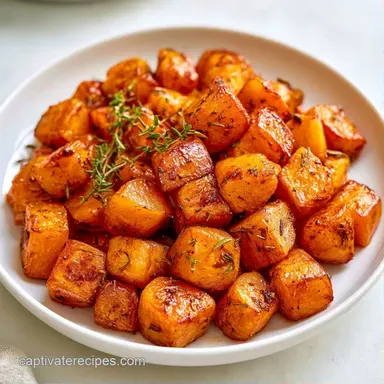
Herb Roasted Butternut Squash with Rosemary
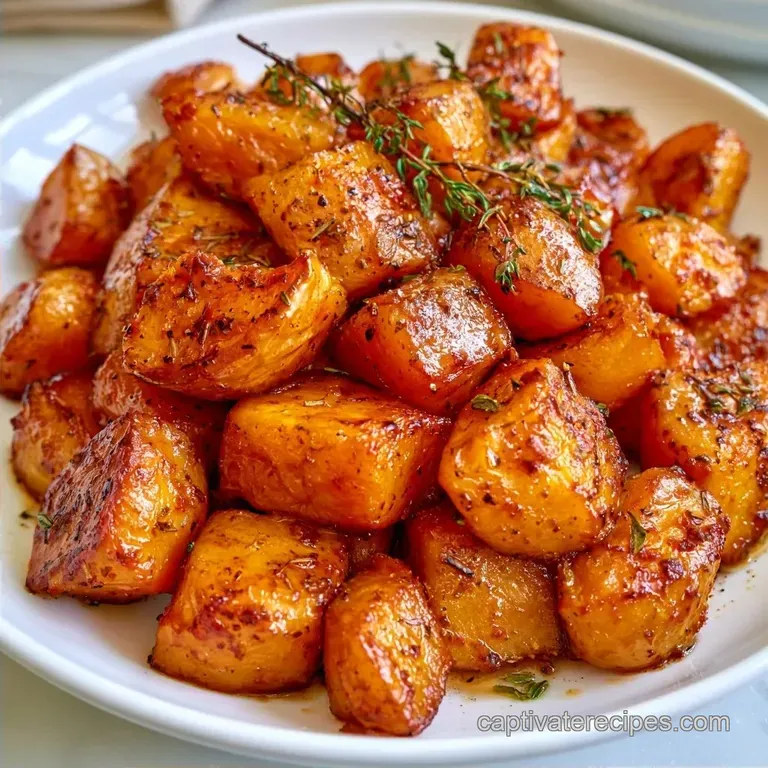
- Time: 10 min prep + 30 min roasting
- Taste & Texture: Mahogany-brown edges with a velvety center
- Ideal for: Budget-friendly weekday sides or holiday meal prep
Herb Roasted Butternut Squash
Ever wonder why some roasted vegetables taste like they were just steamed in a hot box? You've seen those gorgeous, caramelized cubes in magazines, but your own often turn out pale and soft. It usually comes down to one thing: moisture.
If the squash is too wet when it hits the pan, it boils in its own juices rather than browning.
I used to just toss my vegetables in oil and hope for the best. I'd pull out a tray of limp, yellow cubes that lacked any real punch. Then I started patting them dry and cranking the heat. The difference is night and day.
This Herb Roasted Butternut Squash is my reliable go to for when I want something that feels special but doesn't cost much or take all afternoon. It's a simple way to bring out the natural sweetness of the gourd while keeping things savory.
Why the Browning Matters
- High Heat: Using 400°F (200°C) makes the natural sugars in the squash brown quickly. This creates a deeper, toasted flavor that you just can't get with low temperature roasting.
- Pan Space: When you crowd the pan, steam gets trapped between the cubes. Keeping them in a single layer lets the dry heat hit every surface, which is how you get those crisp edges.
- Dry Surfaces: Water is the enemy of a sear. Removing excess moisture with a paper towel ensures the oil sticks and the browning starts the second the pan enters the oven.
Recipe Specs
For the best results, keep these three precision checkpoints in mind. First, your cubes should be exactly 1/2 inch to ensure they cook evenly in 30 minutes. Second, the oven must be fully preheated to 400°F (200°C) before the pan goes in.
Third, look for that mahogany color at the 30 minute mark, not just a light gold.
Since we're keeping this budget friendly, we're sticking to dried herbs. They are cheaper than fresh and actually hold up better under high heat without burning as quickly.
| Method | Prep Time | Cook Time | Result |
|---|---|---|---|
| Fast Roast | 10 mins | 30 mins | caramelized & tender |
| Slow Roast | 10 mins | 50 mins | softer & more uniform |
The Ingredient Breakdown
I've found that keeping the herb blend simple actually lets the squash flavor shine. Don't overcomplicate the spices, or you'll lose that earthy sweetness.
| Ingredient | What It Does | Best Swap |
|---|---|---|
| Butternut Squash | Provides the sweet, starchy base | Kabocha squash (sweeter/denser) |
| Olive Oil | Conducts heat for browning | Melted coconut oil (adds nuttiness) |
| Dried Rosemary | Adds woody, piney notes | Dried Sage (more earthy) |
| Garlic Powder | Gives a savory, toasted depth | Onion powder (milder sweetness) |
Essential Kitchen Tools
Simple tools are all you need. I recommend a Y peeler for squash; it's easier on your wrists and handles the gourd's curves more effectively than a straight peeler.
Grab a large mixing bowl to toss the ingredients. Tossing the squash directly on the pan often leads to uneven seasoning, with some cubes overly oiled and others left dry. A parchment lined baking sheet is also essential to prevent the sugars from sticking to the pan and to make cleanup much faster.
Simple Roasting Steps
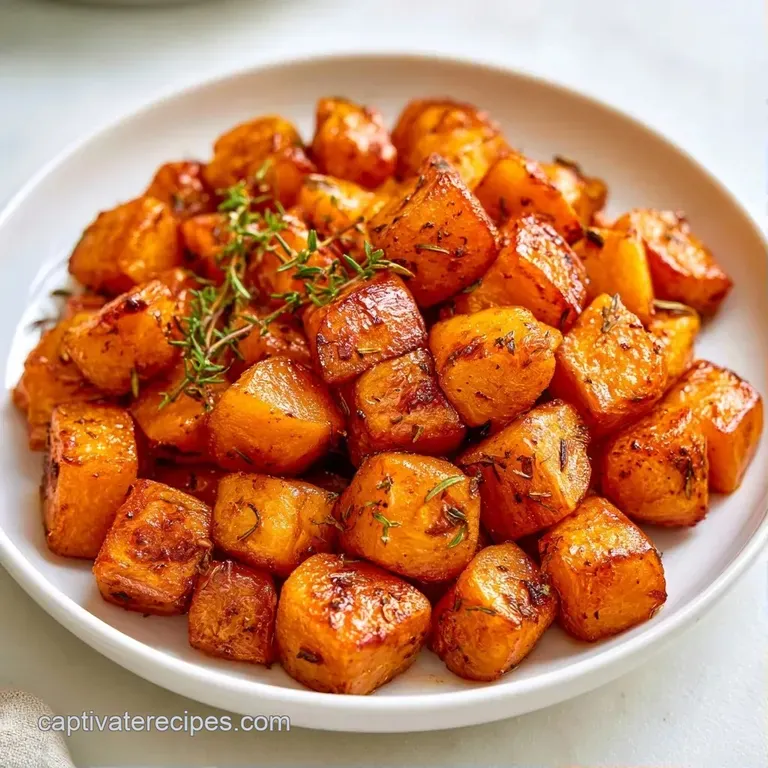
- Trim the ends off the squash, peel it with a Y peeler, halve it lengthwise, and remove the seeds.
- Dice the squash into 1/2 inch cubes and pat them dry with paper towels to eliminate excess moisture. Note: This is crucial for browning.
- In a large mixing bowl, combine the cubed squash, 2 tbsp olive oil, 1 tsp rosemary, 1 tsp thyme, 1/2 tsp garlic powder, 3/4 tsp sea salt, and 1/2 tsp black pepper.
- Toss well until every piece is evenly coated.
- Set your oven to 400°F (200°C) and distribute the squash evenly across a parchment lined baking sheet.
- Roast for 15 minutes.
- Remove the tray and flip the cubes with a spatula. Note: Flipping ensures both sides get color.
- Return to the oven for another 15 minutes until the edges are mahogany colored and the center is.
Chef's Tip: If you're using a very large batch, use two baking sheets. Overcrowding the pan is the fastest way to get soggy squash.
Fixes for Common Problems
Even a straightforward dish can run into issues, typically due to poor spacing or incorrect temperatures.
Fixing Mushy Squash
If your squash remains pale and soft, the oven may be too cool or the pan too crowded. This traps moisture and steams the vegetables instead of roasting them. Try leaving more room between the cubes next time.
Preventing Burnt Herbs
Without enough oil, dried herbs can easily scorch. Toss the squash thoroughly in your mixing bowl to ensure the oil protects the herbs from direct heat.
Safe Cutting Techniques
Butternut squash is quite hard, making it easy for a knife to slip. To ensure stability, slice a small piece off the side or bottom to create a flat surface that won't roll.
| Problem | Fix |
|---|---|
| Pale, soggy cubes | Use higher heat and avoid crowding the pan |
| Burnt herbs | Ensure herbs are fully coated in oil before roasting |
| Uneven cooking | Cut all cubes to a consistent 1/2 inch size |
How to Serve It
These herb roasted butternut squash cubes make a wonderful accompaniment to roast chicken or pork chops. For a more decadent treat, I suggest topping them with a brown butter sage sauce to add a rich, nutty depth.
For a lighter alternative, toss the roasted pieces into a bowl of baby arugula with goat cheese and a touch of balsamic glaze. The heat from the squash gently wilts the leaves, making it an ideal autumn salad.
To add some crunch, garnish the dish with toasted pepitas or pomegranate seeds just before plating. This provides a bright pop of color and an interesting contrast in texture.
Storage and Waste Tips
Keep any leftovers in a sealed container in the refrigerator for 3 to 4 days. For the best reheat, pop them into an air fryer or oven at 350°F (175°C) for a few minutes. While a microwave works, it tends to soften the edges.
If you've made a large batch, these roasted cubes can be frozen for up to 2 months. Just ensure they have cooled completely before placing them in freezer bags. They make a wonderful addition to a hearty winter soup.
Save the squash seeds and peels instead of throwing them away. Season the seeds with salt and roast them similarly to pumpkin seeds. The peels can be added to your vegetable scraps for homemade soup stock, giving the broth a hint of sweetness.
Simple Flavor Tweaks
Depending on what's in your pantry, you can easily pivot this recipe to fit your mood.
- For a Sweet Twist: Add 1 tbsp of maple syrup to the oil mixture. This creates a Maple Herb Roasted Butternut Squash that's great for holiday dinners.
- For an Umami Boost: Toss the cubes with 2 tbsp of grated Parmesan cheese during the last 5 minutes of roasting. This gives you a salty, crispy crust.
- For a Vegan Alternative: Swap the olive oil for melted coconut oil. It keeps the dish vegan and adds a very slight tropical note that pairs well with the rosemary.
- For a Low Sodium Option: Skip the sea salt and add the zest of one lemon after the squash comes out of the oven. The acidity mimics the brightness of salt.
For a firmer set of cubes, try roasting them for an extra 5 minutes without flipping. This allows one side to develop a deeper crust, which is great if you're planning to use them as a base for a tart or a crumble.
High in Sodium
880 mg 880 mg of sodium per serving (38% 38% of daily value)
The American Heart Association recommends a daily limit of no more than 2,300mg of sodium to reduce the risk of high blood pressure and heart disease.
Tips to Reduce Sodium
-
Reduce Sea Salt-25%
The sea salt is the primary sodium source; reduce it by half or eliminate it entirely to significantly lower the sodium.
-
Add a Splash of Acid-15%
Squeeze fresh lemon juice or add a teaspoon of apple cider vinegar after roasting to mimic the brightness of salt.
-
Use Nutritional Yeast-10%
Substitute some salt with nutritional yeast to provide a savory, umami flavor without the high sodium content.
-
Verify Garlic Powder-10%
Ensure you are using pure garlic powder and not garlic salt, as many blends contain hidden sodium.
-
Amplify Aromatics
Increase the rosemary and thyme or add fresh cracked black pepper to add complexity and flavor depth.
Recipe FAQs
Which herbs pair best with butternut squash?
Rosemary and thyme are the top choices. These earthy aromatics complement the natural sweetness of the roasted vegetable.
What should I use to season the squash?
Combine olive oil, rosemary, thyme, garlic powder, salt, and pepper. Toss these vigorously in a bowl to ensure every cube is evenly coated before roasting.
What spice adds the most flavor to roasted squash?
Garlic powder provides a savory depth. It distributes more evenly than fresh garlic and won't burn at high temperatures.
How long should butternut squash roast at 400 degrees?
Roast for a total of 30 minutes. Bake for 30 minutes, flip the cubes with a spatula, and roast for another 15 minutes until the edges are mahogany colored.
Which oil is recommended for roasting?
Extra virgin olive oil is the best choice. It has a flavor profile that enhances the herbs and can handle the oven temperature.
Can I store leftover roasted squash?
Yes, keep them in a container for 3 to 4 days. Reheating them in an air fryer or oven at 350°F helps maintain the texture.
Why is it necessary to pat the squash dry?
Moisture prevents browning. Removing surface water ensures the olive oil adheres properly so the edges caramelize instead of steaming. If you enjoyed mastering moisture control here, the same principle applies to our flatbread crust for a better rise.
Is it true that you must boil butternut squash before roasting?
False. Roasting raw cubes at 400°F creates a velvety center and caramelized exterior that boiling cannot achieve.
Herb Roasted Butternut Squash