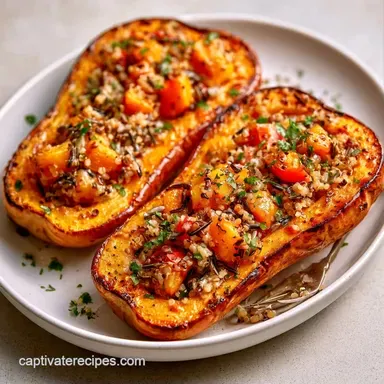
Vegan Stuffed Butternut Squash with Quinoa

- Time: 15 min active + 60 min cooking
- Flavor/Texture Hook: Sweet roasted squash with a salty, umami rich filling
- Perfect for: Holiday centerpieces or a cozy Sunday dinner
The aroma of roasting squash always reminds me of a particular November several years back. I attempted to make a sophisticated centerpiece for my family, but I made the mistake of roasting the squash right side up. The result was a soggy, collapsed disaster that looked more like a puddle than a dish.
I spent the entire evening apologizing while we ate lukewarm squash mush.
That failure taught me that how you handle the vegetable is actually more important than the stuffing. You need that structural integrity to support the grains and vegetables. If the squash is too soft, the whole thing falls apart the moment it hits the plate.
This version of Stuffed Butternut Squash succeeds because it prioritizes the roast. We focus on a high-heat sear and a savory filling that avoids expensive substitutes. It is a grounded, satisfying dish that feels special without requiring a massive budget or a culinary degree.
Simple Stuffed Butternut Squash Specs
When you're planning your evening, it's helpful to know exactly how the timing breaks down. This isn't a "throw it in and forget it" meal, but most of the work happens while the squash is in the oven.
The prep takes 15 minutes, mostly just chopping and scooping. The actual cooking time is 60 minutes. This includes the initial roast and the final glaze. Total time is 75 minutes.
It serves 4 people, making it a great option for a small family gathering or a few days of leftovers.
If you're making this for a crowd, just remember that oven space is your limit. You can roast the squash in batches, but the filling can all be made in one large skillet.
| Goal | What to change |
|---|---|
| Extra Crunch | Add 1/4 cup toasted walnuts |
| More Protein | Double the chickpeas |
| Tangier Flavor | Increase lemon juice to 2 tbsp |
Gathering Your Essentials
I've found that using a mix of quinoa and wild rice gives the best texture. Quinoa is great for protein, but wild rice adds a chewiness that makes the dish feel more substantial. If you're on a tight budget, you can use brown rice, though it lacks that specific nutty hit.
The miso paste is the real hero here. It's a cheap ingredient that adds a deep, salty flavor usually missing from vegan dishes. It replaces the need for expensive cheeses or heavy creams.
| Ingredient | What It Does | Best Swap |
|---|---|---|
| Butternut Squash | Provides the sweet, edible bowl | Honeynut squash (smaller, sweeter) |
| Miso Paste | Adds salty, umami depth | Soy sauce or Tamari |
| Quinoa/Wild Rice | Adds bulk and a nutty texture | Brown rice or Farro |
| Chickpeas | Adds protein and heartiness | White beans or Lentils |
The Shopping List:
- 2 medium butternut squash (approx. 2 lbs / 900g each), halved lengthwiseWhy this? Holds its shape better than pumpkin
- 2 tbsp extra virgin olive oil
- 1/2 tsp sea salt
- 1/4 tsp cracked black pepper
- 1 cup uncooked quinoa or wild riceWhy this? Absorbs the savory broth well
- 2 cups vegetable broth
- 1 can (15 oz / 425g) chickpeas, drained and rinsed
- 1 tbsp olive oil
- 1 medium (110g) yellow onion, finely diced
- 3 cloves (9g) garlic, minced
- 2 cups (60g) chopped kale or Swiss chard
- 1/2 cup (80g) dried cranberriesWhy this? Adds a tart contrast to the miso
- 1 tbsp white miso paste
- 1 tbsp lemon juice
- 1 tbsp maple syrup
- 1 tbsp melted vegan butter or olive oil
Equipment Needed
No specialized equipment is required for this recipe; a standard baking sheet and a reliable skillet will work perfectly. I always line my pan with parchment paper, as scrubbing burnt maple syrup off a baking sheet is a tedious chore I'd rather avoid.
A sharp chef's knife is necessary for slicing the squash. If the skin proves difficult to cut through, try microwaving the whole squash for 60 seconds to soften the exterior, which allows the knife to glide through more easily.
You will also need a medium saucepan for the grains and a whisk for the glaze. A simple fork is all you need to fluff the rice or quinoa once they are cooked.
Step-by-step Instructions
Phase 1: Roasting the Base
- Preheat oven to 400°F (200°C). Slice the squash in half lengthwise and scoop out the seeds to create a clean cavity.
- Brush the squash flesh with olive oil and sprinkle with salt and pepper. Place squash cut side down on a parchment lined baking sheet and roast for 40–45 minutes until the skin is tender and the flesh is velvety. Note: Roasting face down concentrates the sugars.
Phase 2: Simmering the Grains
- Rinse quinoa or wild rice under cold water. Combine grains and vegetable broth in a saucepan, bring to a boil, then reduce to low, cover, and simmer until liquid is absorbed (15 mins for quinoa, 45 mins for wild rice). Let sit covered for 5 minutes before fluffing.
Phase 3: Sautéing the Aromatics
- Heat olive oil in a skillet over medium heat; sauté diced onion until translucent (about 5 mins), then stir in minced garlic for 1 minute.
- Add chickpeas, kale, and dried cranberries to the skillet. Stir until kale has wilted and chickpeas are slightly browned.
- Stir in the miso paste and lemon juice, mixing thoroughly to coat the vegetables.
- Fold the cooked grains into the skillet mixture until fully incorporated.
Phase 4: Stuffing and Finishing
- Flip roasted squash halves right side up and heap the filling into the cavities, pressing down slightly.
- Whisk maple syrup and melted vegan butter together, then brush over the top of the stuffing and the edges of the squash.
- Return the Stuffed Butternut Squash to the oven for 10–15 minutes until heated through and glazed.
The One Thing That Changes Everything

The logic here is all about the sear. Most people roast squash face up, which lets the moisture evaporate and often leads to a dry top and a mushy bottom.
Cut Side Down Roasting: This method uses the pan as a searing surface. The flesh caramelizes against the metal, which creates a structural wall that holds the filling without collapsing.
Umami Layering: Vegan dishes can feel "thin" if they only rely on salt. By combining miso and lemon juice, we create a flavor profile that mimics the richness of aged cheese or meat.
I've noticed that using a bit of maple syrup at the very end helps the edges brown quickly. It's a small touch, but it gives the Stuffed Butternut Squash a professional look without needing a blowtorch.
How to Fix Common Problems
A few things can go sideways with this dish, usually related to moisture. If your stuffing feels like a wet sponge, it's likely because the grains weren't drained or the kale released too much water. Next time, sauté the kale a minute longer before adding the grains.
Another issue is the squash consistency. If it's too hard, you didn't roast it long enough. If it's too soft, it might have been an over ripe squash or the oven was too hot.
Fixing Mushy Squash
If the base is too soft to hold the filling, don't panic. You can scoop out a bit more of the flesh to make a deeper hole, or simply serve the filling alongside the squash in a bowl.
Avoiding Dry Stuffing
Dry grains happen when the broth evaporates too quickly. Keep the lid tight on the saucepan. If the liquid is gone but the grains are still crunchy, add 2 tablespoons of broth and simmer for another 5 minutes.
Solving Bland Flavor
If the dish tastes flat, it needs acidity. A fresh squeeze of lemon juice right before serving wakes up the miso and the sweetness of the squash.
| Problem | Root Cause | Solution |
|---|---|---|
| Squash collapses | Over roasted or too soft | Roast cut side down and check at 35 mins |
| Grains are mushy | Too much broth or overcooked | Reduce broth by 1/4 cup next time |
| Filling is bland | Lack of acidity/salt | Add a splash of lemon juice or extra miso |
Preservation Secrets
These stuffed butternut squash halves store quite well. Simply place them in an airtight container; they will remain fresh in the refrigerator for 3 days. For the best results when reheating, pop them in the oven at 350°F for roughly 15 minutes.
While a microwave is quicker, it often gives the squash a rubbery texture.
If you're freezing leftovers, I recommend storing the filling and the roasted squash in separate containers. The filling maintains its quality for 3 months when frozen. To serve, let it thaw in the fridge overnight, fill a newly roasted squash, and apply the glaze.
Don't let the seeds go to waste. After cleaning them, coat them in a little salt and oil, then roast at 350°F for 10 minutes. These are perfect as a standalone snack or as a crunchy garnish for your meal.
Flavor Variations to Try
Feel free to change the grains to suit your taste. For a Mediterranean twist, substitute the base with a hearty bulgur pilaf. It offers a chewiness similar to wild rice but with a distinct nutty flavor.
To lean into the Vegan Stuffed Butternut Squash with Chickpeas side of things, simply double the amount of chickpeas and stir some smoked paprika into the skillet. This creates a "chorizo-style" flavor profile without using any meat.
Alternative Combinations:
- The Autumn Mix: Replace cranberries with pomegranate seeds and stir in chopped pecans.
- The Green Version: Use spinach in place of kale and mix frozen peas into the filling.
- The Protein Boost: Mix in 1/2 cup of cooked lentils along with the quinoa.
For a less heavy option, a Vegan Stuffed Butternut Squash with Quinoa is an excellent choice. Because quinoa cooks more quickly and is easier to digest, it's an ideal alternative to wild rice for busy weeknights.
Pairing Ideas
Since this dish is quite rich and sweet, a fresh, acidic accompaniment is essential for balance. A peppery arugula salad with a bright lemon dressing is my favorite choice, as the greens cut right through the sweetness of the squash.
If you are serving this as part of a holiday feast, it pairs beautifully with other plant-based options. For another hearty dish with a similar stuffing approach, you might enjoy a Stuffed Pepper Soup as an appetizer.
The Contrast Pair: A crisp apple and fennel slaw provides a textural snap that offsets the softness of the roasted vegetable. The fennel's hint of anise enhances the sweetness of the maple glaze.
The Holiday Feast: Serve this alongside roasted Brussels sprouts and a side of garlic mashed cauliflower to keep the meal light yet satisfying. For a more traditional feel, steamed green beans with toasted almonds provide a lovely color contrast to the orange squash.
You now have all the tips needed to create a Stuffed Butternut Squash that retains its shape and tastes restaurant-quality. Just remember to keep the squash cut-side down and trust the miso; its saltiness is what makes the vegetable's sweetness pop. Let's get cooking!
Recipe FAQs
What can I stuff a butternut squash with?
Mix cooked quinoa or wild rice with chickpeas, kale, dried cranberries, and miso paste. If you enjoyed balancing flavors here, see how we use a similar approach in our Greek tortellini salad.
Is it true that you shouldn't eat the skin of stuffed butternut squash?
No, this is a common misconception. The skin is edible and helps the squash maintain its shape while roasting.
Which ingredients are in the filling?
The filling contains quinoa or wild rice, chickpeas, kale, dried cranberries, onion, garlic, miso paste, and lemon juice. These components are sautéed and folded together for a savory taste.
How do I roast the squash?
Preheat the oven to 400°F and roast the oiled, seasoned squash halves cut-side down for 40–45 minutes. This ensures the flesh is tender before you add the stuffing.
Can this recipe be served as a vegan meal?
This recipe is already vegan because it uses vegetable broth and vegan butter. You can also substitute the vegan butter with extra olive oil.
Stuffed Butternut Squash with Quinoa